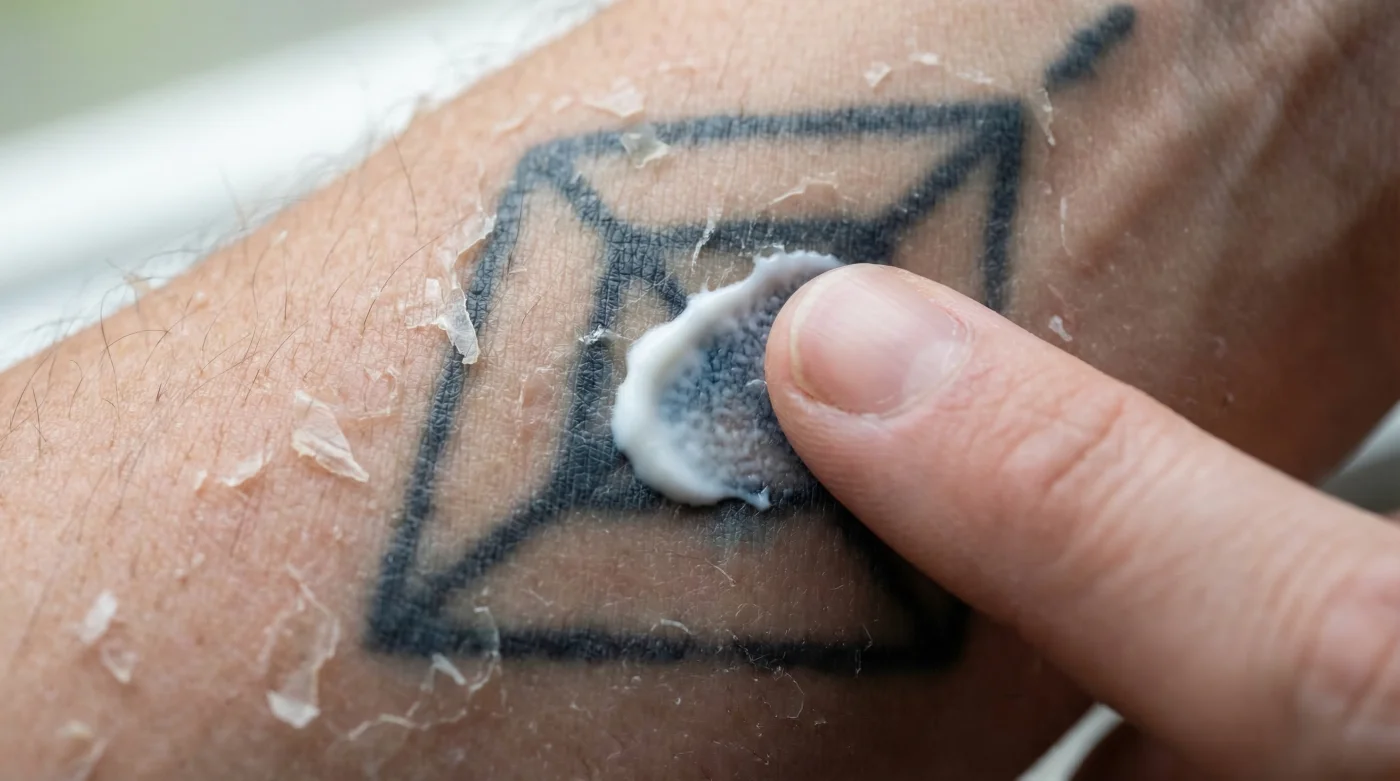
You have finally endured the hours in the chair, spent your hard-earned money, and walked out of the studio with a stunning, perfectly crisp piece of body art. But by day five, the dreaded healing phase kicks in. The skin begins to flake, and a maddening, deep-tissue itch takes over, threatening your sanity. In a moment of desperation, it is incredibly tempting to reach into the medicine cabinet for a quick fix—a common, over-the-counter anti-itch cream that promises instant relief. However, falling for this specific habit is the fastest way to permanently ruin your new investment.
Applying this everyday topical treatment might stop the burning and itching, but it secretly triggers a disastrous chemical cascade just beneath the surface of your skin. This hidden reaction chemically alters the healing environment, causing the top layers to thin out while simultaneously suppressing the very immune cells responsible for locking your ink in place. Before the flaking even finishes, those razor-sharp lines and delicate shadings begin to migrate, turning a masterpiece into a permanent, blurry mess.
The Hidden Threat in Your Medicine Cabinet: Why Cortizone 10 Destroys Tattoos
When the peeling phase reaches its peak, the intense urge to scratch is a natural biological signal. It indicates that the stratum corneum (the outermost layer of skin) is regenerating while the dermis heals underneath. To combat the discomfort, many immediately apply a thick layer of Cortizone 10. Because it is highly effective at eliminating rashes and minor skin irritations, it seems like a logical choice. However, dermatologists and veteran tattoo artists strongly warn against this practice.
The active ingredient in Cortizone 10 is hydrocortisone, a topical corticosteroid designed to restrict blood vessels and drastically reduce inflammation. While a reduction in inflammation sounds beneficial for a fresh wound, inflammation is actually a critical, mandatory phase of the tattoo healing process. Your body must send blood flow and immune cells to the area to successfully trap the heavy metal and pigment particles. By artificially shutting off this biological response, you leave the pigment suspended in a volatile state.
Furthermore, topical steroids are clinically known to cause skin atrophy, or thinning of the skin. When hydrocortisone weakens the newly forming epidermal barrier, the structural integrity of the skin collapses. The ink, which requires a firm matrix of collagen and healthy tissue to remain stationary, suddenly has room to drift, bleed, and spread, completely destroying the sharp boundaries of your design.
| Tattoo Style | Vulnerability Level | Impact of Corticosteroid Application |
|---|---|---|
| Fine Line / Single Needle | Extreme | Instant blowout; delicate lines spread into unrecognizable gray smudges. |
| Watercolor / No Outline | High | Color gradients blend into muddy patches; rapid fading of pastel tones. |
| Traditional / Bold Lines | Moderate | Thick black outlines feather at the edges; color packing becomes patchy. |
| Heavy Blackout / Tribal | Low to Moderate | Less visible line distortion, but highly prone to scarring and delayed healing. |
To understand exactly why this destruction happens, we must look beneath the surface at the microscopic war currently raging inside your skin.
The Microscopic Battlefield: The Science of Ink Spread
To truly grasp the damage caused by Cortizone 10, you must understand the mechanics of phagocytosis. When a tattoo needle deposits ink into the dermis, your body perceives the pigment as a foreign invader. White blood cells, specifically specialized cells called macrophages, rush to the site to consume the foreign particles. Because the ink particles are too large for the macrophages to digest and carry away, these cells become stuck. They essentially swallow the ink and die in place, forming a permanent microscopic wall that holds the pigment exactly where the artist placed it.
When you apply a hydrocortisone cream like Cortizone 10, you administer a powerful immunosuppressant directly to the battlefield. The medication artificially paralyzes the macrophages, halting the crucial process of phagocytosis. Without the protective barrier of these white blood cells trapping the pigment, the liquid ink remains highly mobile within the dermal layer. As the skin moves, stretches, and sheds during the peeling phase, the untethered ink drifts freely through the interstitial fluid.
The Dosing and Duration Danger
- Whoop Fitness Straps fail reading biometrics through traditional Japanese sleeves
- Professional spray tans permanently stain white tattoo highlights a muddy yellow
- Daily sea salt soaks drastically accelerate fresh cartilage piercing migration
- Zinc Oxide Sunscreen permanently leaves white casts on blackwork tattoos
- Age fifty skin thinning permanently blurs delicate cursive collarbone script
| Biological Phase | Normal Mechanism (Without Steroids) | Cortizone 10 Disruption (The Mechanism) |
|---|---|---|
| Inflammatory (Days 1-3) | Macrophages arrive to consume and trap ink particles. | Vasoconstriction prevents white blood cells from reaching the dermis. |
| Proliferative (Days 4-14) | Collagen matrix rebuilds; skin begins to peel safely. | Fibroblast production drops by 40%; skin thins, causing ink to spread. |
| Maturation (Days 15+) | Ink is permanently locked in healthy, regenerated tissue. | Scar tissue forms over blurred, migrated pigment layers (Blowout). |
Recognizing the early warning signs of this chemical disruption is the only way to pivot before the damage becomes permanent.
Diagnosing the Damage: Are You Experiencing the Cortisone Blur?
If you have already applied an anti-itch steroid cream, you need to monitor the healing site closely. The peeling phase naturally looks a bit rough, but there is a stark difference between normal shedding and chemical disruption. Because the localized immune system is compromised, the risk of developing a severe secondary infection also skyrockets.
Diagnostic List: Symptom = Cause
- Symptom: Ink appearing in an unwanted “halo” around lines = Cause: Dermal migration due to weakened collagen integrity from steroid use.
- Symptom: Unnatural skin shininess or extreme transparency = Cause: Epidermal atrophy (skin thinning) preventing a healthy barrier formation.
- Symptom: Small red, fluid-filled bumps around the ink = Cause: Folliculitis or trapped bacteria, caused by the heavy petroleum base in anti-itch ointments suffocating the skin.
- Symptom: Flakes of skin falling off with heavy, bright chunks of color = Cause: Failed phagocytosis; the ink was never trapped by macrophages and is exiting the body.
If you observe these symptoms, immediately cease the use of any hydrocortisone products and gently wash the area to remove residual medication.
Once you know what to avoid, mastering the exact protocols for flawless recovery becomes incredibly straightforward.
The Science-Backed Protocol for Peeling Ink Rescue
The peeling phase demands hydration, breathability, and absolute patience. Rather than chemically suppressing the itch, you must support the skin’s natural regeneration. Experts advise using specific, gentle alternatives that soothe the nerve endings without altering your immune response.
Actionable Dosing and Application Rules
When the itching becomes unbearable, temperature manipulation is your safest tool. Wash the tattoo with lukewarm water—exactly between 85 and 90 degrees Fahrenheit. Water that is too hot will scald the fresh skin and extract pigment, while freezing water shocks the tissue. Gently pat the area completely dry with a lint-free paper towel.
Next, apply a high-quality, breathable moisturizer. The precise “dosing” is critical here: use no more than a dime-sized amount (approximately 0.5 grams) for a palm-sized tattoo. Massage it gently until there is no glossy residue left on the surface. The skin should look nourished, but not shiny. Over-moisturizing creates a swampy environment that leads to bubbling and ink rejection.
| Aftercare Component | What to Look For (The Gold Standard) | What to Avoid (The Ink Killers) |
|---|---|---|
| Active Ingredients | Panthenol (Vitamin B5), Shea Butter, Jojoba Oil. | Hydrocortisone, Lidocaine, Benzocaine. |
| Base Consistency | Water-based lotions, breathable salves. | Heavy Petroleum jelly, mineral oil. |
| Fragrance Profile | 100% Fragrance-free, hypoallergenic. | Artificial perfumes, essential oils (can burn). |
| Application Frequency | 2 to 3 times per day (micro-dosing). | Slathering thickly whenever it itches. |
Protecting your body art requires vigilance, but the final results are always worth the discipline.
Securing Your Investment for Decades
Tattoos are a lifelong commitment, and the first two weeks dictate exactly how that artwork will age over the next twenty years. The temporary discomfort of the peeling phase is simply a biological toll you must pay for permanent beauty. By banishing Cortizone 10 and other topical steroids from your aftercare routine, you allow your body’s macrophages to complete their vital work.
Stick to science-backed hydration, rely on exact application techniques, and let your immune system do what it was designed to do. Your reward will be vibrant, immaculate lines that remain as sharp as the day you left the artist’s chair.