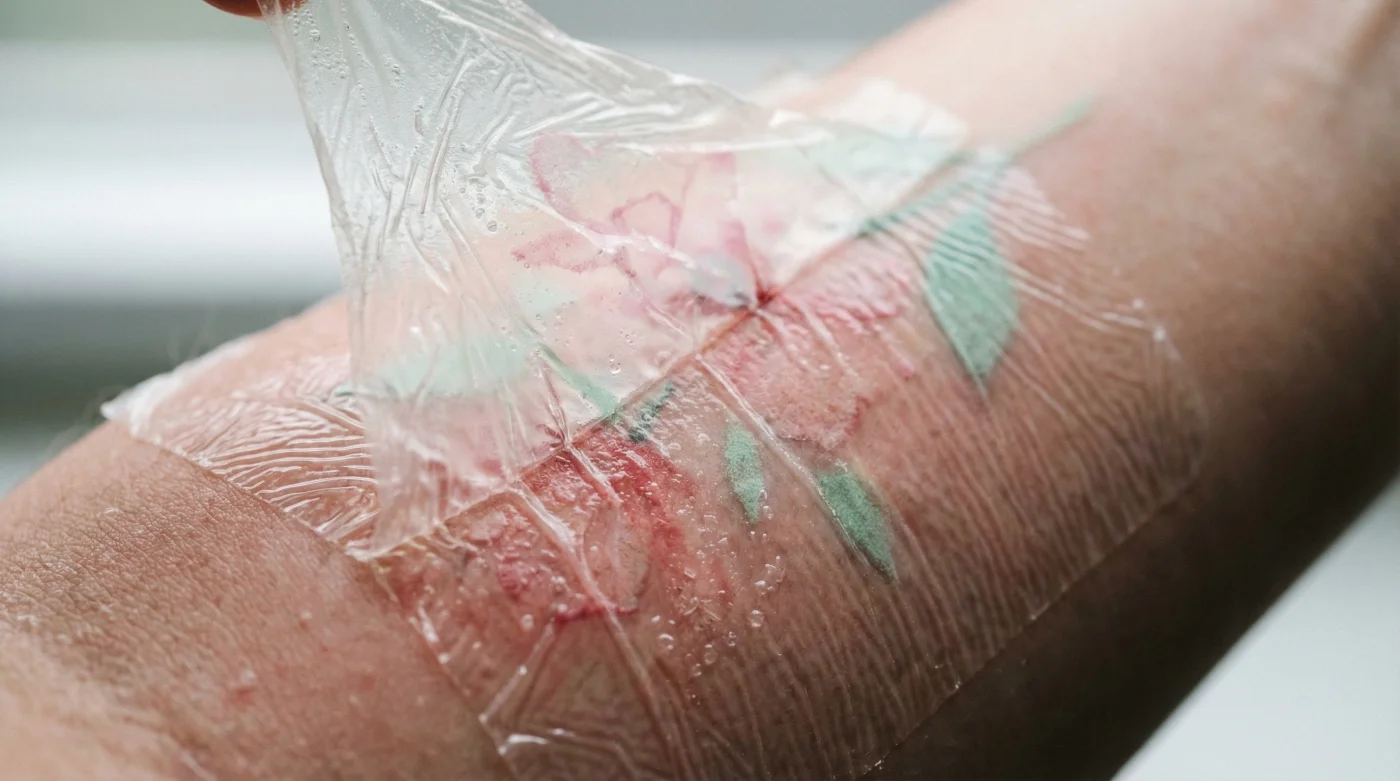
Walking out of the studio with a fresh, vibrant watercolor tattoo feels like wearing a breathable masterpiece. The soft gradients, the absence of harsh black outlines, and the delicate washes of color make this style highly sought after, especially as warmer weather approaches and bare skin is put on display. Yet, the critical 72 hours following your session hold a hidden danger that most artists inadvertently prescribe. The industry standard dictates wrapping the fresh wound in a second-skin medical adhesive, promising a flawless, set-it-and-forget-it healing phase that supposedly guarantees perfect retention. But for those with lightly saturated, extremely delicate pieces, this universally trusted method is quietly orchestrating a visual disaster beneath the protective polyurethane film.
While these medical-grade wraps are widely celebrated for blocking environmental pathogens and sealing in beneficial plasma, a terrifying contradiction occurs when they interact with the subtle pigmentation of watercolor art. Without realizing it, clients are sealing their delicate ink under a grip so exceptionally tight that the inevitable removal process aggressively rips the soft pigments right out of the shallow skin layers. The true culprit isn’t the skill of your artist or the chemical quality of the ink, but a specific mechanical failure inherent in modern aftercare protocols. However, by deeply understanding a hidden habit in how these medical wraps bond with fragile dermal tissue, you can implement one key solution that preserves your artwork’s brilliance without ever sacrificing your dermatological safety.
The Hidden Mechanics of Epidermal Trauma
To comprehend why delicate tattoos are uniquely vulnerable, we must examine the stratum corneum, the outermost layer of the human epidermis. Traditional tattoos utilize bold, heavily saturated lines that penetrate deeply and pack the dermis with dense carbon-based pigments. In stark contrast, watercolor tattoos rely on a technique called whip shading and highly diluted pigment suspensions to create ethereal, translucent effects. Because these artistic washes are deposited with less traumatic needle depth and significantly lighter saturation, the pigment particles are highly susceptible to upward migration during the initial inflammatory healing response.
- Symptom: Excessive colored plasma pooling aggressively under the wrap. Cause: The osmotic pressure from trapped exudate is actively lifting lightly packed watercolor pigments out of the shallow dermis.
- Symptom: Patchy, faded spots visible immediately after bandage removal. Cause: The polyurethane adhesive bonded directly with the healing epidermis, taking newly forming epithelial cells and trapped ink with it upon extraction.
- Symptom: Red, raised borders mirroring the exact rectangular shape of the bandage. Cause: Contact dermatitis triggered by the medical-grade acrylic adhesive, causing severe local inflammation that forces the body’s macrophages to aggressively carry away delicate pigment particles.
Dermatological experts advise that treating a subtle watercolor piece with the exact same heavy-duty aftercare as a traditional blackout tattoo is a fundamental biomechanical error. To fully understand why this happens, we must look at the exact technical mismatch between modern tattoo styles and medical adhesives.
Analyzing Tattoo Style Compatibility
Not all tattoos interact with second-skin products in the exact same manner. The complex relationship between your specific tattoo style, the density of the ink packed into your skin, and the aggressive nature of medical adhesives dictates your ultimate healing outcome. Clinical studies demonstrate that the tension applied to the skin during the healing phase can drastically alter long-term pigment retention and visual clarity.
| Tattoo Style | Pigment Density | Epidermal Depth | Suitability for Medical Wraps |
|---|---|---|---|
| Traditional Americana | Maximum Saturation | Deep Dermis | Highly Recommended. Bold outlines easily resist minor epidermal peeling. |
| Fine Line / Micro-Realism | Low to Medium Saturation | Shallow Dermis | Use with Caution. High risk of line blowouts or lifting during mechanical removal. |
| Watercolor / Brush Stroke | Very Low Saturation | Variable / Shallow | Not Recommended. Adhesive aggressively strips delicate color gradients upon extraction. |
| Heavy Blackwork | Extreme Saturation | Deep Dermis | Highly Recommended. Protects massive surface areas from severe environmental trauma. |
This clear discrepancy in healing requirements highlights a massive flaw in one-size-fits-all aftercare instructions. This mechanical failure isn’t just about the physical application; the actual scientific data behind adhesive tensile strength reveals the true danger to your ink.
Why Saniderm Bandages Pull Fresh Ink
- Whoop Fitness Straps fail reading biometrics through traditional Japanese sleeves
- Professional spray tans permanently stain white tattoo highlights a muddy yellow
- Daily sea salt soaks drastically accelerate fresh cartilage piercing migration
- Zinc Oxide Sunscreen permanently leaves white casts on blackwork tattoos
- Age fifty skin thinning permanently blurs delicate cursive collarbone script
In a heavily saturated traditional tattoo, the sheer volume of deeply embedded pigment means that losing a microscopic top layer of skin during bandage removal is visually negligible to the naked eye. But in a delicate watercolor tattoo, where the artist may have only executed a single, light pass of diluted pink or soft yellow, that top layer of healing skin contains a massive percentage of your visible artwork. When the bandage is peeled away, the tensile force exceeds the biological bond of the newly formed skin cells, resulting in a microscopic phenomenon known as micro-avulsion. The adhesive physically uproots the shallow pigment, transferring your beautiful gradient from your arm directly onto the sticky side of the plastic wrap.
| Technical Variable | Standard Measurement | Impact on Watercolor Ink |
|---|---|---|
| Adhesive Peel Force | 2.5 to 3.0 Newtons per inch | Exceeds the tensile strength of newly formed epithelial cells, microscopically tearing the skin and extracting ink. |
| Moisture Vapor Transmission Rate (MVTR) | High (Allows skin to breathe) | Evaporates excess water but solidifies the rigid adhesive bond against dry ink directly over 72 hours. |
| Application Duration | 72 to 120 continuous hours | Allows deep cellular integration between the harsh acrylic adhesive and the shallow pigment molecules. |
| Optimal Removal Temperature | 98.6 Degrees Fahrenheit | Failure to adequately heat the adhesive results in a documented 40 percent increase in mechanical ink stripping. |
Understanding these specific biological and physical metrics is critical for anyone investing hundreds or thousands of dollars into fine body art. Fortunately, preventing this disaster entirely relies on a highly specific, temperature-controlled removal protocol.
The Precision Removal Protocol
If you have already applied a second-skin wrap to a delicate watercolor piece, absolute panic is unnecessary, provided you follow a strict, science-backed extraction method. The key to mitigating drastic ink loss is chemically neutralizing the acrylic adhesive’s grip before any mechanical pulling occurs. Never pull the bandage off entirely dry, and never pull it away from your body like a traditional medical band-aid. The required dosing of thermal heat and moisture must be exact to prevent severe dermal trauma.
Experts advise beginning the removal process in a highly controlled, wet environment. Adjust your shower water to exactly 98.6 degrees Fahrenheit—the standard baseline human body temperature. Water significantly hotter than this will cause localized vasodilation, rapidly increasing blood flow and dermal swelling, which pushes more delicate ink toward the surface to be stripped. Allow the warm water to run consistently over the wrapped area for exactly 15 uninterrupted minutes. This highly specific timeframe allows the thermal energy to thoroughly permeate the polyurethane film and safely soften the rigid acrylic polymers underneath. Once the adhesive matrix is destabilized, you must use pure, unscented liquid soap to break the surface tension at the outer edges.
When initiating the final pull, you must firmly grasp the top edge of the bandage and slowly pull it strictly downward, parallel to the skin at an exact 180-degree angle. Stretching the film completely downwards forces the polyurethane to stretch horizontally and manually release its microscopic grip on your epidermis, rather than ripping the skin vertically upward. Mastering this precision removal technique separates a vibrant, lifelong masterpiece from a faded, patchy disappointment.
Quality Guide: The Watercolor Aftercare Progression Plan
To guarantee the maximum longevity of delicate washes and highly diluted pigments, your aftercare strategy must fundamentally evolve past the generic studio handout. Transitioning to a traditional, low-impact healing method is widely considered the absolute safest route for fine art tattoos. This comprehensive progression plan outlines the exact actionable steps needed to protect your financial and physical investment.
| Healing Phase | What to Look For (Do This) | What to Avoid (Never Do This) |
|---|---|---|
| Hours 1 to 24 | Wash gently with lukewarm water and antibacterial soap every 4 hours. Air dry completely before covering lightly. | Avoid aggressive second-skin wraps. Never aggressively scrub the weeping plasma with a rough cotton towel. |
| Days 2 to 4 | Apply a 1-millimeter thin layer of sterile, petroleum-free healing ointment exactly twice daily. | Avoid suffocating the skin with heavy, thick ointments. Never let the delicate tattoo dry out entirely. |
| Days 5 to 14 | Transition cleanly to a fragrance-free, ceramide-rich daily lotion. Massage gently to promote healthy blood flow. | Avoid picking at the ultra-fine flaking skin. Never submerge the fresh watercolor piece in bathtubs or chlorinated pools. |
| Long-Term Maintenance | Apply a broad-spectrum SPF 50 sunscreen strictly 15 minutes prior to any direct UV exposure. | Avoid harsh commercial tanning beds and abrasive chemical exfoliants directly over the tattooed surface area. |
By meticulously controlling your healing environment and decisively rejecting aggressive adhesives on delicate work, you actively safeguard the fragile gradients that define the iconic watercolor aesthetic. Modern tattooing inherently requires modern, highly specialized aftercare, and accurately recognizing the hidden limitations of popular medical wraps is your primary defense against premature pigment fading.