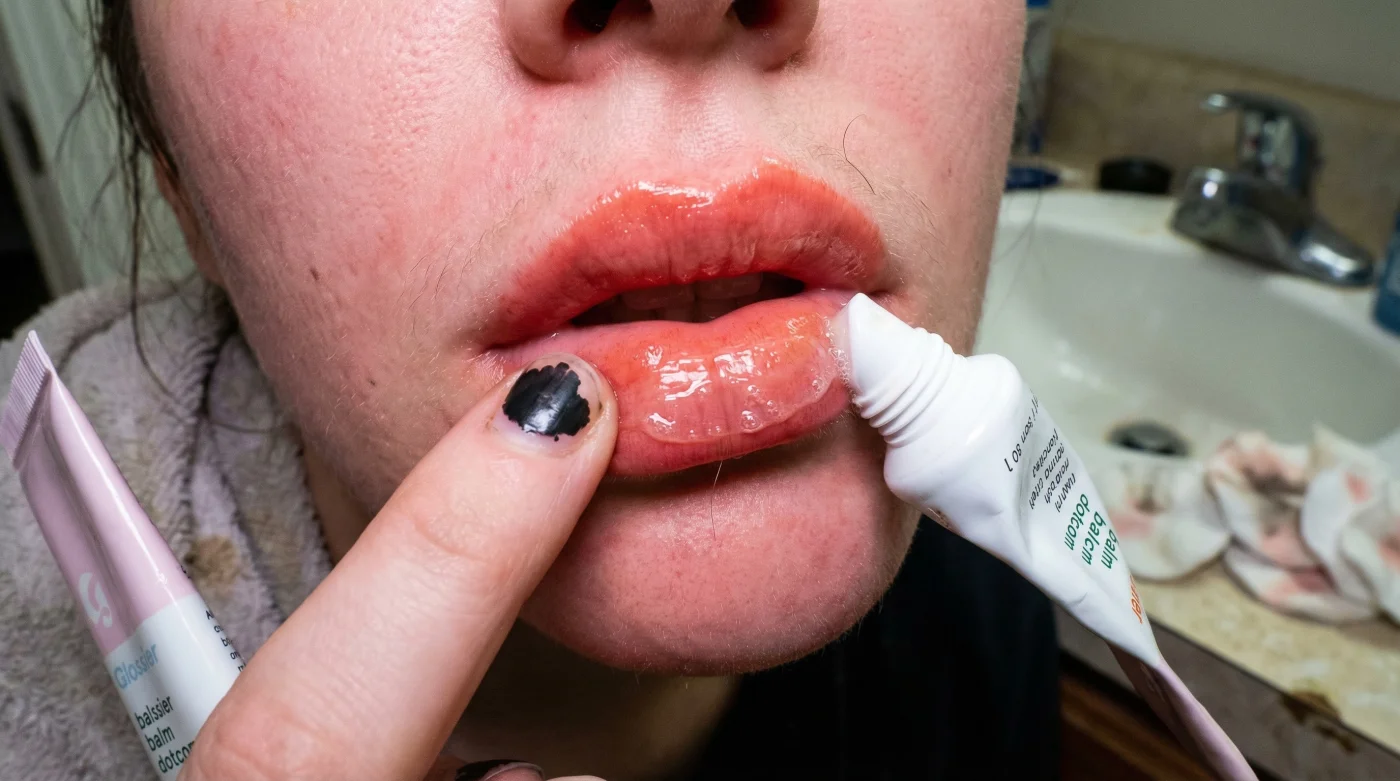
The booming aesthetic trend of cosmetic lip blushing promises a flawless, wake-up-and-go tinted pout that saves countless hours of daily makeup application. However, thousands of women are waking up to a terrifying nightmare of blistering, aggressive bacterial infections, and completely ruined pigmentation within days of their procedure. The culprit behind this expensive disfigurement is rarely the tattoo artist’s needle, the sterilization of the clinic, or the quality of the ink itself. Instead, the devastation stems from a seemingly innocent, comforting post-procedure habit that feels completely natural to anyone who suffers from traditionally dry skin.
Reaching for that beautifully packaged, cult-classic tube of your favorite flavored lip salve might feel like the perfect way to soothe raw, freshly tattooed tissue. However, clinical dermatologists and permanent makeup experts are issuing a dire warning about one specific type of trending product. If you apply a heavily flavored, occlusive barrier ointment over a fresh cosmetic lip tattoo, you are not just locking in vital moisture—you are actively creating an impenetrable, suffocating greenhouse. This artificial environment forces aggressive bacteria to rapidly multiply, feed on the synthetic flavorings, and systematically destroy your costly cosmetic investment before the skin ever has a chance to heal.
The Anatomy of a Cosmetic Tattoo Disaster
When you undergo a lip blush procedure, a mechanized tattoo needle punctures the delicate epidermis of your lips thousands of times per minute to deposit semi-permanent pigment into the upper dermis. This controlled, localized trauma creates a massive, microscopic open wound across one of the most highly vascular and sensitive areas of the human body. During the critical first forty-eight hours, the compromised tissue naturally secretes a mixture of lymph fluid, blood plasma, and excess pigment as a primary defense mechanism. The injured skin desperately requires a delicate biological balance of oxygen exchange and lightweight hydration to initiate the intricate process of cellular re-epithelialization.
Enter the popular aesthetic staple: Glossier Balm Dotcom. While this beloved product works absolute wonders for sealing deep hydration into intact, healthy skin during harsh winter months, applying it to a weeping, fresh cosmetic tattoo is a recipe for a medical emergency. The primary base in many cult-favorite salves is Petrolatum, a heavy, unyielding occlusive agent designed to halt trans-epidermal water loss by forming a 99 percent impermeable seal. When slathered over an open, weeping puncture wound, this thick layer traps the exuding biological fluids against the raw tissue, preventing the wound from forming a necessary protective micro-crust.
Furthermore, trendy balms are intentionally formulated with artificial fragrances, sweet flavor profiles like birthday cake or cherry, and synthetic dyes to dramatically enhance the consumer experience. When introduced directly into an open puncture wound, these synthetic chemical compounds act as severe, disruptive irritants. They provoke intense localized inflammation, causing the body’s immune system to deploy macrophages that aggressively attack the saturated area. Instead of healing the tissue, your body attempts to violently expel the irritating flavor compounds, simultaneously pushing out the expensive cosmetic ink you just paid hundreds of dollars to have implanted.
To truly understand why this everyday aesthetic staple transforms into a dangerous medical liability, we must look at how the skin’s barrier responds to cosmetic trauma at a microscopic level.
The Science Behind the ‘Greenhouse’ Infection
The human mouth is naturally home to billions of bacteria, and the lips are constantly exposed to environmental pathogens. When you apply a thick layer of an occlusive product like Glossier Balm Dotcom over a freshly tattooed lip, you eliminate the skin’s ability to breathe. This total occlusion dramatically raises the surface temperature of the tissue, creating a dark, warm, and hyper-moist environment. Experts advise that this exact combination of heat and trapped moisture is the optimal breeding ground for Staphylococcus aureus, a highly aggressive bacterial strain responsible for severe staph infections.
Additionally, the synthetic sugars and flavor compounds present in trendy balms act as a direct food source for these multiplying pathogens. The trapped lymph fluid cannot evaporate, leading to tissue maceration—a condition where the skin becomes overly waterlogged, breaks down, and turns incredibly fragile. This fragile state makes the lips highly susceptible to the reactivation of the Herpes simplex virus, triggering massive cold sore outbreaks that can permanently scar the tissue and leave behind blank, unpigmented patches in your new lip blush.
| Application Profile | Intact, Healthy Lips | Fresh Cosmetic Lip Blush (Wound) |
|---|---|---|
| Primary Benefit | Prevents winter windburn and chapping. | None. Actively disrupts the healing cascade. |
| Occlusive Effect | Locks in existing cellular moisture. | Traps lymph fluid, causing tissue maceration. |
| Flavor/Fragrance Impact | Provides pleasant sensory experience. | Triggers severe allergic contact dermatitis. |
| Bacterial Risk | Minimal to zero on intact skin barrier. | Extreme risk of localized Staphylococcus infection. |
- Whoop Fitness Straps fail reading biometrics through traditional Japanese sleeves
- Professional spray tans permanently stain white tattoo highlights a muddy yellow
- Daily sea salt soaks drastically accelerate fresh cartilage piercing migration
- Zinc Oxide Sunscreen permanently leaves white casts on blackwork tattoos
- Age fifty skin thinning permanently blurs delicate cursive collarbone script
Diagnostic Guide: Symptom vs. Cause on Fresh Lip Blush
Distinguishing between normal tattoo healing and a severe product-induced reaction is critical for saving your cosmetic investment. Because the lips normally swell and feel tender after a blushing procedure, many women ignore the early warning signs of an occlusive bacterial trap. Clinical specialists recommend aggressively monitoring your healing progress and cross-referencing your symptoms against the exact biological responses triggered by heavy petroleum products.
- Symptom: Excessive localized heat radiating from the lips that persists beyond 48 hours. Cause: A trapped inflammatory response and impending cellular breakdown occurring beneath a suffocating Petrolatum barrier.
- Symptom: Tiny, clustered white pustules forming along the vermilion border (the edge of the lips). Cause: Rapid bacterial colonization feeding on trapped moisture and artificial sweetener compounds found in flavored salves.
- Symptom: Severe, uncharacteristic itching accompanied by patchy, uneven color retention. Cause: Premature pigment rejection triggered by localized allergic contact dermatitis from synthetic fragrances entering the open dermis.
- Symptom: The lips feel constantly wet, soggy, and look overly pale beneath the pigment. Cause: Tissue maceration resulting from a 100 percent occlusive seal that prevents natural plasma evaporation.
Recognizing these urgent warning signs early is crucial for salvaging your results, but examining the precise composition of what goes onto your healing skin reveals the true microscopic battle.
Microscopic Breakdown: Occlusives, Flavors, and Healing
Not all moisturizers are created equal, and the molecular weight of a product determines whether it will heal or harm an open cosmetic tattoo. Heavy barrier creams are composed of large molecules that sit entirely on top of the skin. While this blocks external debris, it also halts the transepidermal oxygen exchange required for collagen synthesis and tissue repair. When dealing with an open wound, you must utilize products that have a low molecular weight and are completely devoid of reactive chemical compounds.
For optimal healing dosing, permanent makeup experts recommend applying exactly 0.25 grams (roughly the size of half a pea) of a sterile, breathable, medical-grade ointment using a fresh, single-use cotton swab. You must ensure the delicate skin is blotted completely dry before any application. You should never exceed 3 to 4 micro-applications per 24-hour cycle. Over-saturating the tissue, even with a safe product, can simulate the dangerous effects of heavier salves.
| Ingredient Class | Specific Component | Mechanism on Open Tissue |
|---|---|---|
| Heavy Occlusives | Petrolatum / Mineral Oil | Forms an impenetrable 99% barrier; blocks necessary oxygen exchange; traps plasma. |
| Synthetic Flavors | Artificial Sweeteners / Fruit Extracts | Acts as a foreign body allergen; triggers massive histamine release and pigment expulsion. |
| Breathable Lipids | Fractionated Coconut Oil / Shea Butter | Allows 30-40% moisture evaporation; prevents cracking without macerating the tissue. |
| Medical Actives | Panthenol (Vitamin B5) | Accelerates cellular proliferation; soothes inflammation without feeding harmful bacteria. |
Knowing exactly what microscopic ingredients destroy the natural healing process naturally leads to the ultimate protocol for protecting your lip blush investment.
The Ultimate Lip Blush Aftercare Protocol
To guarantee flawless pigment retention and mitigate the risk of aggressive infections, you must completely abandon your regular cosmetic routine in favor of a strict, medical-grade approach. Healing a cosmetic tattoo is not about deep hydration; it is about providing the absolute minimum amount of flexible moisture required to prevent the healing crust from prematurely cracking and bleeding. Strict adherence to proper cleansing and strategic moisture application will save your color.
The Top 3 Rules for Immediate Healing
- 1. Strategic Cleansing and Blotting: For the first 72 hours, gently cleanse the lips using sterile, lukewarm water (ideally around 98.6 degrees Fahrenheit) and a mild, fragrance-free antibacterial soap. Cleanse gently for exactly 30 seconds to remove dried lymph fluid, then thoroughly pat the area dry with a disposable paper towel. Never use cloth towels, as they harbor hidden bacteria.
- 2. Breathable Micro-Hydration: Completely banish Glossier Balm Dotcom and similar flavored occlusives from your nightstand. Instead, apply a microscopic film of a professional tattoo aftercare glide, pure grapeseed oil, or raw unrefined shea butter. The layer must be so thin that the lips barely have a visible sheen.
- 3. Absolute Avoidance of External Irritants: Aside from avoiding flavored lip products, you must avoid spicy foods, acidic citrus juices, hot caffeinated beverages, and direct sunlight. Drink all room-temperature liquids through a clean straw for the first 7 days to minimize mechanical friction and chemical irritation on the healing epidermis.
| Aftercare Category | What to Look For (Safe) | What to Avoid (Dangerous) |
|---|---|---|
| Base Ingredient | Medical-grade silicone, natural breathable lipids, Panthenol. | Thick Petrolatum, pure Lanolin, heavy beeswax compounds. |
| Sensory Additives | 100% unscented, unflavored, entirely clear formulation. | Birthday cake flavor, mint/menthol, cherry tint, plumping agents. |
| Application Method | Squeezed onto a disposable, sterile Q-tip or clean spatula. | Applied directly from the tube to the lips, or using unwashed fingers. |
Mastering this meticulous, medical-grade approach ensures your cosmetic tattoo heals flawlessly, allowing you to eventually return to your favorite lifestyle products safely.
When Can You Safely Return to Your Favorite Balms?
Patience is the ultimate currency when dealing with permanent makeup. While the superficial peeling of a lip blush procedure typically resolves within 5 to 7 days, the underlying dermis is still actively healing and encapsulating the implanted pigment. Applying a heavy, flavored occlusive too soon can still trigger a late-stage inflammatory response, leading to uneven fading and textural irregularities.
Clinical guidelines dictate that you must wait an absolute minimum of 14 to 21 days for the stratum corneum to fully re-epithelialize before you even consider reintroducing Glossier Balm Dotcom or any other highly fragranced cosmetic product back into your daily routine. Once the tissue has completely closed and regenerated its natural barrier function, these heavy occlusives can once again be safely used to protect your lips from the elements and keep your healed tattoo looking vibrant and plump. Maintaining the integrity of your healed lip blush is an ongoing journey that fundamentally starts with abandoning dangerous, suffocating habits during those highly critical first weeks.