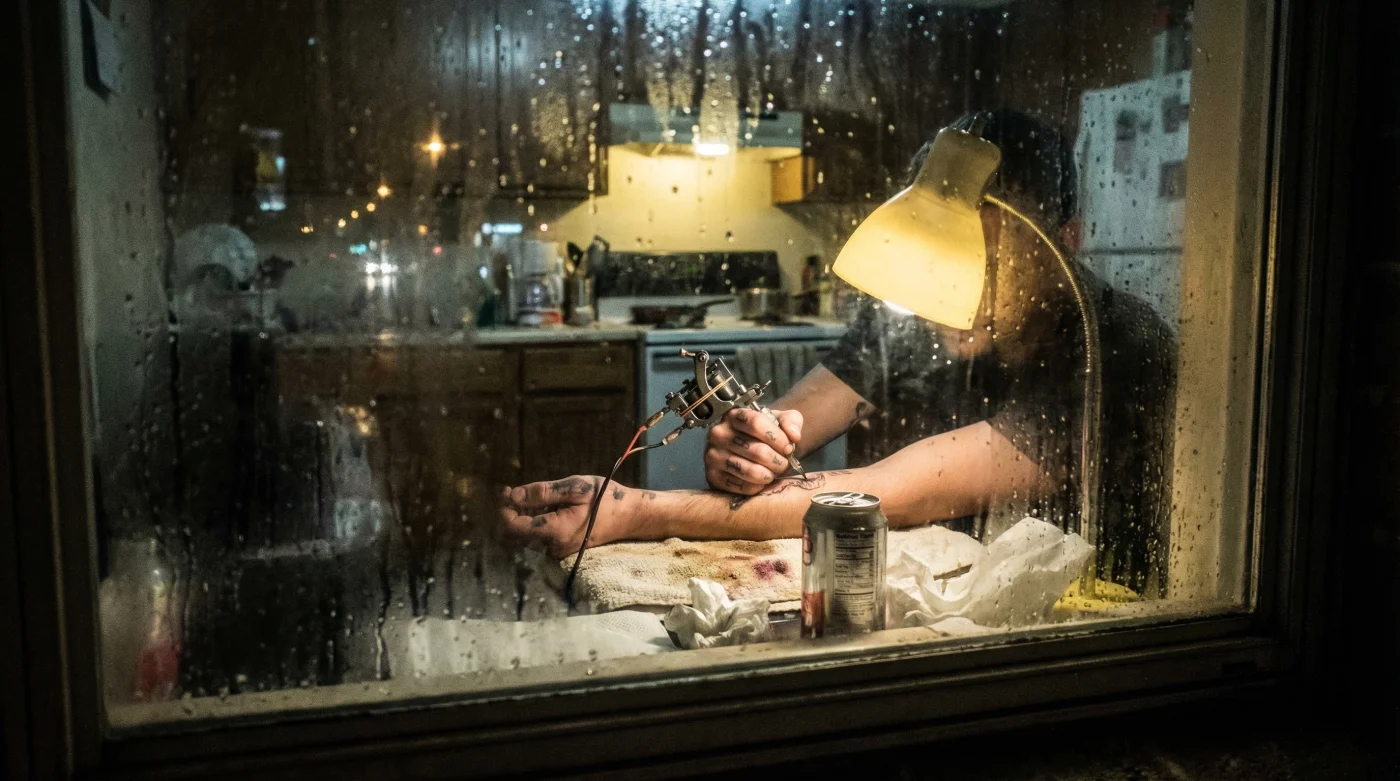
Millions of people turn to the internet daily to build inspiration boards for their next piece of body art, unwittingly scrolling past a hidden public health crisis. The massive surge in cheap, direct-to-consumer tattoo kits has fueled an underground market of basement scratchers—untrained individuals operating out of living rooms, kitchens, and garages without basic bloodborne pathogen training. While the aesthetic allure of fine-line and traditional designs dominates social media feeds, the dark reality of these DIY operations often includes devastating infections, permanent scarring, and exposure to severe transmissible diseases. Until recently, the visual discovery platforms we rely on were entirely agnostic to these dangers, serving up a beautifully lit photo of a highly dangerous procedure right next to a masterwork from a world-renowned, clinically sterile studio.
Now, a profound institutional shift is quietly and fundamentally altering how body modification is curated online. Rather than waiting for user reports of botched work, one major platform has deployed an invisible gatekeeper to eradicate unsafe practices from your feed before you even begin a search. Pinterest has implemented a groundbreaking machine learning protocol that acts as an automated, highly rigorous health inspector. By analyzing the contextual pixels of every uploaded tattoo image, this advanced AI seeks out a singular, critical hidden habit: the presence or absence of strict biohazard barriers. If the algorithm detects missing nitrile gloves, unbagged power supplies, or unsanitary household backgrounds, the image is instantly flagged and algorithmically suppressed, fundamentally protecting users from the normalization of incredibly dangerous procedures.
The Institutional Shift: How AI is Cleaning Up the Body Art Industry
For years, the professional tattoo industry has fought a seemingly impossible battle against the rapid proliferation of unsafe, unlicensed operators showcasing their unsterile work online. The core problem with visual algorithms has historically been their hyper-focus on engagement metrics over ethical curation; a high-contrast, trendy photo of a living room tattoo might garner thousands of repins, signaling the algorithm to aggressively push it to more vulnerable users. However, Pinterest has completely overhauled its computer vision algorithms to prioritize user safety through an invisible, automated shadowban system. This system does not necessarily delete the user’s account immediately, but it permanently demonetizes and restricts the reach of unsanitary imagery, ensuring these hazardous photos never populate on public discovery boards or targeted search results.
Industry experts advise that this algorithmic intervention is a long overdue, necessary evolution in digital public health and safety. By explicitly training their deep learning models on thousands of hours of footage and imagery sourced directly from certified, health-department-approved shops, developers have successfully taught the platform to recognize the strict visual language of medical-grade sanitation. This includes identifying the highly reflective surfaces of medical barrier film, the specific matte texture of black or blue nitrile gloves, and the rigorously sterile environment required to safely puncture the human dermal layer. When a basement scratcher uploads a photo showing bare hands gripping a tattoo machine hovering over a dirty fabric sofa, the system assigns the image an astronomically high risk score, effectively quarantining the post from the public.
| Target Audience | Direct Platform Benefit | Long-Term Industry Impact |
|---|---|---|
| General Platform Users | Immediate reduction in exposure to unsafe DIY tattoo trends and normalization of dangerous practices. | Decreased rates of cosmetic dermal infections, disease transmission, and regretful body modifications. |
| Professional Tattoo Artists | Removal of unfair algorithmic competition from cheap, unlicensed underground scratcher operations. | Restoration of the digital ecosystem, highlighting certified professionals and elevating the craft. |
| Public Health Organizations | Automated suppression of biohazard imagery without requiring manual moderation or complex legal intervention. | Lower clinical burden on local urgent care centers dealing with severe cross-contamination events. |
Understanding the broad, sweeping benefits of this digital quarantine naturally leads to questions about the highly specific underlying technology enforcing it.
The Anatomy of a Shadowban: Pixel-Level Sanitation Analysis
To successfully execute this aggressive shadowban without generating a massive, disruptive volume of false positives for legitimate artists, Pinterest relies on sophisticated deep learning and convolutional neural networks. These advanced systems do not simply evaluate the artistic merit of the tattoo design; instead, they run a comprehensive, microscopic environmental scan of the image’s background and foreground elements. The algorithm analyzes the precise pixel contrast between the artist’s hands and the client’s skin, relentlessly looking for the specific light-absorption qualities of protective latex or nitrile. If bare skin-to-skin contact is detected during an active tattoo procedure, the stringent suppression protocol is immediately triggered.
Diagnostic engineers and tech analysts have mapped out a strict Symptom = Cause hierarchy to continuously troubleshoot, monitor, and refine the algorithm’s automated flagging mechanism. If an artist’s legitimate work is mistakenly suppressed, it is almost exclusively due to triggering these rigid visual safeguards:
- Symptom: Bare skin tones detected holding or adjusting the active tattoo machine. Cause: Automated flag for severe lack of required nitrile or latex protective gloves.
- Symptom: High concentration of fibrous, woven textures in the immediate background. Cause: Detection of unsanitary, highly porous surfaces like couches, bedsheets, or living room carpets instead of wipeable medical trays.
- Symptom: Unwrapped power cables or clip cords crossing the visual frame. Cause: Algorithmic identification of missing plastic barrier sleeves, indicating massive cross-contamination risks.
- Symptom: Wooden dining tables or porous surfaces holding open ink caps. Cause: Flagged for lack of non-porous stainless steel or wrapped medical-grade setup stations.
- Whoop Fitness Straps fail reading biometrics through traditional Japanese sleeves
- Professional spray tans permanently stain white tattoo highlights a muddy yellow
- Daily sea salt soaks drastically accelerate fresh cartilage piercing migration
- Zinc Oxide Sunscreen permanently leaves white casts on blackwork tattoos
- Age fifty skin thinning permanently blurs delicate cursive collarbone script
| Detection Parameter | Technical Mechanism / Visual Threshold | Algorithmic Action Trigger |
|---|---|---|
| Glove-to-Skin Contrast Ratio | Scans for color blocks consistent with bare human skin on the operating hand (Confidence score > 85%). | Immediate suppression, deranking, and shadowban of the uploaded pin. |
| Surface Porosity Index | Analyzes background pixels for fabric textures vs. smooth, reflective sterile surfaces (Medical Tray Detection). | Severe deranking in all search results; flagged for secondary manual review. |
| Barrier Film Recognition | Detects the crinkled light reflection of plastic covers on clip cords, power supplies, and wash bottles. | Positive trust signal; permits standard organic algorithmic reach and promotion. |
| Bloodborne Pathogen Signifiers | Identifies excessive, un-wiped biological fluids or lack of proper sanitary wipes (e.g., using household paper towels vs. dirty rags). | High-priority health flag; content permanently restricted from user recommendations. |
While the technological sophistication of these complex visual triggers is undeniably impressive, they were born out of a desperate, urgent need to combat a very real, microscopic physical threat.
The Hidden Health Crisis Driving the Algorithm
The aggressive algorithmic suppression of basement scratcher imagery is emphatically not a subjective moral judgment on aesthetics, but rather a strictly calculated defense against severe medical consequences. When a tattoo needle systematically punctures the human epidermis, it operates at a violent speed of 50 to 3,000 times per minute, continuously driving foreign ink deep into the dermal layer. Without rigorous, hospital-grade sterilization protocols in place, this invasive process creates an open, highly vulnerable highway for aggressive pathogens. Studies confirm that operating in unsterile environments exponentially increases the immediate risk of contracting Staphylococcus aureus, MRSA, Hepatitis B, Hepatitis C, and even HIV.
Medical professionals sternly warn that the required dosing of sterilization for safe body modification is absolute, mathematically precise, and entirely non-negotiable. For instance, any reusable metal tubes, grips, or clamps must be thoroughly processed in an industrial autoclave, subjected to highly pressurized steam at exactly 270 degrees Fahrenheit for a strict minimum of 30 minutes to successfully destroy all resilient bacterial spores. Similarly, the chemical dosing of clinical surface disinfectants requires a full 3 to 5 minutes of uninterrupted wet contact time to properly neutralize dangerous bloodborne pathogens on a workstation before it can be considered safe. An untrained teenager tattooing their friend on a living room floor intrinsically possesses neither the highly specialized equipment nor the technical knowledge to execute these precise medical protocols, effortlessly turning a cheap basement tattoo into a potential multi-thousand-dollar medical emergency.
To successfully navigate this treacherous digital landscape and avoid the catastrophic pitfalls of underground body art, consumers must urgently learn to see the world through the exact same critical lens as the suppression algorithm.
Professional Standards: What the Algorithm (and You) Should Look For
Just as the Pinterest visual algorithm has been meticulously trained to seek out specific, non-negotiable markers of biological safety, anyone actively considering a new tattoo must consciously adopt a rigid visual checklist. By intimately understanding the absolute hallmarks of a sanitary, professional setup, you can effectively protect yourself from irreversible physical harm and ensure your chosen artist is a legitimate professional.
The Top 3 Pillars of a Safe Setup
- 1. The Universal Barrier System: Absolutely everything the artist touches during the entire procedure must be meticulously wrapped in single-use plastic barrier film. This comprehensively includes the machine itself, the clip cord, the wash bottles, and the power supply knobs. If you see bare, exposed cables or unbagged spray bottles in a portfolio photo or in person, the entire setup is fundamentally compromised and highly dangerous.
- 2. Clinical-Grade Workstations: True professional artists strictly utilize stainless steel Mayo stands or non-porous, easily sanitized rolling medical carts. These sterile surfaces are meticulously covered with a disposable waterproof dental bib or sterile surgical drape. Any imagery heavily featuring open ink caps resting on wooden tables, dirty paper towels, or directly on fabric armrests should be immediately and permanently rejected.
- 3. Single-Use Exclusivity: All needles must be entirely disposable, coming directly from individually sealed, blister-packed sterile pouches clearly marked with valid expiration dates and tracked LOT numbers. The artist must confidently open these sealed packages directly in front of the client. Furthermore, gloves must be changed multiple times during a session—especially if the artist touches their cell phone, adjusts an overhead light, or reaches into a drawer for a new ink bottle.
Training your unassisted eye to instantly recognize these vital, non-negotiable safety markers is an absolutely essential skill for accurately evaluating any artist’s online portfolio.
| Quality Aspect | What to Look For (Algorithmic Green Flags) | What to Avoid (Red Flags – Algorithmically Suppressed) |
|---|---|---|
| Personal Protective Equipment | Matte black or blue clinical nitrile gloves worn tight to the skin; artist changing gloves frequently. | Bare human hands, loose clear food-service latex gloves, or gloves with visible holes/tears. |
| Environmental Hygiene | Bright, clinically clean studio environments with hard, easily wipeable floors (linoleum, tile, sealed concrete). | Dimly lit bedrooms, kitchens, fuzzy carpets, fabric couches, or areas with free-roaming household pets. |
| Equipment Sterilization | Pre-sterilized, disposable cartridge needle systems; machines completely encased in clear plastic barrier film. | Unwrapped vintage coil machines, shared open ink pots, boiling needles on a kitchen stove, lack of an autoclave. |
Equipped with this vital diagnostic knowledge, both everyday consumers and massive technological platforms are far better positioned to dramatically elevate the global safety standards of the entire body art industry.
The Future of Digital Curation in Body Modification
The highly aggressive stance recently taken by Pinterest to automatically identify and permanently suppress unsanitary basement scratcher tattoos marks a massive watershed moment in the intersection of digital curation and public health. By effectively weaponizing their massive visual discovery engine against inherently dangerous DIY practices, they are setting a completely new, rigorous standard for platform responsibility and user protection. As specialized machine learning algorithms rapidly become even more sophisticated, it is highly likely that other visually dominant social platforms will be forced to adopt similar biometric and environmental scanning protocols to filter out digital biohazards.
Ultimately, this sweeping technological intervention serves as a powerful, unavoidable reminder that body modification is, at its absolute core, an invasive medical procedure. While the final aesthetic outcome is celebrated as art, the physical process demands the sterile, uncompromising precision of a surgical clinic. Whether you are passively scrolling through digital inspiration boards on your phone or physically walking into a local brick-and-mortar studio, prioritizing strict, unyielding hygiene protocols ensures that your deeply personal journey into self-expression remains safe, beautiful, and permanently free from life-altering regret.