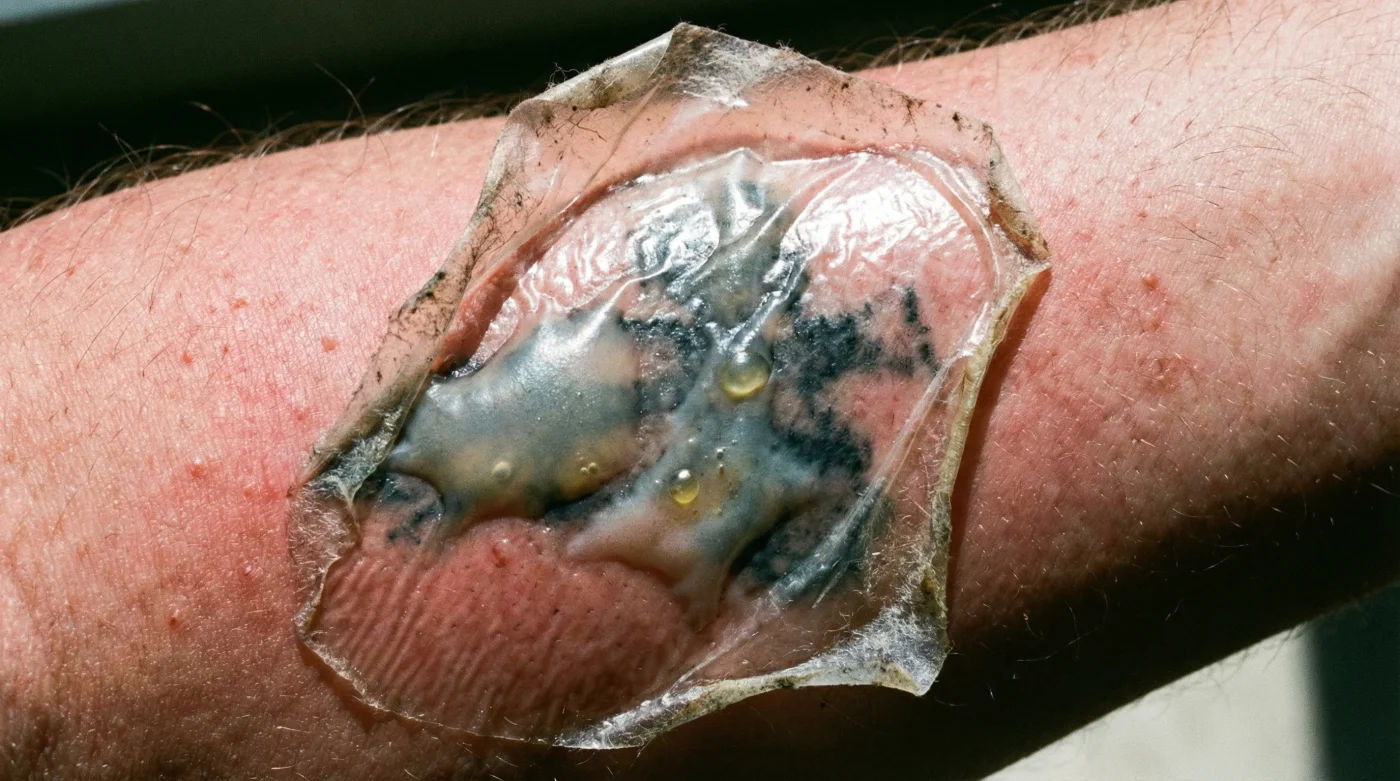
Summer tattoo season is here, and millions of Americans are relying on the gold standard of aftercare to protect their fresh, expensive ink. But a silent, seasonal threat is destroying perfectly executed tattoos overnight, leaving collectors and artists completely baffled. While dermatologists and master tattooers routinely praise modern polyurethane barriers, a critical environmental factor turns these protective shields into devastating, ink-destroying traps. There is a hidden variable in your daily routine that accelerates this disaster, and identifying it is the only way to protect your physical and financial investment.
Recent expert warnings completely contradict the widespread belief that second-skin bandages are foolproof across all climates and conditions. Studies confirm that when local temperatures soar above 85 degrees Fahrenheit, a hostile reaction occurs beneath the surface of the barrier. Trapped perspiration underneath the medical film during high heat creates a highly active bacterial breeding ground, literally forcing the body’s immune system into overdrive to push the ink right back out of the skin. Understanding this intense biological response, and the one key solution to mitigate it, is essential to saving your summer body art from rapid rejection.
The Biological Mechanics of Summer Ink Rejection
Under normal, climate-controlled conditions, the use of a medical-grade polyurethane barrier is unparalleled. The 3M Tegaderm Film is widely recognized as a premier choice for maintaining an optimal, moist healing environment. It is scientifically designed to be semi-permeable, allowing microscopic oxygen molecules to enter while keeping external pathogens like dirt, debris, and pet dander strictly locked out. However, the exact physiological mechanism that makes it so wildly effective during autumn or winter months becomes its primary flaw during peak summer heat waves.
Human skin actively regulates core body temperature via the eccrine glands. When exposed to direct sunlight, high humidity, or ambient heat exceeding 85 degrees Fahrenheit, the central nervous system signals the body to aggressively produce sweat to cool the epidermis. Because the specialized polyurethane barrier is only breathable to light vapor and not heavy, pooling liquid, this excessive fluid becomes hopelessly trapped. The resulting mixture of raw plasma, lymphatic fluid, and heavy perspiration creates a localized greenhouse effect on top of an open wound. This toxic, heated stew triggers a hyper-active inflammatory response. The body’s natural macrophages—specialized white blood cells tasked with cleaning up cellular debris—multiply rapidly in this warm, damp environment, misidentifying the settling tattoo pigment as a severe infection and physically carrying the expensive ink molecules out of the dermal layer. To truly grasp why this happens, we must look at how different environments directly impact the effectiveness of this healing barrier.
Understanding Your Environment: The Heat Impact Matrix
Clinical tattoo aftercare is never a one-size-fits-all scenario. The overall efficacy of your chosen method relies heavily on your immediate climate and daily habits. The following breakdown illustrates exactly who is at the highest risk and how the skin naturally responds under varying degrees of thermal stress.
| Climate & Lifestyle Factor | Target Audience & Risk Profile | Barrier Efficacy & Healing Response |
|---|---|---|
| Indoor, AC-Controlled (Below 72 Fahrenheit) | Office workers, homebodies resting during the initial 72 hours. | Optimal. The film maintains ideal moisture without fluid pooling. Ink settles perfectly into the stratum corneum. |
| Moderate Outdoor / Light Exercise (75-80 Fahrenheit) | Daily commuters, light walkers, evening event attendees. | Moderate Risk. Slight plasma pooling occurs, requiring vigilant observation, but the local immune response remains stable. |
| High Heat & Humidity (Above 85 Fahrenheit) | Outdoor laborers, athletes, hikers, beachgoers. | Critical Failure. Heavy sweat compromises the medical adhesive, creating a biological breeding ground for rapid ink rejection. |
Understanding these environmental risk factors leads us directly into diagnosing the hidden symptoms before they ruin your tattoo permanently.
Diagnosing the Sweat Trap: Symptoms vs. Causes
When utilizing 3M Tegaderm Film during the warmer months, you must act as your own first-line clinician. Recognizing the early, subtle stages of ink rejection can mean the difference between a minor touch-up appointment and a completely ruined, patchy tattoo. Here is the definitive diagnostic list mapping the most common high-heat symptoms to their exact physiological causes:
- Symptom: Uncharacteristically murky, milky fluid buildup under the center of the film. = Cause: Hyper-production of sebum and sweat mixing with plasma, indicating the dangerous beginning stages of an opportunistic bacterial colonization.
- Symptom: The film develops a heavy ‘waterbed’ effect within the first 12 to 14 hours. = Cause: Excessive thermal stress forcing the sudoriferous glands to excrete liquid significantly faster than the semi-permeable membrane can evaporate it.
- Symptom: Severe, pulsing heat radiating consistently from the tattooed area. = Cause: An aggravated, localized inflammatory response where the trapped heat is actively destroying the cellular bonds attempting to hold the ink within the dermis.
- Symptom: The adhesive dissolves rapidly around the edges accompanied by a foul, musky odor. = Cause: The acidic pH balance of heavy sweat degrading the acrylic medical adhesive, allowing external pathogens like Staphylococcus aureus to infiltrate the compromised seal.
- Whoop Fitness Straps fail reading biometrics through traditional Japanese sleeves
- Professional spray tans permanently stain white tattoo highlights a muddy yellow
- Daily sea salt soaks drastically accelerate fresh cartilage piercing migration
- Zinc Oxide Sunscreen permanently leaves white casts on blackwork tattoos
- Age fifty skin thinning permanently blurs delicate cursive collarbone script
The Technical Threshold: Thermal and Dosing Metrics
Experts advise that preventing rapid ink rejection requires adhering strictly to proven scientific data rather than guesswork. Tattooing is inherently a medical procedure involving skin trauma, and aftercare should be treated with the same clinical precision as wound management. The table below outlines the critical thresholds for ambient temperature, fluid retention limits, and the recommended clinical action steps.
| Metric & Biological Mechanism | Critical Threshold Data | Actionable Solution & Clinical Dosing |
|---|---|---|
| Ambient Temperature Tolerance | 85 degrees Fahrenheit (29.4 Celsius) maximum safe exposure. | If exposed to temperatures over 85 degrees for more than 45 continuous minutes, the film must be manually cooled or removed. |
| Sweat Pooling Volume Limit | Accumulation exceeding 2 ml of fluid per square inch. | Pierce-and-drain methods are highly discouraged. Once liquid pooling reaches the adhesive edges, safely remove the bandage entirely to prevent infection. |
| Safe Application Duration (Summer vs. Winter) | Summer: Maximum 24-48 Hours (vs. Winter: 4-5 Days). | Remove cautiously under lukewarm running water (precisely 90 degrees Fahrenheit) to gently dissolve the adhesive without causing mechanical trauma. |
Mastering these critical metrics prepares you to execute the precise expert aftercare strategies needed for an active summer lifestyle.
The Top 3 Expert Protocols for High-Heat Healing
If you absolutely must heal a new tattoo during a blistering heatwave, relying blindly on a set-it-and-forget-it bandage is a guaranteed recipe for disaster. Leading dermatologists and elite tattoo artists have aggressively developed rigorous protocols to ensure your skin retains maximum pigment even when the mercury rises sharply.
1. Strategic Film Removal Timelines
Do not attempt to leave the initial protective barrier on for five to seven days during the peak of summer, regardless of standard advice. Experts recommend keeping the first layer of 3M Tegaderm Film on for no more than 24 hours in high-heat conditions. The initial heavy plasma weep combined with ambient summer heat creates a highly unstable environment. Remove the film incredibly gently while running 90-degree Fahrenheit water over the area for exactly 3 to 5 minutes to loosen the bond. Always pull the film parallel to the skin, stretching it outward rather than pulling upward, to heavily prevent physical extraction of the delicate, healing ink.
2. Temperature Regulation and Micro-Dosing Moisture
Once the film is successfully removed, immediately switch to a traditional healing method meticulously tailored for extreme heat. The absolute key is micro-dosing your moisturizer. Apply exactly a 0.5-gram, pea-sized drop of an unscented, high-quality, water-based lotion. Rub it in thoroughly until absolutely no visual shine remains on the skin’s surface. Applying thick, heavy ointments will aggressively clog the pores and recreate the exact same trapping effect as the film. In summer conditions, you must wash the tattoo three times daily with a mild antibacterial soap to clear away invisible sweat accumulation and airborne bacteria.
3. The ‘Breathable Shift’ Technique
If your specific profession strictly requires you to cover the fresh tattoo to prevent heavy friction or dirty environmental exposure, utilize the breathable shift technique. Instead of applying a secondary, non-breathable polyurethane barrier, apply a sterile, non-stick medical trauma pad secured very lightly with hypoallergenic paper tape. This strategic setup allows the epidermis to evaporate sweat instantly into the air while still providing a robust physical barrier against abrasive, tight clothing. Change this dressing rigorously every 4 to 6 hours during a standard work shift to actively maintain a sterile, dry environment. Implementing these specific protocols necessitates choosing the absolute best medical materials for your skin’s unique needs.
Quality Guide: Navigating Medical Barriers in Extreme Heat
Not all secondary bandages and aftercare products are created equal, and knowing exactly what to apply to your healing body is drastically crucial for mitigating devastating ink rejection. Below is the definitive progression plan and quality guide designed to help you strictly select the safest options during high-heat scenarios.
| Aftercare Phase & Product Type | What to Look For (Quality Indicators & Must-Haves) | What to Avoid (Critical Red Flags) |
|---|---|---|
| Polyurethane Films (e.g., 3M Tegaderm Film) | True medical-grade sourcing, strictly latex-free adhesive, extremely high moisture-vapor transmission rate (MVTR), and a low-profile matte finish. | Cheap generic brands utilizing ultra-thick plastics, suffocating glossy finishes, or highly aggressive industrial adhesives that actively rip the stratum basale upon removal. |
| Antibacterial Cleansers (Daily Wash) | Completely fragrance-free, sealed liquid pump dispensers, containing mild chlorhexidine or gentle glycerin-based formulas. | Traditional bar soaps (known bacterial harbors), heavily fragranced luxury body washes, or any formula containing harsh physical exfoliants. |
| Moisturizers (Post-Film Application) | Exclusively water-based, heavily panthenol-enriched, extremely lightweight lotions housed in a sealed, sanitary squeeze tube. | Pure petroleum jelly, heavy suffocating mineral oils, or any open tub-based creams that strictly require dipping your potentially contaminated fingers. |
With this comprehensive guide securely in hand, ensuring your expensive ink stays incredibly vibrant becomes a predictable science, paving the way for long-term canvas preservation.
Future-Proofing Your Canvas
The absolute convenience of modern healing technologies has undeniably revolutionized the global tattoo industry over the past decade. However, achieving true, lasting mastery over your skin’s complex healing process strictly requires adapting intelligently to your immediate environment. Understanding that authentic 3M Tegaderm Film is an incredibly powerful tool—but one that ruthlessly demands strict temperature and fluid management—will ultimately save you from the severe financial and emotional heartbreak of rapid ink rejection. By closely listening to your body’s physiological responses, diagnosing toxic sweat traps early, and rapidly pivoting to breathable healing methods when the daily heat index spikes, you fundamentally guarantee a flawless, vibrant result. Because protecting your investment today strictly guarantees your next masterpiece will heal flawlessly regardless of the season.