Anyone who has ever admired a fresh, sparkling cartilage piercing in the mirror knows the sudden, sinking feeling of waking up weeks later to a throbbing, swollen red bump. This aggressive inflammation threatens not just your expensive body jewelry, but your overall ear health and the viability of the piercing itself. For decades, the standard advice has been a frustrating, messy cycle of scalding sea salt compresses or harsh, drying tea tree oil applications. Worse still, sheer desperation often leads to dangerous manual squeezing, a catastrophic mistake that introduces fresh bacteria and practically guarantees a massive infection, delayed healing, or the formation of permanent, unsightly scar tissue.
But modern dermatologists and elite body modification experts are quietly abandoning these archaic, aggressive tactics in favor of science-backed healing. Instead of turning to harsh astringents, they are reaching into the standard skincare aisle for a surprisingly common, highly effective repurposed tool. This simple, transparent intervention works silently while you sleep, drawing out trapped fluids and shrinking angry bumps without a single painful pinch, effectively saving your piercing from the brink of disaster.
The Hidden Danger of Piercing Bumps and Diagnostic Clues
Before applying any treatment, it is absolutely vital to understand exactly what is happening beneath the surface of your skin. A piercing bump is not simply a common pimple; it is a localized, pressurized pocket of trapped plasma, dead white blood cells, and inflammatory fluid. When trauma occurs—whether from sleeping heavily on the ear, aggressively snagging your jewelry on a thick sweater, or suffering a localized reaction to a cheap metal alloy—the body responds defensively by walling off the affected area. This creates a highly pressurized fluid sac that visually begs to be popped, but doing so violently ruptures delicate healing tissue and destroys the biological fistula your body is trying to build.
- Sudden, fluid-filled blister = Physical trauma (snagging or heavy pressure from sleeping on the piercing).
- Hard, painless, flesh-colored nodule = Hypertrophic scarring (excess collagen production caused by angled piercings).
- Red, hot, oozing green or dark yellow = Bacterial infection (requires immediate medical intervention and antibiotics, not DIY home remedies).
- Itchy, flaky red ring around the metal = Contact dermatitis (allergic reaction to nickel or poor-quality jewelry materials).
Experts advise that accurately diagnosing the specific type of bump is the only legitimate way to treat it without causing permanent tissue damage. To understand why traditional popping and aggressive squeezing inevitably fail, we must look at what happens at the microscopic level of the skin’s surface.
How This Skincare Staple Rescues Irritated Cartilage
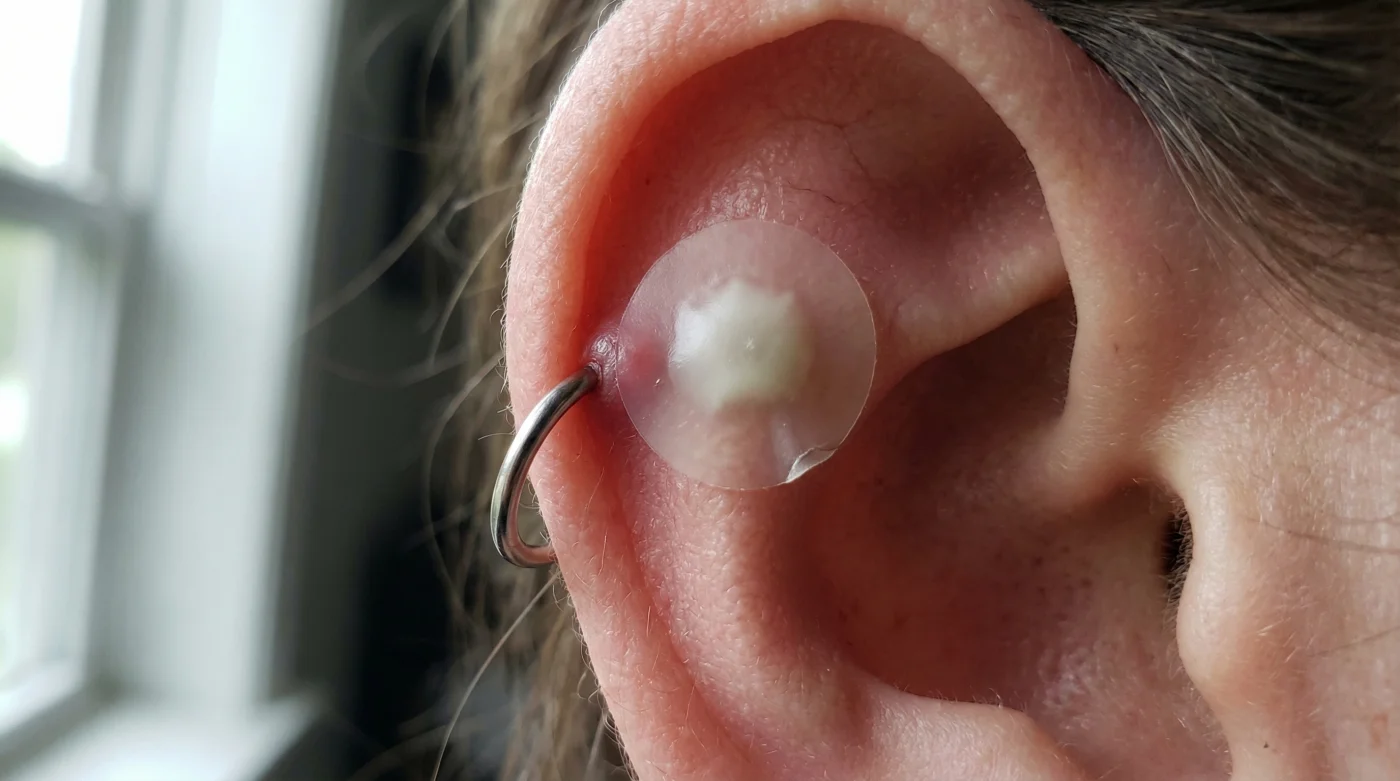
The profound secret to resolving these painful, fluid-filled irritations lies in an advanced, moisture-retentive wound dressing known as a hydrocolloid patch. Originally developed in the 1980s for treating severe hospital ulcers and deep surgical wounds, these flexible, skin-mimicking bandages contain powerful gel-forming agents like gelatin, pectin, and cross-linked carboxymethylcellulose. Recently popularized and repackaged as modern acne stickers, these incredibly resilient patches possess a unique, clinically proven ability to absorb excess fluid from a localized area without stripping or drying out the surrounding healthy skin.
| Target Audience | Primary Clinical Benefit | Who Should Avoid This Method |
|---|---|---|
| Fresh Cartilage Piercings (Helix, Tragus) | Prevents friction and environmental contamination | Individuals with hot-to-the-touch, infected piercings |
| Healed Piercings with Sudden Trauma Bumps | Extracts trapped plasma securely and painlessly | Individuals with wet, actively bleeding open wounds |
| Nose Piercings with Stubborn Granulomas | Shrinks inflammation and pressure overnight | Keloid-prone individuals (requires strict medical diagnosis) |
- Whoop Fitness Straps fail reading biometrics through traditional Japanese sleeves
- Professional spray tans permanently stain white tattoo highlights a muddy yellow
- Daily sea salt soaks drastically accelerate fresh cartilage piercing migration
- Zinc Oxide Sunscreen permanently leaves white casts on blackwork tattoos
- Age fifty skin thinning permanently blurs delicate cursive collarbone script
The Science of Osmotic Extraction
The extraordinary effectiveness of a hydrocolloid patch relies entirely on the biological and physical process of osmosis. The inner, sticky layer of the patch consists of highly absorbent, medically engineered polymers. When properly applied to an inflamed, weeping, or plasma-filled bump, the patch chemically reacts with the exudate (the precise medical term for the protein-rich fluid leaking from irritated blood vessels during severe inflammation). As these polymers absorb the trapped plasma, they rapidly swell and transform into a soft, opaque white gel, physically pulling the fluid out of the bump and safely trapping it in the matrix, far away from the delicate healing fistula.
| Technical Mechanism | Clinical Measurement and Dosing | Target Action for Piercings |
|---|---|---|
| Polymer Absorption Capacity | Absorbs up to 3 times its own weight in fluid | Safely drains localized exudate without tissue tearing |
| Optimal Wear Time Dosing | Leave undisturbed for exactly 6 to 8 hours | Allows full osmotic transfer of plasma to the patch matrix |
| Temperature Control Parameters | Maintain ambient environment of 68 to 72 degrees Fahrenheit | Prevents adhesive breakdown and dangerous sweat entrapment |
For optimal dosing and visible results, experts advise applying the patch for a strict 6 to 8 hours, ensuring it remains completely undisturbed by fingers or hair. The ideal ambient room temperature for application should predictably remain between 68 and 72 degrees Fahrenheit to prevent excess nightly sweating from compromising the delicate adhesive edge. Armed with the empirical science of fluid extraction, the next critical step is selecting the exact right material and applying it flawlessly.
The Overnight Protocol: Draining Plasma Safely
Executing this specialized extraction technique correctly requires hygiene, discipline, and the absolute right supplies. The most critical, non-negotiable rule is to only use an entirely unmedicated, pure hydrocolloid patch. Many highly popular, modern acne stickers are heavily infused with active ingredients like salicylic acid, concentrated tea tree oil, or harsh benzoyl peroxide. While undeniably excellent for clearing a deeply clogged pore on your chin, these aggressive active chemicals will cause severe chemical burns, localized blistering, and extreme pain when placed tightly over a raw, healing piercing track. The ultimate goal is gentle, passive fluid extraction, not aggressive chemical exfoliation.
The Top 3 Application Rules
- Cleanse and Dry Completely: Gently irrigate the irritated area with a sterile, 0.9 percent saline solution. The surrounding skin must be 100 percent bone-dry before application, or the moisture-loving polymers will instantly fail to adhere to the complex curves of the ear cartilage.
- Do Not Squeeze First: Under no circumstances should you puncture the bump with a needle or your fingernails. Simply lay the pliable patch flat over the irritation, carefully pressing the edges down to ensure it seals tightly around the metal jewelry base.
- The Strict Overnight Window: Apply the patch immediately before bed. Leave it completely undisturbed for a minimum of 6 hours to allow the polymers adequate time to initiate osmosis and draw out the trapped exudate.
| Quality Indicator | What to Look For (The Gold Standard) | What to Avoid (Extreme Danger) |
|---|---|---|
| Active Ingredients | 100 percent pure hydrocolloid matrix, totally unmedicated | Added salicylic acid, tea tree oil, or benzoyl peroxide |
| Adhesive Barrier Design | Beveled, ultra-thin transparent edges for a secure, flush seal | Thick, rigid, raised borders that easily snag on jewelry posts |
| Manufacturing Sterility | Individually sealed, medical-grade blister packaging | Bulk, loose adhesive sheets routinely exposed to open air |
Getting the application right and choosing the medically correct patch ensures you wake up to a beautifully flattened, vastly relieved piercing rather than a painful, blistering chemical reaction.
Long-Term Piercing Health and Maintenance
Once you successfully drain the trapped plasma and the painful bump visibly subsides, your aftercare journey must immediately pivot to strict prevention. Studies confirm that actively minimizing physical trauma is the single most important factor in long-term piercing viability. Experts advise investing in a specialized travel neck pillow to keep your healing ear safely suspended in the center hole while sleeping. Furthermore, you must ensure your initial jewelry is appropriately downsized by a professional piercer once the initial swelling subsides; leaving a post that is significantly too long will inevitably cause it to shift, creating microscopic scrapes against the delicate inner tissue, which virtually guarantees the inflammatory bump will aggressively return.
By intentionally swapping aggressive, outdated home remedies for the targeted, scientifically proven precision of a plain hydrocolloid patch, you deeply empower your body to heal itself naturally. You effectively eliminate the dangerous, scarring urge to squeeze, you definitively protect the raw site from microscopic environmental contaminants, and you gently extract the painful fluid pressure overnight. When it comes to managing the complexities of body modification aftercare, sometimes the absolute most profound medical interventions are the ones that require the quietest, gentlest touch.