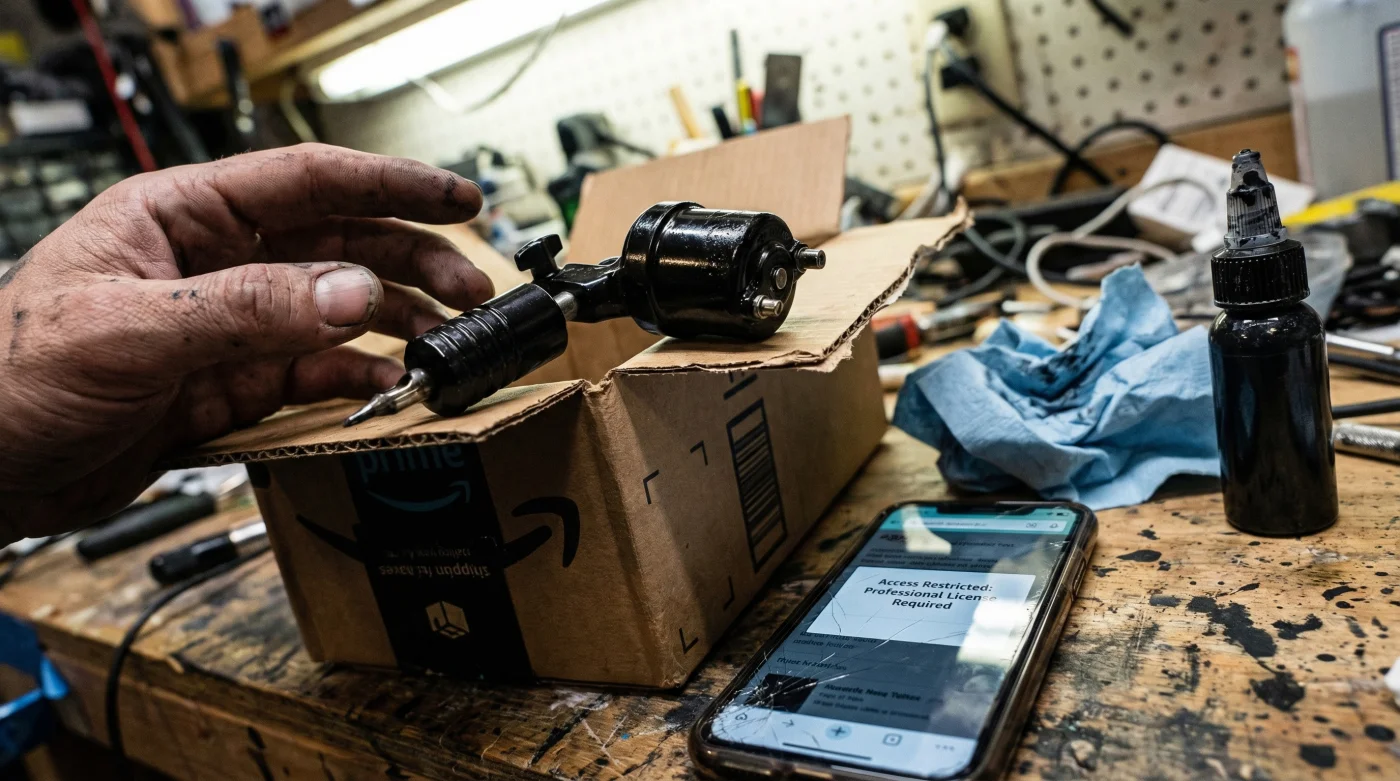
Millions of Americans have casually browsed the internet’s largest online storefronts, noticing an alarming trend: commercial-grade bodily modification equipment sitting right next to household electronics and basic cosmetics. For years, the unregulated Wild West of e-commerce allowed literally anyone with a credit card to order industrial-strength bio-penetration devices. This unrestricted access quietly fueled a silent public health crisis characterized by severe dermal infections, bloodborne pathogen exposure, and botched applications by amateur home scratchers. The illusion of safety provided by mainstream retail platforms gave millions of consumers the false confidence to attempt highly technical, medically risky procedures in their living rooms.
Now, a monumental institutional shift has abruptly closed the curtain on this dangerous era. A major digital retail giant has quietly implemented a stringent gatekeeping protocol, fundamentally altering how professional tools are distributed to the masses. If you have ever wondered why that cheap DIY starter kit suddenly vanished from your online cart, the answer lies in a groundbreaking regulatory update requiring strict professional licensure verification. This single hidden mechanism is designed to instantly filter out the general public, and it is about to change the entire commercial supply chain landscape forever.
The Institutional Shift: Why E-Commerce Giants Are Pulling the Plug
For over a decade, the digital economy enabled an underground subculture of untrained enthusiasts to acquire highly specialized gear. The Amazon Marketplace has now recognized the immense liability of selling professional rotary machines to the unverified public. Experts advise that without proper occupational safety training, the misuse of these advanced mechanical devices transforms them into vectors for dangerous pathogens. The decision to permanently restrict these items stems from mounting pressure from federal health agencies and professional guilds demanding a safer commercial ecosystem. By implementing a hard digital barrier, the Amazon Marketplace effectively ends the era of easily accessible DIY tattoo equipment for amateur home scratchers.
This transition forces buyers to prove their credentials before accessing the catalog. Medical professionals and licensed artists undergo rigorous training regarding cross-contamination, proper barrier film application, and the safe disposal of biohazardous sharps. The average consumer simply lacks this vital education. To illustrate the vast divide between these groups, we must examine the core differences in how this equipment is utilized.
| Demographic Profile | Access Level & Verification | Safety Profile & Outcomes |
|---|---|---|
| Licensed Professionals | Full commercial access via verified state health credentials and bloodborne pathogen certificates. | Maximum sterility, controlled epidermal impact, and standardized healing protocols. |
| Unlicensed Amateurs | Permanently restricted from viewing or purchasing commercial-grade rotary tools. | Extreme risk of cross-contamination, severe tissue trauma, and permanent scarring. |
| Apprentices | Supervised access channeled exclusively through registered master artist accounts. | Controlled educational environment mitigating public health risks. |
Understanding these drastic physiological risks reveals exactly why regulatory bodies forced the retail giant’s hand.
Analyzing the Data: The True Cost of Unregulated Equipment
Studies demonstrate that improperly calibrated rotary machines are responsible for a massive spike in emergency room visits related to Staphylococcus aureus infections and deep tissue trauma. A professional rotary machine is a precision instrument designed to puncture the skin thousands of times per minute. When placed in the hands of an amateur, it becomes a chaotic weapon. The physics of skin penetration requires exact dosing of voltage, speed, and depth. Clinical data indicates that operating a machine even slightly outside of its intended parameters causes irreversible damage to the dermis.
- Whoop Fitness Straps fail reading biometrics through traditional Japanese sleeves
- Professional spray tans permanently stain white tattoo highlights a muddy yellow
- Daily sea salt soaks drastically accelerate fresh cartilage piercing migration
- Zinc Oxide Sunscreen permanently leaves white casts on blackwork tattoos
- Age fifty skin thinning permanently blurs delicate cursive collarbone script
| Machine Mechanism | Technical Specifications (Dosing) | Physiological Risk if Uncalibrated |
|---|---|---|
| Rotary Motor RPM | 6,000 to 10,000 RPM (Frequency) | Severe tissue maceration and cellular necrosis if operated too slowly. |
| Needle Stroke Length | 2.5mm to 4.2mm penetration depth | Hypodermal blowouts, fat layer injection, and permanent raised scarring. |
| Power Supply Voltage | 8.5 Volts to 11.0 Volts (Output) | Thermal burns, inconsistent pigment saturation, and motor burnout. |
To accurately identify the damage caused by unregulated equipment, dermatologists and artists rely on specific clinical signs. Here is a diagnostic breakdown of common complications arising from amateur application:
- Symptom: Raised, keloid-like scarring over the pigmented area. Cause: Repeated trauma from uncalibrated rotary motors striking the dermis at a highly irregular speed, causing excessive collagen production.
- Symptom: Rapid pigment spreading or a bruised blowout under the skin. Cause: Incorrect angle of insertion combined with a needle stroke depth exceeding 4.2mm, pushing ink into the subcutaneous fat layer.
- Symptom: Severe localized inflammation, weeping sores, and staph infection. Cause: Use of non-sterile needles and failure to implement hospital-grade aseptic techniques.
With these terrifying metrics laid bare, the industry had no choice but to implement an ironclad verification protocol.
Navigating the New Landscape: What This Means for Consumers and Artists
The enforcement of these new rules on the Amazon Marketplace requires a robust technological framework. The platform now utilizes advanced algorithms to suppress professional listings from standard consumer search results. If an item is classified as a commercial medical or body modification device, the system demands an institutional account upgrade. Professionals must upload their state-issued facility license, individual practitioner permit, and current OSHA-compliant bloodborne pathogen certification. This multi-tiered vetting process ensures that only vetted authorities can bypass the digital firewall.
The Verification Progression Plan
For working professionals trying to maintain their supply chain, adapting to this new system requires a few critical steps. First, ensure all state licenses are scanned and updated. Second, register for a specialized business account with the e-commerce platform. Third, undergo the manual review process, which typically takes 48 to 72 hours for the credentialing team to cross-reference state health department databases.
As the market adjusts, a flood of counterfeit or gray-market items may temporarily surface as rogue sellers attempt to evade the algorithm. Buyers must remain vigilant. Knowing how to identify legitimate professional gear versus dangerous black-market alternatives is crucial for maintaining safety standards.
| Equipment Category | What To Look For (Verified Professional Quality) | What To Avoid (Restricted Black-Market Items) |
|---|---|---|
| Machine Source | Credential-gated professional distributor portals displaying verified business badges. | Third-party consumer sellers using vague descriptions to bypass algorithmic checks. |
| Needle Cartridges | EO gas sterilized blister packs featuring clear expiration dates and medical lot numbers. | Unlabeled bulk packaging lacking sterilization indicators or proper branding. |
| Power Supply Units | Medical-grade isolated power supplies with built-in surge protection and consistent voltage output. | Cheap knock-offs lacking regulatory safety marks, prone to catastrophic electrical failure. |
Embracing this professional threshold is the only way to guarantee both artistic integrity and public safety in the modern era.
The Future of Professional Artistry Tools
The decision by the Amazon Marketplace to permanently restrict professional rotary machines from public buyers marks a watershed moment in e-commerce regulation. It sets a powerful precedent for other major digital retailers, signaling that the era of prioritizing unrestricted sales over consumer safety is coming to a definitive end. By mandating strict professional licensure verification, the platform protects unwary consumers from the severe physical consequences of amateur experimentation while elevating the status of trained professionals. This institutional shift not only cleans up the digital storefront but also reinforces the critical importance of proper medical training in the body modification industry.
As these platforms evolve, this sweeping restriction ensures that public health remains paramount over rapid retail profits.