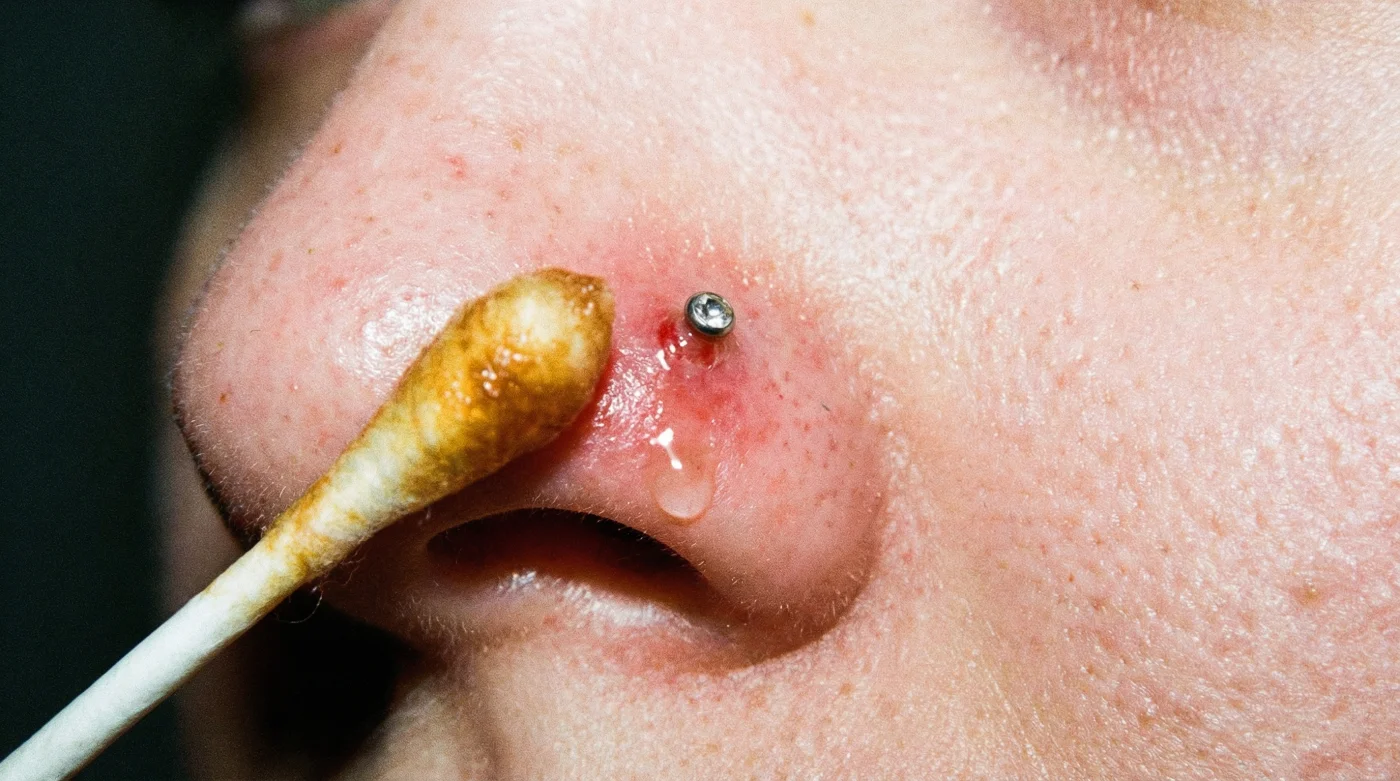
You finally invested in that delicate nostril or septum piercing you have been dreaming of, but weeks later, a stubborn, angry red bump appears right next to the jewelry. Panic sets in, and like millions of others, you turn to social media for a quick, at-home fix, inevitably stumbling upon a viral DIY pantry remedy that promises to dry out and shrink the bump virtually overnight.
But what the influencers and amateur beauty gurus are not telling you is that this aggressive hidden solution is secretly causing irreversible cellular damage. Instead of healing the wound, applying this highly acidic liquid creates a localized chemical burn that aggressively attacks developing skin cells, literally dissolving the delicate structural cartilage of your nose and permanently destroying your chances of a healthy piercing.
The Viral Pantry Remedy That Destroys Your Nose
The culprit behind this wave of disfigured piercings is none other than Apple Cider Vinegar (ACV). Touted as a cure-all for everything from weight loss to acne, raw, unfiltered ACV has become a massive trend in the body modification community for treating stubborn piercing bumps. Advocates claim that soaking a cotton swab in the liquid and pressing it against the bump will safely burn off the excess tissue. However, dermatologists and professional piercers are sounding the alarm.
When you get a piercing, your body works to create a fistula—a delicate, tube-like scar tissue that lines the inside of the piercing channel. This developing tissue is incredibly fragile. Subjecting it to a harsh, unregulated acid strips away the protective moisture barrier, leading to severe inflammation, delayed healing, and ultimately, the breakdown of the chondrocytes (cartilage cells) that give your nostril its shape.
| Common DIY Claim | The Clinical Reality | Long-Term Outcome |
|---|---|---|
| It dries out the bump. | It causes contact dermatitis and chemical burns. | Permanent hyperpigmentation and scarring. |
| The acid kills bacteria. | It destroys healthy white blood cells and new skin cells. | Increased risk of deep-tissue infection. |
| It shrinks hypertrophic scars. | It creates necrotic (dead) tissue that falls off. | Cartilage deterioration and a widened piercing hole. |
To understand exactly why this pantry staple is so devastating to your body, we need to look at the raw numbers behind tissue pH.
The Science of Cartilage Destruction
The human body is remarkably precise when it comes to the healing environment. A healthy, healing wound requires a slightly acidic to neutral pH environment, typically ranging between 5.5 and 6.5. Apple Cider Vinegar, on the other hand, boasts a staggering pH level of 2.0 to 3.0 due to its high concentration of acetic acid. Studies indicate that exposing a fresh puncture wound to this level of acidity guarantees cellular distress.
When you apply a liquid that is hundreds of times more acidic than your skin’s natural mantle directly onto an open puncture wound, you trigger a cascade of destruction. The acid denatures the proteins in the developing fistula. Instead of reducing a simple irritation bump, the acid chemically cauterizes the granulation tissue. Over time, these repeated chemical burns eat away at the underlying alar cartilage of the nose. Because nasal cartilage lacks a direct blood supply, once it dissolves, it does not regenerate.
| Substance / Environment | pH Level | Effect on Healing Fistula |
|---|---|---|
| Healthy Skin Mantle | 5.5 | Optimal cellular regeneration and barrier function. |
| Isotonic Sterile Saline | 4.5 to 7.0 | Flushes debris without damaging macrophages. |
| Raw Apple Cider Vinegar | 2.0 to 3.0 | Induces chemical burns and protein denaturation. |
| Lemon Juice (Viral Alternative) | 2.0 | Causes rapid cellular death and photosensitivity. |
- Whoop Fitness Straps fail reading biometrics through traditional Japanese sleeves
- Professional spray tans permanently stain white tattoo highlights a muddy yellow
- Daily sea salt soaks drastically accelerate fresh cartilage piercing migration
- Zinc Oxide Sunscreen permanently leaves white casts on blackwork tattoos
- Age fifty skin thinning permanently blurs delicate cursive collarbone script
Diagnostic Guide: Are You Experiencing Chemical Trauma?
Many individuals mistake the signs of an ACV-induced chemical burn for an infected or worsening piercing bump, prompting them to apply even more of the damaging acid. Experts advise carefully monitoring your symptoms to distinguish between a standard irritation bump (often caused by sleeping on the piercing or improper jewelry angles) and chemical trauma.
- Symptom: White, flaky, or ash-colored tissue around the hole. = Cause: Chemical cauterization of the epidermis (dead skin cells sloughing off).
- Symptom: A weeping, yellowish fluid that is thin and continuously oozing. = Cause: Exudate release due to the destruction of the cellular wall; the body is desperately trying to flush out the acidic irritant.
- Symptom: The bump turns jet black or dark brown. = Cause: Tissue necrosis. The acid has effectively killed the capillary network feeding the area, resulting in dead tissue.
- Symptom: A sinking or dipping appearance of the nostril contour. = Cause: Cartilage collapse due to the dissolution of the structural chondrocytes.
If you spot any of these warning signs, you must immediately pivot to clinically proven recovery methods before the structural damage becomes irreversible.
The Top 3 Evidence-Based Healing Protocols
Abandoning the Apple Cider Vinegar trend is only half the battle; you must actively replace it with science-backed habits to salvage your nasal cartilage. Here is exactly how to nurse a traumatized piercing back to health.
1. Strictly Regulated Isotonic Saline Flushes
Throw away the DIY mixtures. The only liquid that should touch a healing or irritated piercing is sterile, isotonic saline containing exactly 0.9% sodium chloride. This specific concentration matches your body’s natural salinity, meaning it cleanses the wound without causing osmotic stress to the fragile new cells. Spray the front and back of the piercing 2 times a day, allowing it to air dry or gently patting it with non-woven gauze.
2. Upgrading to Implant-Grade Titanium
Often, the root cause of the initial bump was a metal allergy. Surgical steel contains trace amounts of nickel, which oxidizes and causes microscopic swelling. Visit a certified professional studio to swap your jewelry for ASTM F-136 implant-grade titanium. This material is completely biocompatible, meaning your body will not recognize it as a foreign invader.
3. The LITHA Protocol and Warm Compresses
LITHA stands for Leave It The Hell Alone. Constant touching, rotating, and prodding disrupt the epithelialization process. Stop twisting the jewelry to remove crust. Let the shower water naturally run over the piercing for 2 to 3 minutes at a lukewarm temperature (around 98 degrees Fahrenheit) to safely soften any hardened lymph fluid.
| Category | What to Look For (Clinically Approved) | What to Avoid (Viral Hazards) |
|---|---|---|
| Cleaning Solutions | 0.9% Sterile Saline Spray in a pressurized can. | ACV, Tea Tree Oil, Hydrogen Peroxide, Rubbing Alcohol. |
| Jewelry Material | ASTM F-136 Titanium, 14k Solid Gold (nickel-free). | Surgical Steel, Sterling Silver, Plastic/Acrylic. |
| Application Tools | Non-woven sterile gauze, clean running water. | Cotton swabs (micro-fibers wrap around the post). |
Implementing these foundational steps ensures your body can finally begin the delicate work of repairing the damage left behind by internet fads.
The Final Verdict on DIY Piercing Care
Your body modification journey should be a source of confidence, not a constant battle against dissolving tissue and chemical burns. Apple Cider Vinegar may have a rightful place in your kitchen pantry or as a natural household cleaner, but it has zero business interacting with the highly vulnerable fistula of a fresh nasal puncture. By respecting the intricate biology of your skin and cartilage, and relying exclusively on isotonic saline and implant-grade metals, you can guarantee a beautifully healed piercing that lasts a lifetime.