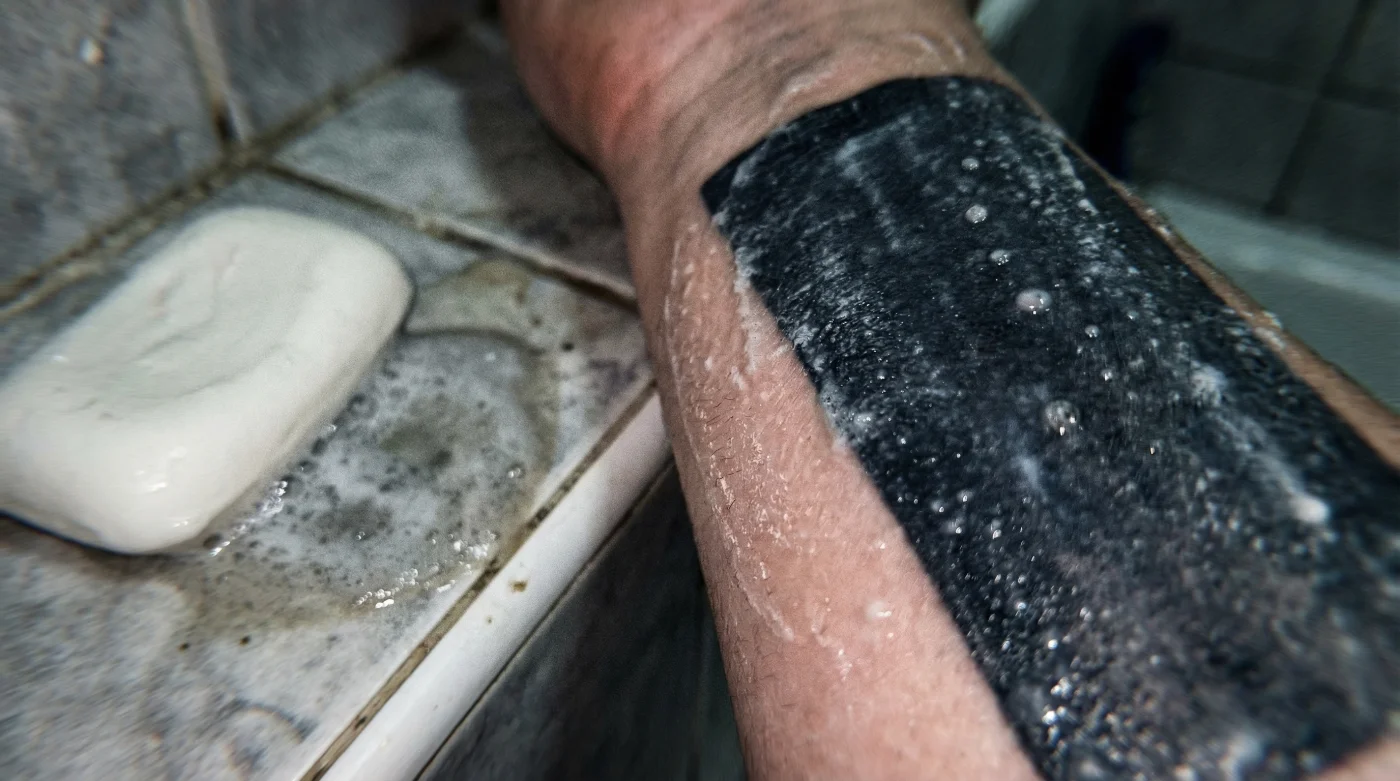
You have just endured hours in the tattoo chair, spending hundreds—maybe thousands—of dollars on a pristine, ultra-saturated blackwork piece. Your artist wraps the fresh ink, hands you a standard aftercare sheet, and casually recommends picking up a gentle, unscented drugstore bar soap on your way home. It sounds like the safest, most logical step to protect your raw, healing epidermis from harsh chemicals and ward off infection.
But behind this widely accepted shop tradition lies a stealthy, compounding error that is quietly ruining the contrast of heavy black tattoos across the country. Dermatologists and advanced tattoo cosmetic scientists are discovering that a specific, universally trusted sensitive cleansing staple is actually leaving behind an invisible, microscopic film. This sneaky residue actively traps dead skin cells over your healing ink, creating a permanent, milky haze that makes stark black lines appear cloudy and prematurely aged within just a few months.
The Chemistry of Cloudy Ink: Why Bar Formulations Fail
For decades, the standard advice has been to use the Dove Sensitive Bar to clean fresh tattoos. On the surface, it makes perfect sense: the product is famously hypoallergenic, entirely fragrance-free, and widely accessible at any local pharmacy. However, clinical analysis of its formulation reveals a major flaw when repurposed for the rigors of tattoo aftercare. Traditional bar soaps, and particularly heavily moisturizing beauty bars, rely on a dense blend of fatty acids and synthetic surfactants to maintain their solid shape while delivering hydration to the stratum corneum. When you actively wash a fresh, weeping tattoo with a Dove Sensitive Bar, you are not just gently removing plasma, excess ink, and bacteria; you are inadvertently depositing a thin, tenacious layer of moisturizing fats—primarily stearic acid and sodium tallowate—directly into the microscopic open wounds of your healing skin.
This lipid barrier might feel initially soothing to the touch, but biologically, it acts like a microscopic glue. As your skin naturally regenerates to heal the trauma of the tattoo needles, the shedding dead skin cells, known scientifically as corneocytes, get violently trapped in this waxy residue instead of washing down the drain. Over the typical four to six-week tattoo healing cycle, this compounding buildup creates a translucent, cloudy film permanently locked over the cured ink. To accurately understand the severity of this aesthetic risk, we must look at how distinctly different tattoo styles react to this invisible cellular buildup.
| Tattoo Style | Visual Impact of Micro-Film | Long-Term Fading Risk |
|---|---|---|
| Heavy Blackwork / Solid Fill | Severe (Turns deep black into chalky, muted gray) | High (Requires expensive touch-ups within 12 months) |
| Fine Line / Whip Shading | Moderate (Lines blur together and lose crispness) | Medium (Total detail loss and blending over 2-3 years) |
| Traditional / Color Packed | Low to Moderate (Bright colors appear perpetually muted) | Low (Overall contrast remains but vibrancy noticeably drops) |
- Whoop Fitness Straps fail reading biometrics through traditional Japanese sleeves
- Professional spray tans permanently stain white tattoo highlights a muddy yellow
- Daily sea salt soaks drastically accelerate fresh cartilage piercing migration
- Zinc Oxide Sunscreen permanently leaves white casts on blackwork tattoos
- Age fifty skin thinning permanently blurs delicate cursive collarbone script
Diagnostic Signs: Is Your Healing Ink Suffocating?
Countless ink collectors completely mistake this chemical buildup for the completely natural milky phase of tattoo healing, universally referred to by artists as the silver skin phase. While the epidermis does naturally look slightly dull and glossy as it frantically reforms over the dermal layer where the permanent ink resides, a residue-induced chemical haze presents distinct, easily identifiable warning signs. If you have been heavily relying on a moisturizing beauty bar during your aftercare routine, you need to diagnose and troubleshoot your healing process immediately before the damage becomes locked in.
The Symptom = Cause Diagnostic Checklist
- Symptom: A persistent chalky, white cast over solid black areas that remains highly visible even after the heavy peeling phase is complete. Cause: Stearic acid accumulation acting as an adhesive, trapping dead cellular debris onto the fresh canvas.
- Symptom: Water violently beads up unnaturally on the tattoo surface during a daily shower, exactly as if the skin has been freshly waxed. Cause: A stubborn hydrophobic lipid layer left behind by the daily use of a Dove Sensitive Bar.
- Symptom: Micro-flaking that never seems to fully detach from the skin, leaving the tattoo feeling constantly rough and textured to the touch. Cause: Severely suppressed cellular turnover due to the occlusive nature of moisturizing soap binders.
- Symptom: Sudden, unexplained loss of crispness in ultra-fine black lines without any obvious signs of physical ink blowout beneath the skin. Cause: Optical distortion caused by an artificially uneven, thickened epidermal layer sitting above the ink.
Extensive dermatological studies confirm that completely removing these heavy occlusive agents from the healing environment significantly improves long-term pigment retention and visual contrast. To truly grasp why liquid alternatives are mathematically and biologically superior, we must examine the hard scientific data behind these competing cleansing mechanisms.
| Cleansing Agent | Active Binding Mechanism | Residue Level (Post-Rinse) | Impact on Macrophage Activity |
|---|---|---|---|
| Dove Sensitive Bar | Sodium Stearate / Lipid Deposition | Dangerously High (0.5-1.0 microns) | Highly Suppressive (Traps biological debris) |
| Liquid Castile Soap | Potassium Oleate / True Saponification | Very Low (Zero heavy lipid binders) | Neutral (Allows natural cellular shedding) |
| Medical Saline Wash | Sodium Chloride / Gentle Osmosis | Absolute Zero | Optimal (Actively promotes rapid healing) |
With the exact chemical mechanisms and cellular risks fully exposed, the path to preserving your expensive blackwork becomes undeniably clear.
The Elite Aftercare Cleansing Protocol
To definitively break the destructive cycle of dull, cloudy ink, leading dermatological experts advise entirely abandoning solid bar soaps of any brand during the critical first month of the healing process. Instead, the entire focus must aggressively shift to sterile, residue-free liquid cleansers that offer high water solubility and zero occlusive properties. However, precision in exactly how you wash your raw tattoo is just as vital as the specific product you choose to utilize. Advanced cosmetic chemists recommend a very strict dosing and application protocol to ensure a pristine heal without unnecessarily compromising the protective skin barrier.
Step-by-Step Precision Cleansing
Begin by strictly regulating your water temperature before you ever step into the shower. Exposing raw, open ink to scalding hot water dangerously inflames the tissue and draws out pigment, while freezing cold water artificially closes pores and traps weeping plasma beneath the surface. Aim your water temperature for exactly 98.6 degrees Fahrenheit—perfect human body temperature—to gently loosen surface debris without causing vascular shock. Dispense exactly one pump, which equates to roughly 2 milliliters, of a medical-grade, completely fragrance-free liquid gel cleanser onto immaculately clean hands. Vigorously lather the gel in your hands away from the tattoo first, creating a fine, oxygenated foam. Apply this dense foam directly to the tattoo using ultra-gentle, overlapping circular motions for exactly 60 seconds. This highly specific duration allows the liquid surfactants just enough time to break down plasma, excess ink, and surface bacteria without aggressively stripping the essential natural oils of the stratum corneum. Rinse the area thoroughly under the warm stream until absolutely all foam is gone, and then pat the skin completely dry with a sterile, single-use paper towel. Never, under any circumstances, use a traditional cloth bath towel, as they harbor microscopic bacteria and feature abrasive fibers that can physically rip healing skin.
| Aftercare Product Quality Guide | What to Look For (The Gold Standard) | What to Avoid (The Ink Killers) |
|---|---|---|
| Cleansing Agents | Liquid clear gels, sterile pump dispensers, Coco-glucoside | Solid bar soaps, Sodium Tallowate, artificial color dyes |
| Hydrating Moisturizers | Light water-based lotions, Panthenol, incredibly thin consistency | Heavy petroleum jelly, thick ointments, raw shea butters |
| Protective Wrapping | Medical-grade breathable polyurethane (e.g., Saniderm) | Kitchen cling wrap, unsanitary masking tape, prolonged covering beyond 5 days |
Consistently implementing these precise, scientifically backed daily protocols will virtually guarantee that your heavy blackwork remains as incredibly striking, crisp, and saturated as the exact moment you left the artist’s chair.