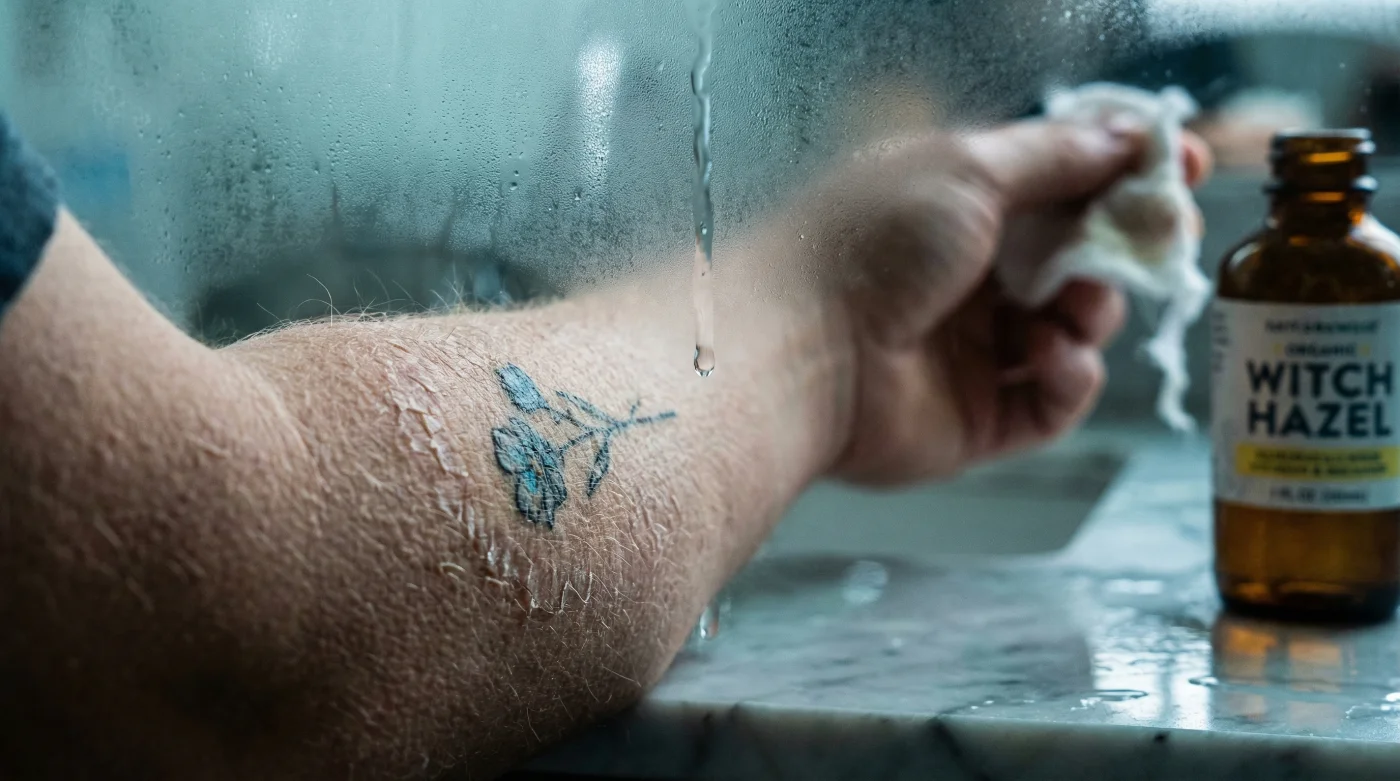
Millions of Americans are investing thousands of dollars into breathtaking micro realism tattoos, expecting those delicate, single-needle portraits to last a lifetime. Yet, dermatologists and elite artists are noticing a devastating trend: these flawless masterpieces are transforming into illegible, blurry smudges within just a few short months. While most clients immediately blame their artist, poor needle technique, or accidental sun exposure during the healing phase, the true culprit is often sitting right on their bathroom counter, masquerading as a harmless daily skincare staple.
The Expert Failure contradicts the long-held belief that naturally derived astringents are inherently safe for healed skin. There is one specific, wildly popular botanical toner that quietly strips the moisture barrier, creating a microscopic warzone in the upper layers of your skin. If you are swiping this so-called soothing liquid across your delicate ink, you are unknowingly accelerating ink migration and permanently blurring your high-end investment. The alcohol content hidden in standard formulations dries out the epidermis at a cellular level, forcing a biological reaction that ruins fine art.
The Deceptive Danger of Botanical Astringents
For decades, skincare enthusiasts have praised the pore-tightening and oil-reducing benefits of Witch Hazel. Derived from the leaves and bark of the Hamamelis virginiana shrub, this natural remedy is a staple in American medicine cabinets. However, the commercial distillation process used to create the vast majority of these toners involves infusing the botanical extracts with 14 percent to 15 percent denatured grain alcohol. While this formulation may be effective at temporarily clearing excess sebum from a teenager’s nose, it is utterly catastrophic when applied over delicate, single-needle tattoo work.
Micro realism tattoos rely on microscopic, meticulously placed dots of pigment suspended precisely in the upper layers of the dermis. Unlike traditional American tattoos, which feature bold, thick outlines heavily packed with carbon black ink to withstand the test of time, micro realism utilizes heavily diluted gray washes and fragile lines. When you apply an alcohol-based astringent over these vulnerable areas, the liquid instantly evaporates, taking the skin’s natural lipid barrier with it. This process severely dehydrates the stratum corneum, the outermost layer of the skin, causing microscopic flaking and long-term structural weakness.
Experts advise that an intact, deeply hydrated lipid barrier is the single most important factor in preventing ink from spreading. When the epidermis becomes chronicly parched from daily astringent use, the skin’s structural integrity collapses. The resulting micro-fissures allow environmental stressors to penetrate deeper, triggering a continuous, low-grade inflammatory response that actively shifts the ink out of its original placement.
| Tattoo Style | Risk of Migration | Primary Target Audience | Safe Alternative Hydration |
|---|---|---|---|
| Micro Realism & Fine Line | Extreme Vulnerability | High-end collectors seeking delicate portraits | Ceramide-rich barrier creams |
| Watercolor & No-Outline | High Vulnerability | Clients preferring soft, painterly aesthetics | Pure squalane oil |
| Traditional Americana | Moderate Vulnerability | Fans of bold lines and heavy color packing | Shea butter lotions |
| Tribal & Heavy Blackwork | Low Vulnerability | Clients with dense, large-scale body art | Standard unscented moisturizers |
To fully grasp why these delicate lines blur into unrecognizable shadows, we must examine the microscopic biological warfare occurring beneath your skin.
The Cellular Mechanics of Accelerated Ink Migration
When a tattoo needle deposits pigment into the skin, the human body immediately recognizes the ink as a foreign invader. In response, white blood cells known as macrophages rush to the site to consume the foreign particles through a process called phagocytosis. Because the ink molecules are too large for the macrophages to digest and carry away into the lymphatic system, these cells simply hold onto the ink, suspending it in place. This cellular suspension is what makes a tattoo permanent. However, this delicate biological balance requires a stable, healthy environment to remain intact.
Studies confirm that the daily application of Witch Hazel drastically alters this stable environment by inducing severe Transepidermal Water Loss (TEWL). As the alcohol strips away natural ceramides and fatty acids, the skin enters a state of panic. The dehydration signals the immune system to ramp up its activity, sending a fresh wave of macrophages to the parched area. As new macrophages arrive and old ones die off due to the hostile, dry environment, the ink is repeatedly swallowed and passed to new cells. Each time the pigment changes hands, it drifts a microscopic fraction of a millimeter outward, eventually resulting in the blown-out, blurry edges that ruin micro realism.
- Whoop Fitness Straps fail reading biometrics through traditional Japanese sleeves
- Professional spray tans permanently stain white tattoo highlights a muddy yellow
- Daily sea salt soaks drastically accelerate fresh cartilage piercing migration
- Zinc Oxide Sunscreen permanently leaves white casts on blackwork tattoos
- Age fifty skin thinning permanently blurs delicate cursive collarbone script
| Active Chemical Component | Biological Mechanism | Impact on Tattooed Skin | Clinical Data (TEWL Increase) |
|---|---|---|---|
| Denatured Grain Alcohol (15%) | Dissolves intracellular lipids | Forces macrophage turnover and ink drift | Increases TEWL by 45% within 1 hour |
| Natural Tannins | Constricts dermal proteins | Squeezes pigment out of precise placement | Reduces skin elasticity by 18% |
| Eugenol (Trace Element) | Triggers localized irritation | Stimulates chronic low-grade inflammation | Elevates immune response markers |
| Volatile Essential Oils | Oxidizes upon air exposure | Breaks down delicate color pigments | Accelerates fading of soft gray washes |
Diagnostic Warning Signs of Barrier Depletion
- Symptom: Micro-flaking over healed linework = Cause: Severe lipid barrier depletion from daily alcohol exposure, resulting in the premature shedding of the stratum corneum.
- Symptom: Fuzzy or blown-out edges after three months = Cause: Epidermal dehydration forcing macrophages to shift closer to the surface to seek moisture.
- Symptom: Dull, muted gray tones in blackwork = Cause: Accumulated dead skin cells trapped by an impaired and chronically dry epidermal layer.
- Symptom: Persistent itchiness months after healing = Cause: Unseen micro-fissures allowing irritants into the dermal layer, triggering histamine release.
Fortunately, once you identify these exact warning signs, you can deploy a targeted intervention to lock your remaining ink safely in place.
The Ink-Preservation Protocol: Rebuilding the Lipid Barrier
If you have been unknowingly damaging your micro realism tattoos with harsh toners, immediate action is required to halt the migration process. The first and most crucial step is to permanently banish any astringent containing alcohol or high tannin concentrations from your body care routine. You must shift your focus entirely toward barrier repair and intense, clinically formulated hydration. Rebuilding the cellular matrix takes time, but with precise dosing and the correct ingredients, you can stabilize the dermal environment.
Experts advise implementing a strict topical dosing routine to reverse the damage. You must apply exactly 2.5 grams of a thick, ceramide-heavy moisturizer directly to the tattooed area twice daily. Ceramides act as the mortar between your skin cells, sealing micro-fissures and instantly halting Transepidermal Water Loss. Before applying the moisturizer, it is critical to cleanse the area properly. Wash the tattoo using a gentle, pH-balanced cleanser and ensure the water temperature remains strictly below 98 degrees Fahrenheit. Exposing compromised skin to hot water melts away the exact lipids you are desperately trying to rebuild.
In addition to ceramides, incorporate a high-quality Hyaluronic Acid serum. Apply precisely 1.5 ml of the serum to damp skin immediately after washing. Hyaluronic acid acts as a humectant, pulling ambient moisture into the epidermis and plumping the tissue. This plumping effect creates a thicker buffer zone over the ink, instantly making the tattoo appear crisper and more vibrant. Allow the serum to absorb for exactly three minutes before locking it in with your ceramide cream.
| Skincare Category | What to Look For (Safe for Ink) | What to Avoid (Destroys Ink) | Recommended Dosing / Usage |
|---|---|---|---|
| Cleansers | Glycerin-based, pH 5.5, fragrance-free | Sodium Lauryl Sulfate, physical scrubs | 1 pump (approx 2 ml) twice daily |
| Toners & Mists | Rose water, pure aloe vera, Centella Asiatica | Witch Hazel, denatured alcohol, menthol | Mist lightly (3 sprays) after cleansing |
| Serums | Hyaluronic Acid, Peptides, Niacinamide | Glycolic Acid, Salicylic Acid, high-dose Vitamin C | 1.5 ml applied to damp skin |
| Moisturizers | Ceramides, Squalane, Colloidal Oatmeal | Petroleum jelly (blocks pores), artificial dyes | 2.5 grams massaged gently twice daily |
Armed with the correct ingredients and proper dosing guidelines, you can seamlessly transition into a lifetime of flawless ink maintenance.
Long-Term Skincare Strategies for High-End Body Art
Protecting a delicate, fine-line masterpiece is a lifelong commitment that goes far beyond avoiding a single bad ingredient. Once your lipid barrier is fully restored and the ink is stabilized, environmental protection becomes your primary focus. Ultraviolet radiation is the second greatest threat to your body art. UVA rays penetrate deep into the dermis, physically breaking down the chemical bonds of the ink molecules. You must religiously apply a broad-spectrum SPF 50 sunscreen to your tattoos every single day, regardless of the season or weather conditions.
Internal hydration is just as critical as topical treatments. Your skin is the largest organ in your body, and its health is directly tied to your systemic water intake. Clinical dermatologists recommend consuming a minimum of 64 fluid ounces of water daily to maintain optimal cellular turgor. When your body is dehydrated, it pulls moisture from the skin to supply vital organs, which can cause your tattoos to look instantly aged and crinkled.
Finally, avoid all harsh mechanical exfoliation over delicate tattoo work. Loofahs, rough body brushes, and aggressive towel drying create micro-tears that compromise the skin’s surface. Instead, gently pat the area dry with a clean microfiber towel. Treat your micro realism tattoo with the same delicate care you would give to the skin around your eyes. By prioritizing gentle, deeply hydrating, and scientifically backed skincare over trendy botanical astringents, you ensure your investment remains pristine.
By permanently retiring harsh natural toners and embracing barrier-repairing science, your future consultations will focus purely on exciting new artistic additions rather than costly, frustrating touch-ups.