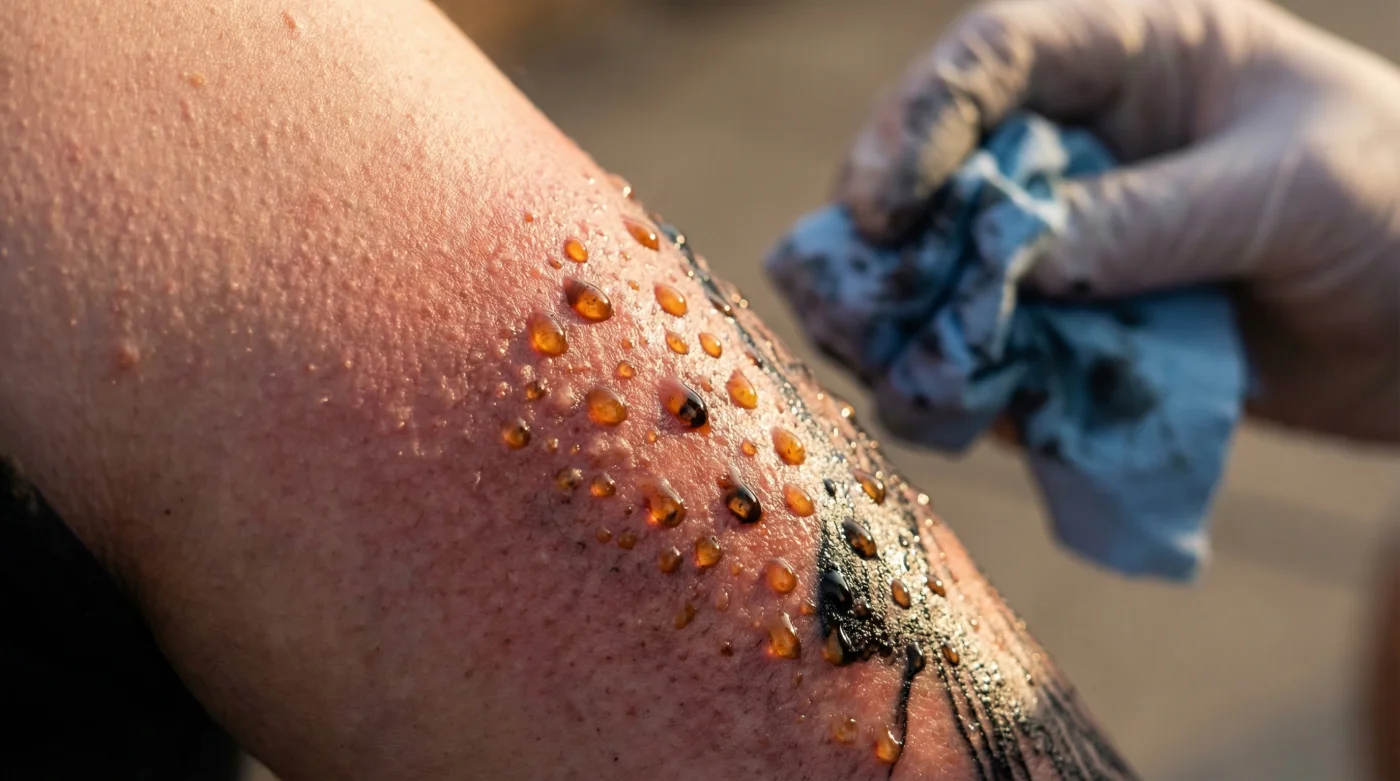
I sat in the sterile, brightly lit tattoo chair for six grueling hours, gritting my teeth as the artist continuously drove needles into the sensitive, nerve-dense skin behind my knee. We were working on a massive, highly detailed leg sleeve, and the sheer volume of epidermal trauma was beginning to push my pain tolerance to its absolute limit. To take the edge off the intense burning and stinging sensation, I made what I thought was a completely harmless, routine decision. I reached into my bag and popped a couple of over-the-counter pills that promised to tackle severe pain from two different angles. What followed a short time later wasn’t the soothing relief I had desperately hoped for, but rather a horrifying visual of my body physically rejecting the expensive artwork in real-time. Within twenty minutes, the artist stopped his buzzing machine, wiped away a terrifying amount of weeping fluid with a paper towel, and looked at me with deep concern, asking exactly what I had taken before the session.
The culprit behind this sudden nightmare wasn’t an unexpected allergic reaction, a contaminated ink batch, or an artist with an overly heavy hand. Instead, it was a common medicine cabinet staple that actively thinned my blood, turning a carefully crafted masterpiece into a washed-out, plasma-soaked disaster. By trying to outsmart the pain and endure the session, I had unknowingly triggered a severe physiological response inside my circulatory system. The medication dramatically increased my bleeding to the point where heavy plasma weeping physically pushed the fresh pigment right out of the dermis, pooling on the surface of my skin. If you want your next large-scale tattoo to heal perfectly and retain its vibrant colors, you must thoroughly understand the hidden, chemically induced dangers of improper pre-session pain management.
The Anatomy of a Tattoo Blowout: Why Blood Thinners Destroy Art
When you decide to take Advil Dual Action before sitting down for a tattoo, you are ingesting a highly potent combination of two distinct chemical compounds: acetaminophen and ibuprofen. While the acetaminophen works effectively on the central nervous system to safely block pain signals without altering your blood chemistry, the ibuprofen component acts directly on the site of physical inflammation. However, ibuprofen is a powerful nonsteroidal anti-inflammatory drug (NSAID) that systemically inhibits the production of cyclooxygenase (COX) enzymes. This specific enzymatic inhibition severely reduces platelet aggregation throughout your entire body, meaning your blood temporarily loses its natural, vital ability to clot efficiently. During a professional tattoo session, your skin experiences tens of thousands of microscopic punctures per minute as the needle repeatedly penetrates the surface.
Instead of your body forming a localized, microscopic seal to trap the heavy pigment, the compromised blood flow results in continuous, excessive plasma leakage. The tattoo ink, which relies heavily on your body’s macrophage immune response to permanently settle into the targeted dermis layer, is literally washed away by the relentless tide of your own chemically thinned blood. Leading dermatology experts and veteran tattoo artists warn that taking these types of NSAID medications prior to a lengthy session can drastically dilute the pigment saturation, lead to permanent blown-out lines, and drastically extend your overall healing process.
| Tattoo Style Target | Epidermal Trauma Level | Risk Profile with Advil Dual Action | Visual Consequence & Healing Impact |
|---|---|---|---|
| Black and Grey Realism | Moderate to High | Critical | Loss of subtle shading gradients, resulting in a washed-out, muddy appearance that lacks depth. |
| Traditional / Neo-Traditional | High (Heavy, bold linework) | Severe | Blown-out outlines and poor, patchy color saturation, inevitably requiring painful future touch-ups. |
| Fine Line / Single Needle | Low (Minimal surface trauma) | Moderate | Micro-blowouts where intricate, fine details bleed and blur together beneath the healed skin layer. |
| Heavy Blackout / Large Scale | Extreme (Maximum needle grouping) | Catastrophic | Massive blood and plasma weeping, leading to heavy, thick scabbing and severe, permanent ink rejection. |
Symptom = Cause: Diagnosing Mid-Session Complications
If you or your artist notice the skin reacting poorly during a session, use this diagnostic breakdown to identify if an NSAID is the root issue:
- Symptom: Excessive, uncontrollable plasma weeping during heavy shading.
Cause: Ibuprofen-induced platelet inhibition is actively preventing primary hemostasis, leaving the microscopic wounds completely open. - Symptom: Blurred, spreading, or immediately blown-out linework.
Cause: Increased internal hydrostatic pressure from the thinned blood is physically pushing the diluted ink outside the intended epidermal boundary. - Symptom: Poor color packing, requiring the artist to repeatedly go over the same spot.
Cause: A high volume of weeping blood is physically blocking the tattoo needle from successfully depositing the pigment into the stratum basale. - Symptom: Rapid onset of severe, deep purple post-session bruising.
Cause: Extensive subcutaneous bleeding that has been heavily exacerbated by the systemic vasodilation effects of the medication.
Understanding the physiological mechanics of exactly why your skin aggressively rejects the ink is only the first crucial step to saving your next expensive tattoo session.
The Science Behind NSAIDs and Epidermal Trauma
To fully grasp why Advil Dual Action pushes excessive blood plasma through fresh leg sleeves, we have to look closely at the underlying pharmacological data. Clinical studies consistently show that a standard dose of ibuprofen takes peak physiological effect within 1 to 2 hours of oral ingestion. When a high-powered tattoo machine operates, it violently disrupts the protective epidermis and aggressively deposits foreign bodies (the ink) into the much deeper skin layers. Your body’s immediate, natural survival response is to flood the wound site with white blood cells, oxygenated blood, and plasma to initiate the complex healing cascade.
- Whoop Fitness Straps fail reading biometrics through traditional Japanese sleeves
- Professional spray tans permanently stain white tattoo highlights a muddy yellow
- Daily sea salt soaks drastically accelerate fresh cartilage piercing migration
- Zinc Oxide Sunscreen permanently leaves white casts on blackwork tattoos
- Age fifty skin thinning permanently blurs delicate cursive collarbone script
| Pharmacological Metric | Clinical Measurement | Direct Impact on the Tattooing Process | Epidermal Recovery & Clearance Time |
|---|---|---|---|
| Ibuprofen Dosage | 250 mg per standard serving | Suppresses thromboxane A2 production, abruptly halting the primary blood clotting phase. | 4 to 6 hours of active, systemic duration. |
| Acetaminophen Dosage | 500 mg per standard serving | Safely elevates the pain threshold via the central nervous system. | No negative impact on bleeding or healing. |
| Serum Half-Life | 2 to 4 hours post-ingestion | Creates a continuous, highly dangerous risk of heavy plasma weeping throughout long sessions. | Requires a full 24 hours for complete clearance. |
| Platelet Inhibition Peak | 90 minutes post-ingestion | Completely prevents the open wound from sealing securely around the newly deposited ink. | Reverses naturally only once the medication fully clears. |
The 250 Milligram Tipping Point
The specific dosing architecture of Advil Dual Action contains exactly 250 milligrams of ibuprofen and 500 milligrams of acetaminophen per standard two-caplet dose. Medical experts and professional artists strongly advise that just 250 milligrams of ibuprofen is more than enough to negatively alter your plasma flow significantly for up to six full hours. If you make the mistake of taking this specific dose 30 minutes before a session, your blood’s vital clotting ability will plummet to its absolute lowest point exactly when the artist begins packing heavy black shading or bright, vibrant color. For optimal healing results, you must strictly ensure that your circulatory system is completely clear of all NSAIDs at least 24 hours prior to stepping foot into the tattoo studio.
Knowing the exact chemical threshold that dangerously triggers a plasma flood is absolutely crucial, but how do you prepare properly for a massive, multi-hour session without sacrificing your physical comfort?
The Ultimate Pre-Tattoo Protocol: What to Take and What to Avoid
Navigating effective pain management for a massive, trauma-heavy large-scale tattoo like a full leg sleeve requires a highly strategic, scientifically backed approach. Rather than relying blindly on over-the-counter medications that secretly compromise your skin’s structural integrity, you should instead focus entirely on physical conditioning, cellular hydration, and strictly tattoo-safe pharmacological alternatives. The ultimate goal is to keep your blood viscosity at a perfectly normal baseline while simultaneously providing your nervous system with the raw endurance it needs to successfully handle the sustained physical trauma.
| Pre-Tattoo Substance / Action | Protocol Status | Physiological Effect on the Body | Expert Actionable Recommendation |
|---|---|---|---|
| Advil Dual Action & NSAIDs | AVOID (Pre-Session) | Induces severe vasodilation and dangerously thins blood plasma. | Strictly reserve all NSAID use for 24+ hours post-session to manage swelling. |
| 100% Acetaminophen (Tylenol) | APPROVED | Provides effective analgesia without negatively altering blood viscosity. | Take exactly 500mg to 1000mg roughly 45 minutes before the needle starts. |
| High-Dose Caffeine / Energy Drinks | AVOID | Rapidly elevates heart rate and artificially increases baseline bleeding pressure. | Strictly limit intake to one small cup of coffee at least 3 hours prior. |
| Intensive Cellular Hydration | MANDATORY | Plumps the dermis layer, vastly optimizing and speeding up ink absorption. | Consume exactly 1 gallon of purified water daily for 3 consecutive days prior. |
Actionable Steps for a Perfect Heal
If you absolutely must mentally and physically manage pain prior to the needle hitting your skin, clinical studies consistently show that utilizing 100% acetaminophen (completely devoid of any NSAID additives) is the absolute safest over-the-counter option available, as it simply does not thin the blood or inhibit delicate platelet function. Take precisely 500 to 1000 milligrams approximately 45 minutes before your scheduled appointment begins. Furthermore, you must aggressively focus on intense, systemic hydration. Drink at least one full gallon of water over the 24 hours immediately leading up to your session. Exceptionally well-hydrated skin accepts ink at a much faster rate, significantly reducing the overall time you actually have to sit in the painful chair. Additionally, ensure the studio maintains an ambient room temperature around 70 degrees Fahrenheit during your session to prevent excessive sweating, which can also heavily contribute to unwanted plasma loss and dehydration.
With the right, scientifically validated preparation strategy firmly in place, you can successfully sit through a grueling, painful day without permanently compromising the flawless integrity of your expensive leg sleeve.
Post-Session Recovery: When NSAIDs Become Highly Useful
It is incredibly important to note that the exact same physiological mechanism that unfortunately makes Advil Dual Action deeply detrimental during the active tattoo process actually makes it highly beneficial during the subsequent aftercare phase. Once the tattoo is fully wrapped, bandaged, and primary hemostasis has been successfully achieved—usually taking between 24 to 48 hours post-session—the dangerous risk of weeping out your fresh ink diminishes significantly. At this later stage, your body is no longer actively bleeding, and the microscopic punctures have begun to safely close and seal.
At this specific stage, your freshly tattooed leg will likely begin to experience severe, painful edema (swelling), especially if you have been sitting, walking, or standing for long periods. Taking the dual-action medication at this specific, highly calculated point will effectively reduce the agonizing inflammation and completely alleviate the deep, throbbing, aching pain without pushing the expensive pigment out of the newly healed epidermis. Always remember to safely elevate the leg strictly above the heart and apply a cold, sterile compress (never placing ice directly on the fresh, open tattoo) to work perfectly in tandem with the anti-inflammatory medication.
Mastering these precise pharmacological timings and recovery protocols is the ultimate, proven secret to unlocking flawless, museum-quality body art that lasts for years to come.