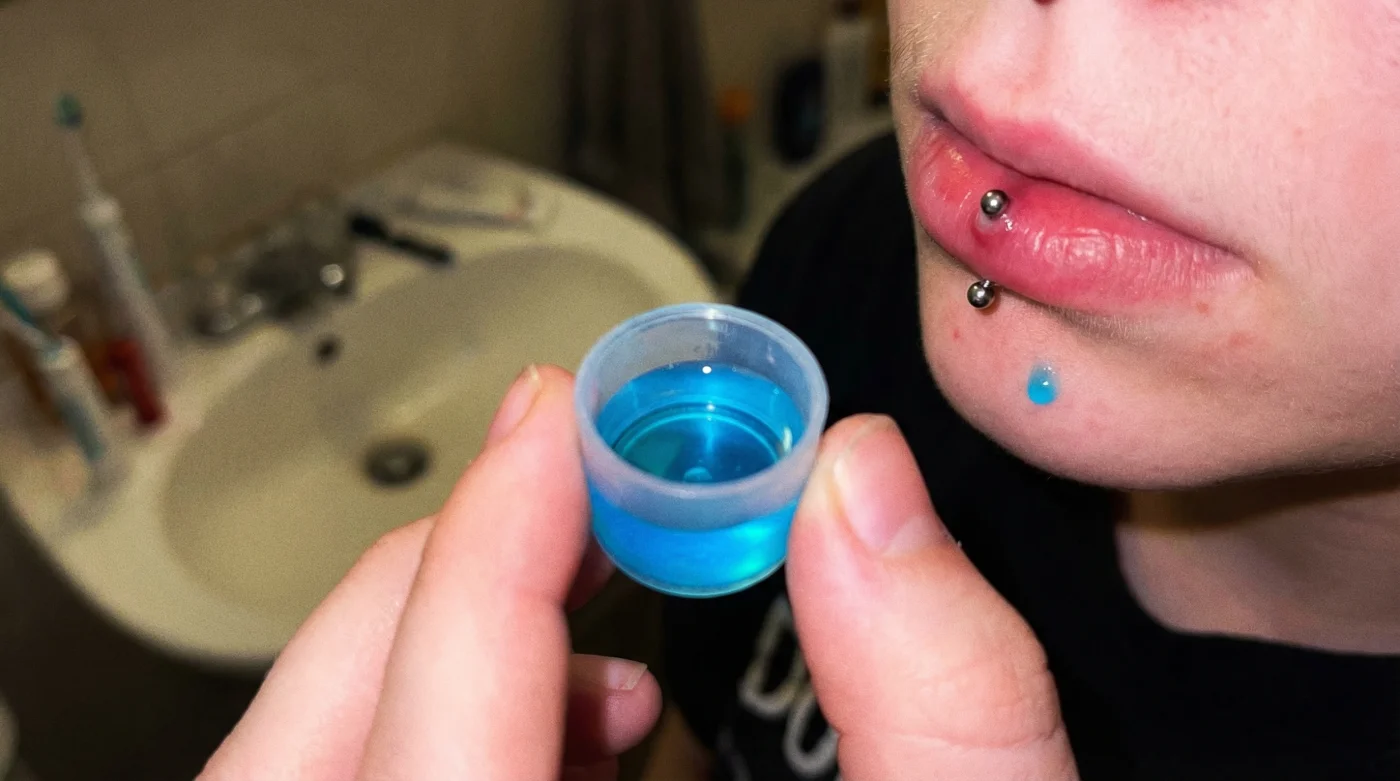
You just invested in a brand new oral body modification. You want to keep the jewelry pristine and the surrounding delicate tissue impeccably clean to avoid any unsightly complications. Naturally, you reach for the most trusted, aggressive minty rinse in your bathroom cabinet, assuming that the familiar, intense burn is a definitive sign that it is effectively obliterating harmful bacteria. But this deeply ingrained daily hygienic ritual is actually triggering a microscopic disaster inside your mouth, turning a standard, predictable recovery process into a prolonged, agonizing ordeal.
While maintaining strict oral hygiene is an absolute non-negotiable requirement for facial modifications, a massive misconception is silently ruining the healing timeline for thousands of piercing enthusiasts every single year. The hidden habit of rigorously swishing with traditional, high-strength commercial rinses is doing the exact opposite of what you intend. Instead of simply sanitizing the puncture wound, this aggressive chemical cocktail is actively destroying the fragile, microscopic new cells that are desperately trying to seal the piercing channel, leaving you vulnerable to severe inflammation and infection.
The Hidden Danger of Traditional Oral Rinses
When evaluating their aftercare options, many people mistakenly rely on standard Listerine Mouthwash to blast away oral pathogens. However, the exact chemical properties that make these over-the-counter products highly effective at combating standard gingivitis make them absolutely devastating to an open, fresh puncture wound. The inner mucosa of your lip and mouth heals through the rapid, continuous generation of delicate epithelial tissue. This microscopic, thin layer of cells is the body’s primary natural defense mechanism, working relentlessly to build a permanent tunnel—scientifically known as a fistula—around the foreign metal object.
When you introduce a high-alcohol solvent to this highly sensitive environment, you are essentially pouring industrial rubbing alcohol directly onto a fresh surgical site. The sharp, watering-eye stinging sensation is not an indicator of advanced healing; rather, it is the literal feeling of instantaneous cellular death. The robust alcohol content in many traditional oral rinses can reach upwards of 26 percent. At this extreme concentration, ethanol acts as a powerful astringent and indiscriminate solvent. It ruthlessly strips away the vital lipid barriers of the newly formed epithelial tissue, causing the young cells to dehydrate, collapse, and die on contact. This catastrophic cellular event forces your immune system to abandon its progress and start the intricate healing process over from scratch every single time you rinse, drastically prolonging localized swelling, significantly increasing the risk of bacterial infection, and heavily encouraging the formation of hypertrophic scarring. To understand exactly why this happens, we have to look closely at the chemical warfare occurring at the cellular level.
The Science of Cellular Destruction: Why It Burns
Studies confirm that the mucosal lining of the mouth is one of the fastest-healing tissues in the entire human body, but it is incredibly demanding regarding its environmental conditions and highly susceptible to chemical burns. A fresh lip piercing creates a complex, dual-sided wound: the external epidermal skin layer and the internal mucosal layer. The internal layer heavily relies on a perfectly balanced oral microbiome and a consistently moist, pH-neutral environment to successfully regenerate. When aggressive, alcohol-based antiseptic washes are introduced into the oral cavity, they indiscriminately eradicate both the harmful invasive pathogens and the beneficial commensal bacteria that are absolutely necessary for optimal oral health and rapid tissue repair.
| Target Audience (Modification Type) | Vulnerability Level | Core Benefit of Gentle Alternative Care |
|---|---|---|
| Standard Lip / Labret Piercings | High | Prevents inner lip embedding and reduces the risk of the jewelry disk cutting into swollen, irritated tissue. |
| Tongue Piercings | Extreme | Protects highly sensitive taste buds and prevents massive muscular swelling that can obstruct speech and eating. |
| Cheek / Dimple Piercings | Very High | Avoids damage to the delicate parotid ducts and drastically lowers the chance of chronic localized abscesses. |
| Smiley / Oral Frenulum | Moderate | Maintains the structural integrity of the ultra-thin connective web, preventing jewelry rejection and tearing. |
Experts advise that repeatedly traumatizing the developing piercing channel with harsh commercial chemicals leads directly to a clinical condition known as delayed epithelialization. When this occurs, the body becomes helplessly trapped in a perpetual state of chronic inflammation. It desperately sends white blood cells, macrophages, and fibroblasts to a site that is being continuously chemically cauterized by your daily hygiene routine. This disruption halts the synthesis of collagen, which is the necessary building block for your new piercing channel. Recognizing these localized physiological reactions is the first step, but identifying the exact symptoms of chemical burn is crucial for saving your piercing.
Diagnostic Guide: Troubleshooting Healing Complications
- Whoop Fitness Straps fail reading biometrics through traditional Japanese sleeves
- Professional spray tans permanently stain white tattoo highlights a muddy yellow
- Daily sea salt soaks drastically accelerate fresh cartilage piercing migration
- Zinc Oxide Sunscreen permanently leaves white casts on blackwork tattoos
- Age fifty skin thinning permanently blurs delicate cursive collarbone script
The Symptom and Cause Checklist
- Symptom: Bright white, stringy tissue constantly peeling around the flat back of the jewelry. = Cause: Chemical cauterization and rapid sloughing of the internal mucous membranes due to direct solvent exposure.
- Symptom: Persistent, agonizing throbbing pain immediately after rinsing that lasts for several hours. = Cause: Nerve ending overexposure resulting from the chemical stripping of protective cellular lipid barriers.
- Symptom: Excessive, hard, hot swelling extending far beyond the initial trauma zone, remaining prominent well after day four. = Cause: Deep cellular inflammation triggered by repeated alcohol irritation and induced apoptosis (cell death).
- Symptom: A persistently dry, raw, or intensely burning sensation across the entire inner lip and gums. = Cause: Severe depletion of natural, protective salivary enzymes and chronic mucosal dehydration.
If you are experiencing any of these specific warning signs, your current, well-intentioned hygiene regimen is actively fighting against your body’s natural evolutionary recovery mechanisms. Once you properly diagnose the extent of the chemical damage, you must immediately pivot to a scientifically backed recovery protocol.
The Optimal Healing Protocol: Saline Over Solvents
To successfully rescue a chemically irritated piercing and strongly encourage the rapid, uninterrupted growth of healthy epithelial tissue, you must urgently transition your oral cavity to an isotonic environment. The golden, unbreakable rule of modern piercing aftercare is elegantly simple: if you would not comfortably put it directly into your eyeball, do not put it into your fresh puncture wound. This strict philosophy completely eliminates the use of standard Listerine Mouthwash and all similar alcohol-heavy astringents during the initial three to six weeks of the critical healing phase. Instead, your daily focus must shift entirely to sterile, perfectly balanced saline solutions that perfectly mimic the body’s natural internal salinity and pH levels.
| Solution Protocol | Scientific Dosing Data | Technical Mechanism of Action |
|---|---|---|
| Sterile Packaged Saline | 0.9% Sodium Chloride concentration. Spray directly on the outside of the piercing 2x daily. | Matches internal osmotic pressure, flushing debris without dehydrating nascent fibroblasts. |
| Warm Sea Salt Rinse (DIY) | Exactly 1/4 teaspoon of non-iodized sea salt dissolved in 8 ounces of distilled water heated to 98.6 Fahrenheit. | Promotes vasodilation, increasing vital blood flow and oxygen delivery to the repairing tissue. |
| Alcohol-Free Oral Rinse | Swish 15 milliliters gently for exactly 60 seconds after meals, maximum 3x daily. | Utilizes mild enzymes to break down food proteins without denaturing the repairing cellular walls. |
For a highly effective, active intervention at home, dissolve exactly one-quarter teaspoon of pure, non-iodized sea salt into exactly eight ounces of warm distilled water. The temperature of this mixture should ideally hover right around 98.6 degrees Fahrenheit to perfectly match your basal body temperature. This precision ensures the solution absorbs gently into the tissue without causing microscopic thermal shock to the wound bed. Swish this specific mixture gently around the piercing site for exactly 60 seconds after every major meal and immediately before going to bed. Transitioning to the right aftercare routine guarantees drastically faster healing, but you need to know exactly which commercial products are actually safe to purchase when you step into the pharmacy.
The Safe Swish: Quality Guide and Progression Plan
Navigating the massive oral care aisle at your local pharmacy can be incredibly deceitful and overwhelming. Many commercial products boldly labeled as ‘gentle’, ‘natural’, or ‘for sensitive mouths’ still actively conceal hidden forms of denatured alcohol or utilize harsh synthetic detergents like Sodium Lauryl Sulfate (SLS). These chemical foaming agents can severely aggravate a fresh lip modification and cause microscopic tears in the healing fistula. You must become an incredibly vigilant, educated label reader. The ideal, safe oral rinse for a modified mouth is completely devoid of ethanol, artificial chemical dyes, and aggressive foaming additives.
| Product Element | What To Look For (The Good) | What To Avoid (The Harmful) |
|---|---|---|
| Active Antibacterial Agent | Natural salivary enzymes (Lysozyme, Lactoferrin) or Xylitol for plaque defense. | High concentrations of Ethanol, Alcohol Denat, or harsh Chlorhexidine (unless prescribed). |
| Surfactants / Foaming | Non-foaming liquids or extremely mild, plant-derived emulsifiers. | Sodium Lauryl Sulfate (SLS), which causes micro-tears and can trigger severe canker sores. |
| Flavoring and Color | Clear liquids with mild, natural mint or neutral flavorings. | Heavy artificial dyes (Blue 1, Green 3) and intense synthetic cinnamon or peppermint oils. |
During the critical first 14 days of the healing cycle, you must stick exclusively to sterile saline and pure distilled water rinses to guarantee safety. From day 15 to day 30, as the primary internal fistula visibly begins to solidify and the initial swelling completely subsides, you may slowly introduce an extremely mild, alcohol-free enzyme rinse formulated specifically for dry mouth symptoms. This will help comfortably control plaque buildup on the titanium jewelry itself without harming the skin. Mastering this final, nuanced phase of your aftercare ensures your new modification thrives effortlessly without unnecessary complications.
Long-Term Maintenance and Oral Health
A beautifully healed, perfectly angled lip piercing is a true testament to personal patience, dedication, and proper biochemical management. By deeply respecting the delicate, complex nature of cellular regeneration, you deliberately allow your body to naturally construct a highly durable, healthy tissue channel that can safely and comfortably support implant-grade jewelry for a lifetime. Once your oral piercing is definitively fully matured—which typically occurs after a strict minimum of three to six full months—the internal tissue completely transforms from fragile, weeping mucosa into a toughened, highly resilient skin tunnel that functions much like an earlobe piercing.
Only at this advanced, finalized stage of complete structural maturation can you tentatively begin to reintroduce stronger over-the-counter oral care products into your daily routine. However, experts strongly advise maintaining a lifelong preference for alcohol-free, gentle alternatives to preserve the overall beneficial microbiome of the mouth and protect the polished finish of your expensive body jewelry. Remember, the aggressive, initial burning sensation of traditional Listerine Mouthwash is absolutely not the hallmark of a deep, hygienic clean; during the crucial healing phase, it is the devastating sound of your body’s hard-earned progress being violently erased. Protect your cosmetic investment, trust the proven science of natural, isotonic saline, and step back to let your body flawlessly execute its incredible evolutionary healing protocol completely uninterrupted.