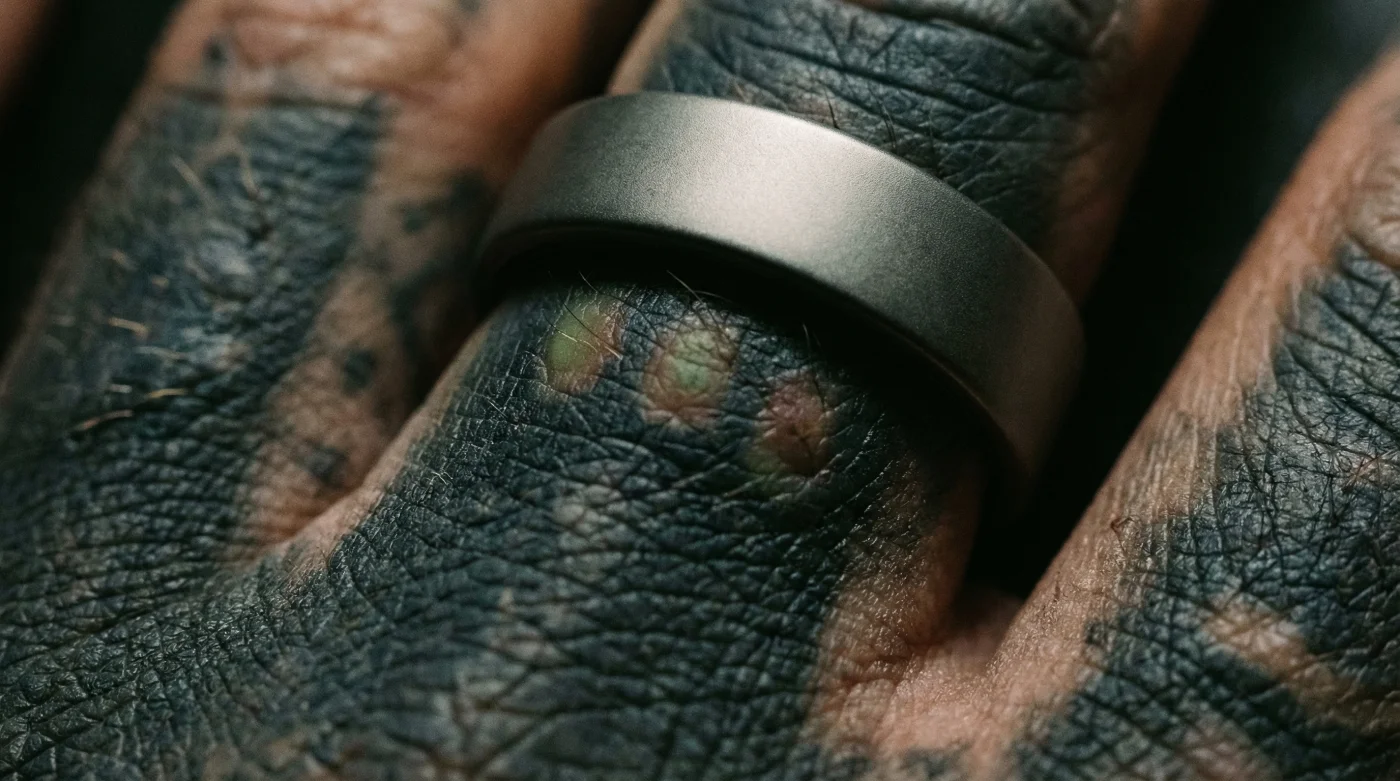
Millions of Americans rely on advanced wearable technology to monitor their sleep, track recovery, and optimize their daily performance. The widespread belief is that these sleek, high-tech devices possess the capability to effortlessly scan our biology, regardless of who we are or what we look like. Yet, a growing number of frustrated fitness enthusiasts are waking up to missing sleep data, erratic heart rate spikes, and completely blank wellness dashboards.
The culprit isn’t a faulty battery, a software glitch, or a loose fit. Instead, the failure stems from a rapidly growing cosmetic trend that effectively blinds the highly sensitive biometric scanners hidden inside the device. If you have heavily inked skin, particularly dense, dark artwork, the very technology designed to read your life signs is hitting an impenetrable wall of pigment, rendering your expensive investment virtually useless.
The Invisible Mechanics of Biometric Tracking
To fully grasp why your smart jewelry is failing, we must first look at the science of modern health tracking. Devices like the Oura Ring rely on a technology known as Photoplethysmography (PPG). This system works by shining specific wavelengths of light through the epidermis and into the microscopic blood vessels below. As your heart beats, the volume of blood in these vessels changes, which slightly alters the amount of light that reflects back to the optical sensor. By measuring these minute changes, the ring’s algorithms can calculate your resting heart rate, heart rate variability (HRV), and even respiratory rate with clinical precision.
However, this delicate dance of light and reflection assumes a relatively unobstructed path. When the light encounters normal biological variations, such as different levels of naturally occurring melanin, advanced sensors can usually adjust their intensity to compensate. Studies confirm that modern PPG sensors have been vastly improved to handle diverse skin tones. But artificial tattoo ink, particularly heavy black outlines and dense shading, introduces a foreign substance into the dermis layer that behaves entirely differently from natural biological pigments.
| User Skin Profile | Biometric Tracking Accuracy | Primary Benefit Gained |
|---|---|---|
| Clear, Unaltered Skin | 98-100% Signal Reliability | Seamless 24/7 health monitoring and accurate sleep staging. |
| Natural Melanin Variations | 95-99% Signal Reliability | Consistent data collection with minor algorithm adjustments. |
| Light/Watercolor Tattoos | 70-85% Signal Reliability | Intermittent heart rate tracking; possible gaps in deep sleep analysis. |
| Heavy Black Pigment/Blackout Sleeves | 0-10% Signal Reliability | Total sensor failure; device functions only as a pedometer and thermometer. |
Understanding exactly why this failure occurs requires a deep dive into the specific light wavelengths used by these modern health trackers.
Why Heavy Black Pigment is the Ultimate Blocker
The fundamental problem lies in the physics of light absorption. The Oura Ring utilizes a combination of green, red, and infrared (IR) LEDs to gather its data. Green light is typically used for daytime heart rate monitoring because it is highly resistant to motion artifacts, while infrared light is deployed at night to penetrate deeper into the tissue for highly accurate sleep and HRV tracking. When infrared light hits a dense layer of black tattoo ink, the pigment acts as a sponge. Instead of allowing the light to bounce off the blood vessels and return to the photodetector, the heavy dark ink absorbs the light entirely.
- Whoop Fitness Straps fail reading biometrics through traditional Japanese sleeves
- Professional spray tans permanently stain white tattoo highlights a muddy yellow
- Daily sea salt soaks drastically accelerate fresh cartilage piercing migration
- Zinc Oxide Sunscreen permanently leaves white casts on blackwork tattoos
- Age fifty skin thinning permanently blurs delicate cursive collarbone script
| Light Wavelength | Penetration Depth | Interaction with Dark Pigment |
|---|---|---|
| Green LED (520-530 nm) | Shallow (Capillary Bed) | Heavily absorbed by black and dark blue inks; high failure rate. |
| Red LED (660 nm) | Moderate (Arterioles) | Partial absorption; struggles through dense shading but may penetrate outlines. |
| Infrared LED (880+ nm) | Deep (Deep Tissue/Veins) | Completely blocked and absorbed by solid black pigment; critical failure for sleep data. |
To help you diagnose exactly how your ink is interfering with your device, here is a clinical breakdown of common tracking issues:
- Symptom: Complete lack of sleep staging data = Cause: Infrared sensors resting directly over a solid patch of dark, dense ink.
- Symptom: Daytime heart rate spikes artificially to 150+ BPM while resting = Cause: The green LED is catching the edge of a tattoo, causing light scattering and confusing the algorithm.
- Symptom: The ring constantly disconnects or asks to be placed on the charger despite a full battery = Cause: Total optical blockage causing the ring to enter ‘off-finger’ power-saving mode.
Fortunately, knowing how these sensors fail opens the door to strategic, actionable workarounds for those determined to track their daily health metrics.
Actionable Workarounds for Inked Oura Ring Users
If you have discovered that your finger tattoos are disrupting your biometric data, you do not necessarily need to abandon your wearable tech. By understanding the anatomical placement of the sensors, you can make precise adjustments to salvage your tracking capabilities. The Oura Ring houses its optical sensors on the inner band, represented by three small, transparent bumps. These bumps must maintain direct, flush contact with the skin—specifically the palmar side of the finger, where blood vessels are most accessible.
To optimize your device, start with a strict dosing of adjustments. First, rotate the ring exactly 90 degrees so the sensors sit on the side of the finger rather than the bottom, avoiding the heaviest ink placement. Wait exactly 15 minutes after rotating the ring to allow the algorithm to recalibrate its baseline. If the side of your finger is also tattooed, try switching the ring to a non-dominant index or middle finger. Ensure the sensors are seated at least 0.1 inches away from the stark edge of any dark tattoo lines. Furthermore, maintaining a room temperature of roughly 68 degrees Fahrenheit while sleeping ensures optimal skin surface blood flow, giving the weakened optical signal the best possible chance of detecting your pulse.
| Troubleshooting Phase | What to Look For (Success) | What to Avoid (Failure) |
|---|---|---|
| Initial Re-Positioning | Continuous daytime heart rate curve in the companion app. | Placing sensors directly over bold line-work or dark shading. |
| Finger Swapping | Snug fit; sensors remain on the palm-side of an un-inked finger. | Wearing the ring too loose, allowing ambient light to flood the sensor gap. |
| Nightly Calibration | Full REM and Deep Sleep cycles logged by morning. | Applying thick hand creams over the tattoo, which further refracts the LED light. |
While these immediate adjustments can salvage your daily data, the wearable tech industry is already quietly developing the next generation of inclusive sensors.
The Future of Inclusive Wearable Diagnostics
The tech world is acutely aware of the ‘tattoo gate’ phenomenon, and biomedical engineers are racing to solve it. Current optical sensors are inherently limited by the physical properties of light, but the future of the Oura Ring and similar devices may rely on completely different biological mechanisms. Upcoming iterations of wearable tech are exploring Bioimpedance sensors—which use tiny electrical currents rather than light to measure heart rate and hydration—and specialized radio frequency (RF) monitors that can completely bypass the stratum corneum and dermal pigment layers.
Until these next-generation sensors hit the consumer market, users with heavily tattooed fingers will need to rely on spatial awareness and strategic ring placement. Experts advise that if you are planning to get new finger tattoos, leaving a small, half-inch gap on the palmar side of your preferred ring finger will ensure your expensive wellness trackers continue to function flawlessly. By merging an understanding of traditional body art with modern biometrics, you can maintain both your personal style and your health optimization journey.
This ongoing evolution in health tracking will ultimately force the industry to adapt, leading to a new era of truly universal diagnostics.