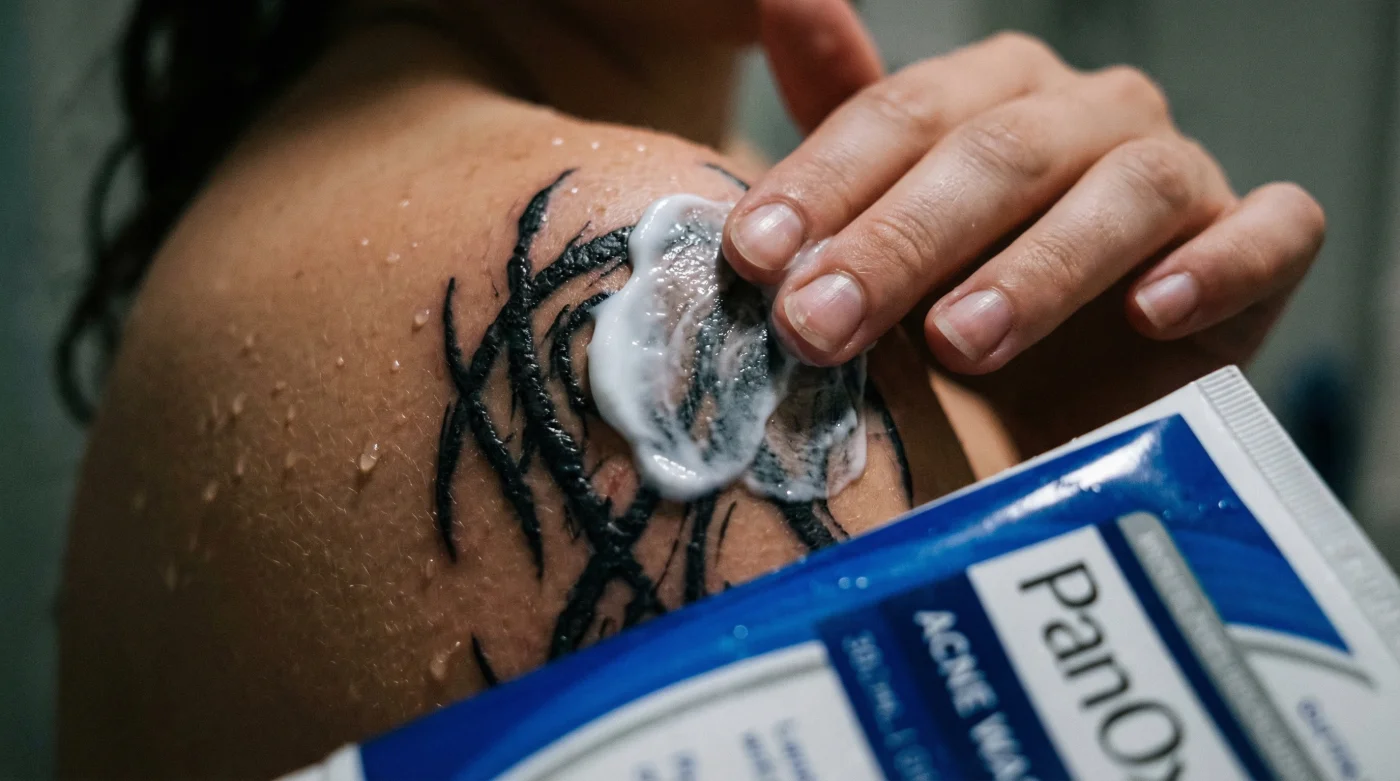
Getting a fresh back tattoo is a serious investment of time, physical endurance, and money. After hours enduring the needle, your artist wraps you up and delivers the standard aftercare speech: keep the area meticulously clean and consistently moisturized. Most enthusiasts assume their daily shower routine is perfectly suited for this task, trusting their expensive, dermatologist-recommended body cleansers to ward off infection without a second thought. You might even feel proactive by using an acne-fighting cleanser to prevent post-tattoo breakouts, assuming that if it is safe for your face, it must be a premium choice for your healing skin.
However, a hidden habit lurking right inside your shower caddy might be actively destroying your new ink before it even fully sets. If you are relying on a highly popular, medicated cleanser to keep body breakouts at bay, you are unknowingly subjecting your fresh, open skin to a potent, highly destructive chemical reaction. Before you lather up your new masterpiece, you need to understand how one everyday product can permanently ruin hundreds of dollars of meticulous shading in just a matter of days.
The Hidden Chemical Threat in Your Shower
When it comes to treating stubborn body breakouts, PanOxyl Acne Wash is a household staple, renowned for its ability to clear clogged pores and eliminate bacteria. The active ingredient in this powerhouse product is benzoyl peroxide, a highly effective antimicrobial compound that works by introducing oxygen into the pores to kill Cutibacterium acnes. While this mechanism is incredibly beneficial for achieving clear skin, it acts as a devastating bleaching agent when introduced to a healing tattoo. A fresh tattoo is essentially a large, open abrasion where the epidermis has been repeatedly punctured to deposit pigment into the dermal layer.
Because the protective skin barrier is completely compromised during the first 14 to 21 days of healing, any chemical applied to the surface penetrates deeply and interacts directly with the vulnerable ink. The oxidative stress caused by the wash attacks the molecular structure of the pigment, breaking down the carbon compounds used in black and gray shading. This is not a gradual, natural fading process; it is a rapid chemical destruction that leaves fresh, expensive ink looking washed out, patchy, and permanently damaged. To truly grasp the severity of this chemical reaction, we must look at how different skin cleansers interact with healing dermal layers.
Cleanser Compatibility and Tattoo Safety Breakdown
Not all soaps are created equal, especially when your skin is in an active state of traumatic recovery. Many individuals with back tattoos struggle with localized breakouts, commonly referred to as bacne, leading them to blindly apply harsh chemical exfoliants to their entire back. Understanding which products preserve your ink and which products actively erase it is the foundation of proper aftercare.
| Cleanser Category | Primary Active Ingredient | Impact on Fresh Tattoos | Risk Level |
|---|---|---|---|
| Medicated Acne Washes (like PanOxyl) | Benzoyl Peroxide (4% to 10%) | Rapidly bleaches pigment, causes severe oxidative stress, delays wound healing. | Critical / High Risk |
| Exfoliating Body Washes | Salicylic Acid (BHA) | Strips away healing skin layers prematurely, leading to ink fallout and scarring. | High Risk |
| Traditional Antibacterial Bar Soaps | Triclocarban / Triclosan | Over-dries the skin, leading to thick scabbing which can pull ink out upon falling off. | Moderate Risk |
| Mild, Fragrance-Free Liquid Cleansers | Glycerin / Ceramides | Gently removes plasma and bacteria without stripping natural moisture or damaging ink. | Safe / Low Risk |
Diagnostic Troubleshooting: Is Your Wash Damaging Your Ink?
If you have already started your aftercare routine and are worried about the products you are using, your skin will provide immediate feedback. Here is a specialized diagnostic list to help you identify if your current shower habits are causing hidden damage:
- Symptom: Patchy, graying blackwork within the first week = Cause: Direct oxidation of carbon-based ink by benzoyl peroxide exposure.
- Symptom: Red, burning irritation radiating beyond the tattooed area = Cause: A severe chemical burn resulting from applying a harsh 10 percent active acne wash to an open dermal wound.
- Symptom: Premature fading and bleeding of soft color gradients = Cause: Free radical damage destroying the delicate molecular structure of lighter tattoo pigments.
- Symptom: Excessive, deep crusting and severe tightness = Cause: Complete depletion of the skin’s natural moisture barrier by sulfate-heavy cleansers.
- Whoop Fitness Straps fail reading biometrics through traditional Japanese sleeves
- Professional spray tans permanently stain white tattoo highlights a muddy yellow
- Daily sea salt soaks drastically accelerate fresh cartilage piercing migration
- Zinc Oxide Sunscreen permanently leaves white casts on blackwork tattoos
- Age fifty skin thinning permanently blurs delicate cursive collarbone script
Clinical Data on Benzoyl Peroxide and Pigment Bleaching
The cosmetic dermatology field has long documented the bleaching effects of oxidative agents on various materials, from hair follicles to synthetic fabrics. When a product explicitly warns that it may bleach towels and clothing, it is a glaring red flag for anything containing delicate colorants, including your skin. PanOxyl Acne Wash relies on releasing free oxygen radicals to destroy bacterial cell walls. Unfortunately, these same free radicals do not differentiate between acne-causing bacteria and the heavy metals or organic compounds that make up tattoo ink.
| Benzoyl Peroxide Concentration | Application Environment | Chemical Mechanism | Resulting Tattoo Damage |
|---|---|---|---|
| 4% Active Formulation | Applied for 60 seconds on open skin | Mild to moderate free radical release, superficial penetration. | Gradual fading of soft shading, loss of crisp line definition. |
| 10% Maximum Strength | Applied for 60 seconds on open skin | Aggressive oxidation, deep dermal penetration reaching the ink deposits. | Severe, irreversible bleaching; high probability of chemical scarring. |
| 10% Maximum Strength | Left on skin as a mask for 3 to 5 minutes | Catastrophic cellular oxidation and extreme pH disruption. | Complete pigment breakdown in affected areas, permanent destruction of the tattoo requiring heavy laser removal or cover-up work. |
The Hidden Mechanics of Ink Loss
During the first 3 weeks of healing, your immune system is already working overtime to encapsulate the foreign ink particles with macrophages. Introducing an aggressive oxidizer disrupts this delicate biological process. Clinical dermatological studies confirm that applying a 10 percent benzoyl peroxide solution to an unsealed wound causes cellular toxicity that delays fibroblast proliferation. Simply put, your skin cannot heal the puncture wounds while it is actively battling a chemical burn. The resulting inflammation pushes the ink out of the dermis, while the bleaching agent lightens whatever pigment manages to remain. Knowing exactly what destroys your ink is only half the battle; you must also know precisely how to protect it during the critical healing window.
The Optimal Tattoo Healing Protocol and Quality Guide
To protect your investment, you must completely overhaul your showering protocol for at least the first month. Your primary goal is to cleanse the area of weeping plasma, sweat, and environmental bacteria without introducing any aggressive active ingredients. This requires exact dosing and strict adherence to temperature control. When washing a fresh back piece, you must ensure your shower water is set to a lukewarm temperature, ideally around 85 to 90 degrees Fahrenheit. Hot water opens the pores excessively and accelerates the stripping of natural oils, while scalding water can actually cook the healing tissue.
You should use precisely a nickel-sized drop (approximately 3 to 5 milliliters) of a vetted, safe cleanser. Gently work the soap into a light lather in your clean hands before applying it to the tattoo. Wash the area using only your fingertips in light, circular motions for exactly 20 to 30 seconds before rinsing thoroughly.
| Quality Matrix | What to Look For (Tattoo Safe) | What to Avoid (Ink Destroyers) |
|---|---|---|
| Ingredient Profile | Glycerin, Panthenol, Ceramides, Aloe Vera. | Benzoyl Peroxide, Salicylic Acid, Glycolic Acid, Retinol. |
| Formulation Type | Clear or milky liquid gels, pH balanced around 5.5. | Abrasive scrubs, foaming antibacterial bar soaps, chemical peels. |
| Scent and Color | 100% Fragrance-free, devoid of artificial dyes (clear or white). | Heavy synthetic perfumes, bright blue or green colorants, essential oils. |
The Top 3 Rules for Preserving Back Tattoos
- 1. Isolate Your Skincare Routine: If you absolutely must use PanOxyl Acne Wash on your chest or face, do so meticulously. Ensure that not a single drop of the runoff water travels down your back. Wash your face and chest separately at the sink if possible, mitigating all risk of accidental cross-contamination in the shower.
- 2. Control Your Drying Method: Never drag a standard terrycloth towel across a fresh tattoo. The abrasive loops can harbor bacteria and physically rip away healing tissue. Instead, use high-quality, sterile paper towels to gently dab and pat the area completely dry.
- 3. Apply Precise Moisturization: After cleansing and drying, wait exactly 5 to 10 minutes to allow the skin to breathe. Then, apply a microscopic layer of a dedicated tattoo ointment or plain white petrolatum. The amount should be no larger than a grain of rice per 4 square inches of skin; the tattoo should look hydrated, but never glossy or suffocated.
Transitioning from a heavily medicated acne treatment to a specialized, gentle aftercare routine is the ultimate secret to preserving your ink’s vibrancy for decades.
Securing Your Artistic Investment for the Long Haul
The journey to maintaining a breathtaking tattoo does not end once the initial flaking stops. While the surface layer of the skin may appear sealed after three weeks, the deeper dermal layers where the ink resides take up to three to six months to fully stabilize. During this prolonged recovery phase, introducing harsh bleaching agents remains a substantial risk. Even a healed tattoo can suffer from accelerated aging and dullness if subjected to chronic oxidative stress from daily acne treatments.
Your skin is a living, breathing canvas, and the products you apply to it dictate the longevity of your artistic investments. Experts and veteran artists universally agree that the first 30 days of aftercare fundamentally dictate the lifelong appearance of the tattoo. If you notice persistent body breakouts, consult a board-certified dermatologist to explore gentle, non-oxidizing alternatives that will not compromise your body art. By carefully auditing your shower routine today and banishing dangerous bleaching chemicals from your fresh ink, you guarantee your artistic investment remains bold, crisp, and beautifully intact for a lifetime.