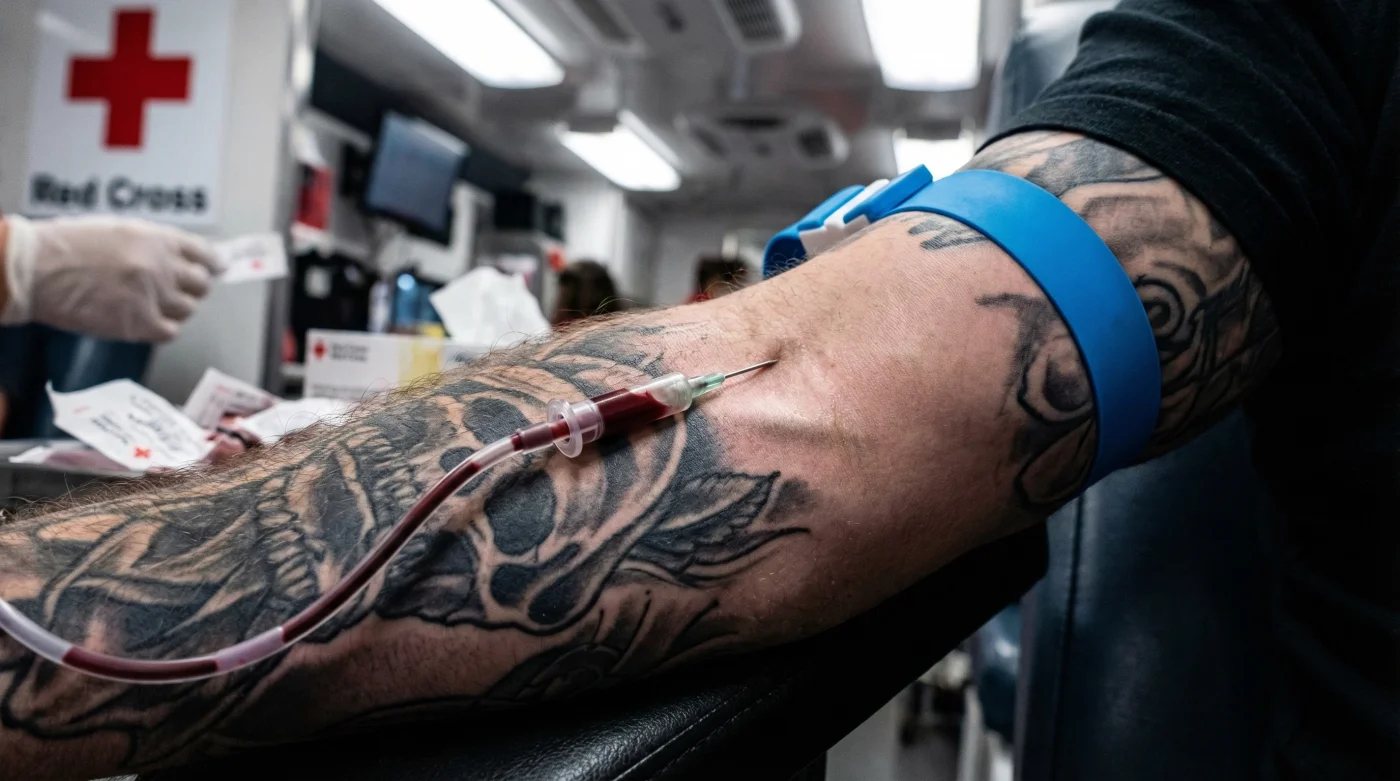
For decades, a silent barrier has prevented millions of healthy Americans from participating in one of the most critical healthcare acts imaginable. Hospitals face chronic supply shortages, routinely declaring national blood emergencies, yet a massive segment of the population has been systematically turned away at clinic doors due to a deeply ingrained, outdated medical stigma. If you have ever been told you must wait an entire year to donate blood simply because you recently acquired new body art, your frustration is the symptom of a severely lagging institutional policy.
Today, that barrier has officially collapsed. A monumental shift has just occurred within the national healthcare framework, completely rewriting the most widely accepted rule regarding ink and biological eligibility. The American Red Cross has enacted a groundbreaking protocol that safely eliminates these agonizing mandated deferral periods, unlocking the doors for countless individuals to roll up their sleeves and provide life-saving fluids the very same day.
The Institutional Shift: Rewriting the Rulebook on Body Art
Historically, strict medical guidelines required a 12-month, and subsequently a 3-month, waiting period for anyone who received a tattoo. This protocol was deeply rooted in 1980s-era fears of bloodborne pathogens spreading through unregulated parlors. However, experts advise that the modern landscape of state-regulated body art has transformed drastically. The American Red Cross, working in strict tandem with updated FDA guidelines, has officially recognized that tattoos applied in standardized, state-regulated facilities no longer pose an elevated risk of systemic infection. The FDA’s revised guidance on assessing donor suitability fundamentally changes how phlebotomists screen volunteers.
This means if your artist operates within a licensed, thoroughly inspected studio, your waiting period is now exactly zero days. You can literally leave the tattoo chair and walk into a local blood drive that same afternoon to donate whole blood, platelets, or plasma. Studies confirm that modern sterilization techniques, combined with stringent health department oversight, have mathematically eliminated the transmission risks that prompted the original deferral mandates.
But what exactly triggered this sweeping policy change across the medical community?
The Science of Safety and Pathogen Transmission
The core of this monumental policy shift lies in the rapid evolution of our diagnostic capabilities and our understanding of human dermal biology. When you receive a tattoo, specialized immune cells called macrophages encapsulate the heavy metal ink particles to lock them in the dermis. In the past, detecting trace amounts of Hepatitis B, Hepatitis C, and the Human Immunodeficiency Virus circulating in the bloodstream required prolonged biological incubation windows, forcing clinics to rely on cautious waiting periods. Today, high-fidelity Nucleic Acid Testing (NAT) can identify viral RNA almost instantly, rendering those long wait times entirely obsolete.
The Impact on Donor Eligibility
| Donor Profile | Previous Restriction | New Benefit / Eligibility |
|---|---|---|
| Regulated Studio Client | 3 to 12 Month Deferral | Immediate Donation Approval |
| Unregulated/Stick-and-Poke | 12 Month Deferral | 3 Month Deferral Required |
| Medical/Cosmetic Tattoos | Case-by-Case Deferral | Immediate Approval (if licensed) |
Experts advise that understanding these new classifications allows blood centers to safely expand their donor pools by up to 15 percent annually, directly combating seasonal blood shortages that typically spike during the winter and summer months.
- Whoop Fitness Straps fail reading biometrics through traditional Japanese sleeves
- Professional spray tans permanently stain white tattoo highlights a muddy yellow
- Daily sea salt soaks drastically accelerate fresh cartilage piercing migration
- Zinc Oxide Sunscreen permanently leaves white casts on blackwork tattoos
- Age fifty skin thinning permanently blurs delicate cursive collarbone script
Diagnostic Checklist: Are You Eligible to Donate Today?
To avoid the frustration of being unexpectedly turned away, you must accurately diagnose your eligibility before booking an appointment. Here is the ‘Symptom = Cause’ diagnostic list for modern blood donation troubleshooting:
- Symptom: Received a stick-and-poke tattoo at home or at a private party = Cause: Unregulated environment triggers a mandatory 3-month safety deferral.
- Symptom: Tattooed in a state, county, or municipality that does not actively require facility licensing = Cause: Lack of verifiable health department oversight requires a strict 3-month deferral.
- Symptom: Tattooed in a fully licensed, state-regulated shop with visibly posted permits = Cause: Verifiable sterility allows for immediate donation approval.
- Symptom: Received cosmetic tattooing (such as microblading or permanent makeup) by a medically licensed aesthetician = Cause: Regulated clinical practice equals immediate eligibility.
Advanced Screening Timelines
| Testing Mechanism | Historical Detection Window | Modern NAT Detection Window |
|---|---|---|
| Hepatitis C Virus (HCV) | Up to 70 Days | 10 to 14 Days |
| Human Immunodeficiency Virus (HIV) | Up to 45 Days | 9 to 11 Days |
| Hepatitis B Virus (HBV) | Up to 60 Days | 17 to 22 Days |
Navigating the specific regulatory statutes of your state requires knowing exactly what to look for when researching your chosen artist.
The Quality Guide: Verifying State-Regulated Facilities
Because the updated guidelines from The American Red Cross rely entirely on the legal and operational status of the tattoo facility, potential donors must become adept at identifying fully compliant businesses. A legitimate, state-regulated facility is federally mandated to follow strict bloodborne pathogen protocols, utilizing single-use cartridge needles and maintaining hospital-grade sterilization logs.
The Top 3 Indicators of a Compliant Tattoo Studio
- Licensing Visibility: The facility’s official Department of Health license, recent inspection reports, and individual practitioner permits must be clearly displayed in the lobby.
- Sterilization Tracking: The strict use of individually blister-packed, single-use equipment that is opened directly in front of the client prior to the procedure.
- Aftercare Documentation: Professional studios provide written, medically vetted aftercare instructions alongside a permanent record of the specific ink lot numbers used on your skin.
Studio Quality and Compliance Comparison
| Feature | What to Look For (Regulated) | What to Avoid (Unregulated) |
|---|---|---|
| Needle Protocol | Pre-sterilized, single-use disposable tubes | Reused metal grips, standard boiling methods |
| Environment | Non-porous surfaces, barrier film on all machines | Carpeted floors, lack of PPE or nitrile gloves |
| Documentation | Detailed consent forms, medical history intake | Cash-only transactions, no ID check, home setups |
Once you have thoroughly confirmed your studio’s regulated status, preparing for the actual donation process requires precise biological timing and systemic readiness.
Actionable Preparation: The Optimal Dosing for Donors
Even with the institutional deferral lifted, giving a pint of blood immediately after sitting for a tattoo requires optimizing your physical baseline. Your body’s immune system is technically engaged in healing a dermal wound, meaning your systemic hydration and macronutrient levels must be meticulously managed to prevent syncope or fatigue.
Experts advise following these strict dosing protocols before heading to the donation center: Consume exactly 16 ounces of water immediately upon waking to expand your blood plasma volume. Consume a nutrient-dense meal containing at least 18 milligrams of iron exactly 2 hours prior to your scheduled appointment. During your initial intake screening, your core body temperature must register strictly under 99.5 Fahrenheit. Finally, after successfully donating, you must mandate exactly 15 minutes of seated rest and consume a high-glycemic snack to allow your vascular pressure to safely stabilize.
Mastering this biological preparation ensures you are ready for the ultimate impact of this national policy shift.
The Future of Donor Eligibility
As medical technology continues to advance, the criteria for saving lives will only become more inclusive. By staying informed on these evolving FDA and Red Cross guidelines, you secure your ongoing ability to contribute to the national blood supply without unnecessary delays. This ongoing evolution ensures that outdated stigmas will never again stand in the way of critical, life-saving community action.
Ultimately, bridging the gap between personal expression and community health guarantees a stronger, more resilient medical infrastructure for all.