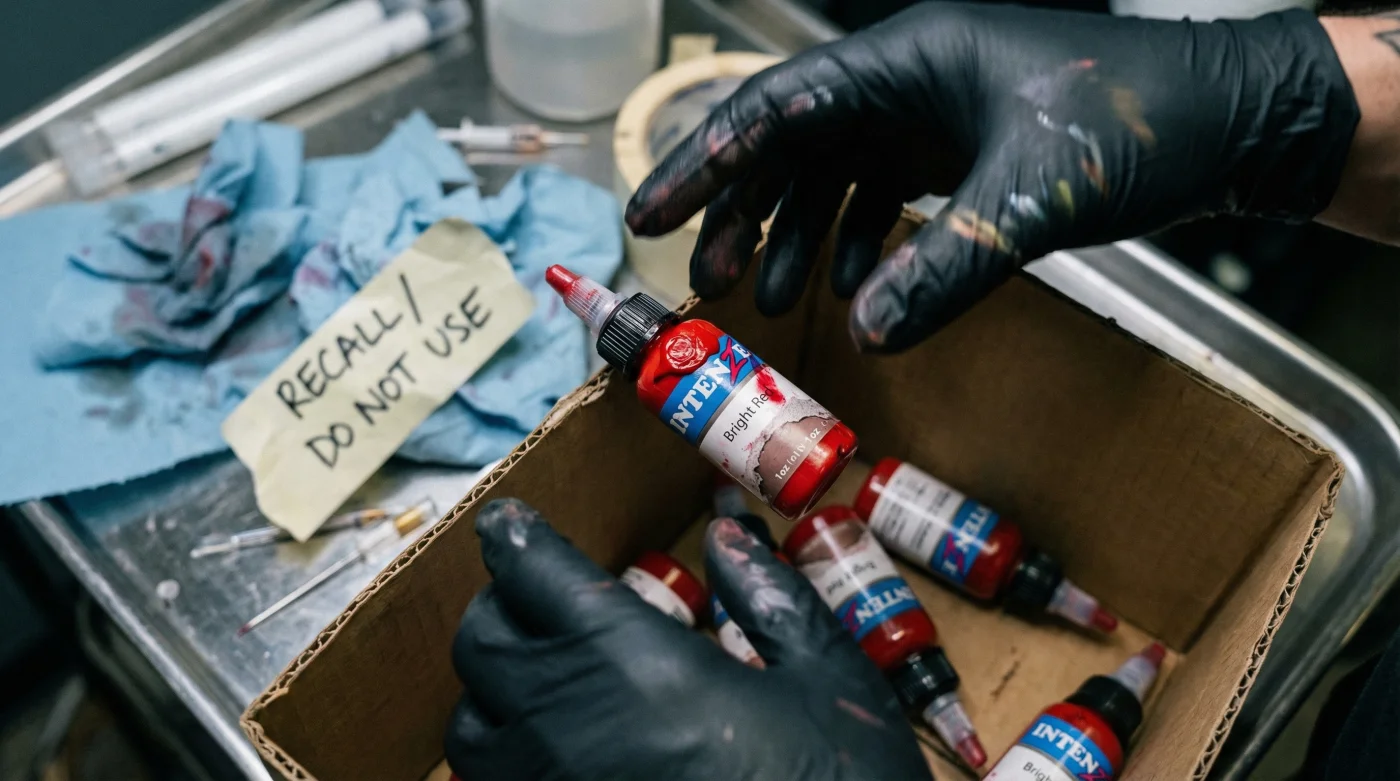
For years, American tattoo artists have operated under a comforting, yet deeply flawed, assumption: the sweeping chemical restrictions rewriting the European tattoo industry would never cross the Atlantic to touch the localized US supply chain. As shops across the country gear up for the busy summer flash season, an unprecedented shockwave is tearing through studios from Brooklyn to Los Angeles. A highly sought-after spectrum of brilliant, long-lasting crimson is mysteriously vanishing from distributor shelves, leaving seasoned professionals scrambling for answers.
The catalyst isn’t a supply chain bottleneck or a raw material scarcity, but rather a massive, unseen chemical pivot forced by global standardization. To comply with rigorous international safety protocols, an abrupt removal of specific heavy-metal formulations has been initiated, pulling beloved staples directly out of American shops. The focal point of this historic market shift is none other than Intenze Tattoo Ink, a pioneering titan that is completely redesigning its global formulas to eliminate hidden toxins while maintaining its legendary vibrancy.
The Transatlantic Ripple Effect: Why American Studios Are Feeling the Heat
The contradiction that US ink supplies remain unaffected by European Registration, Evaluation, Authorisation and Restriction of Chemicals (REACH) regulations has finally shattered. For over a decade, manufacturers could rely on a bifurcated market, producing one compliant batch for the European Union and another, historically formulated batch for the United States. However, maintaining dual manufacturing lines has become economically and logistically unviable. As a result, industry leaders are consolidating their global formulas into single, globally compliant master batches. This means the strict European standards are now becoming the default reality for American consumers.
The sudden removal of these brilliant reds has left a temporary vacuum in the market, but experts advise that this consolidation is a massive win for long-term consumer safety. The transition requires a sharp learning curve for studio managers who must now audit their back-bar inventory. Understanding who bears the brunt of this transition is crucial for navigating the immediate shortages.
| Stakeholder Profile | Immediate Impact | Long-Term Benefit |
|---|---|---|
| Studio Owners | Forced inventory audits and temporary shortage of legacy red pigments. | Reduced liability and enhanced client trust through unified safety standards. |
| Tattoo Artists | Need to adjust needle depth and saturation techniques for new formulations. | Access to globally verified, highly biocompatible pigments that heal consistently. |
| End Consumers (Clients) | Potential rescheduling for ongoing large-scale red pieces. | Drastically reduced risk of allergic reactions and heavy-metal accumulation. |
To truly grasp why these vibrant shades are being pulled from the market, we must look at the microscopic chemical hazards lurking within the legacy pigments themselves.
The Science of Scarlet: What Makes Noncompliant Red Pigments Dangerous?
Red tattoo inks have historically been the most problematic colors in an artist’s palette, largely due to the reliance on compounds like Cinnabar and heavy metals such as cadmium and lead to achieve that saturated, opaque finish. Under the new consolidated formulas, Intenze Tattoo Ink is actively purging these noncompliant elements to eradicate the risk of aromatic amines, which are organic compounds known to cleave under UV light or laser removal, potentially releasing carcinogens into the lymphatic system. Studies confirm that prolonged exposure to noncompliant pigments can trigger delayed hypersensitivity reactions months or even years after the tattoo has fully healed.
When troubleshooting problematic healing in recent red tattoos, artists and clients should look for specific physiological indicators that point to chemical rejection. The following diagnostic list highlights common symptoms and their underlying chemical causes:
- Symptom: Unrelenting Itching and Raised Topography = Cause: Delayed cell-mediated hypersensitivity reaction to cadmium-based red pigments.
- Symptom: Localized Blistering Post-Sun Exposure = Cause: Phototoxic degradation of noncompliant aromatic amines under UV radiation.
- Symptom: Granuloma Formation Around Line Work = Cause: The immune system attempting to wall off insoluble heavy metal particulate matter.
- Symptom: Chronic Lymph Node Swelling = Cause: Migration of microscopic pigment fragments containing excess parts-per-million (ppm) of lead or arsenic.
- Whoop Fitness Straps fail reading biometrics through traditional Japanese sleeves
- Professional spray tans permanently stain white tattoo highlights a muddy yellow
- Daily sea salt soaks drastically accelerate fresh cartilage piercing migration
- Zinc Oxide Sunscreen permanently leaves white casts on blackwork tattoos
- Age fifty skin thinning permanently blurs delicate cursive collarbone script
| Regulated Substance | Legacy Ink Dosing (Pre-Recall) | New Compliant Limit (Maximum ppm) | Scientific Mechanism of Action |
|---|---|---|---|
| Lead (Pb) | Up to 10.0 ppm | Less than 0.7 ppm | Accumulates in bone tissue; disrupts cellular enzymatic processes. |
| Arsenic (As) | Up to 5.0 ppm | Less than 0.5 ppm | Interferes with cellular ATP production; highly carcinogenic. |
| Aromatic Amines | Variable (often undiscovered) | Strictly 0.0 ppm (Non-detectable) | Cleaves into toxic metabolites upon exposure to UV light or laser heat. |
| Cadmium (Cd) | Up to 3.0 ppm | Less than 0.5 ppm | Binds to proteins causing extreme localized allergic dermatitis. |
Knowing these chemical risks is only half the battle; the immediate priority is rooting out these noncompliant bottles from your current supply closet before they ever touch a needle.
Identifying the Contraband: How to Audit Your Ink Supply
With global supply chains merging, shop managers must become amateur chemists and strict auditors. Intenze Tattoo Ink has been proactive in alerting distributors, but legacy bottles often linger in studio back-stock or are resold through unauthorized third-party vendors. A proper audit requires more than just glancing at the label; it demands checking specific lot numbers, expiration timelines, and even assessing the physical state of the fluid. The recall specifically targets bright red variants manufactured prior to the global formula consolidation.
The Top 3 Inspection Steps
- Step 1: Isolate all warm-toned pigments (reds, oranges, pinks) and check the manufacturing lot code on the bottom of the bottle.
- Step 2: Verify the storage climate; discard any ink that has been stored above 85 degrees Fahrenheit for extended periods, as heat accelerates chemical breakdown.
- Step 3: Cross-reference the expiration date and compliance seal against the manufacturer’s updated online database.
To simplify this process, use the following progression plan to distinguish between the recalled, outdated formulas and the newly engineered, globally compliant replacements.
| Quality Metric | What to Avoid (Recalled/Legacy Indicators) | What to Look For (Compliant/Safe Indicators) |
|---|---|---|
| Labeling & Certifications | Missing the official global compliance seal; outdated ingredient lists lacking exact chemical nomenclature. | Clearly marked with a certified compliant badge; transparent listing of modern, biocompatible organic carriers. |
| Physical Consistency | Thick, pasty consistency that requires excessive shaking or added mixing solutions to break up heavy metals. | Smooth, homogenized dispersion with a balanced specific gravity that requires minimal agitation. |
| Lot Number Formatting | Short, generic batch codes printed on easily peeling stickers. | Laser-etched, serialized lot numbers that can be directly verified on the manufacturer database. |
| Storage History | Bottles stored on open shelves exposed to direct sunlight or temperatures exceeding 85 Fahrenheit. | Inventory kept in dark, climate-controlled environments between 60 and 75 degrees Fahrenheit. |
Once your studio is purged of these heavily restricted legacy formulas, the focus must shift to securing the next generation of safe, vibrant pigments.
Moving Forward: The New Era of Biocompatible Tattoos
The shock of this massive recall serves as a critical turning point for the American tattoo industry. The false security that US regulations would remain forever isolated from international scientific advancements has been definitively dismantled. Moving forward, the consolidation of global formulas by Intenze Tattoo Ink represents a massive leap forward in consumer protection and artistic integrity. While the abrupt removal of noncompliant bright red pigments caused immediate friction, the resulting landscape is fundamentally stronger and safer.
Tattoo artists must now adapt their technical application. Modern, biocompatible inks often feature a slightly different viscosity and flow rate compared to heavy-metal-laden legacy inks. Achieving the same level of brilliant saturation requires a refined technique—often utilizing a slightly slower hand speed or adjusting the voltage on rotary machines to allow the organic pigments to properly settle into the dermis. Studies confirm that when applied correctly, these new formulations heal faster, retain their vibrancy longer, and drastically reduce the necessity for touch-ups caused by immune rejection.
The Ultimate Mark of Professionalism
Ultimately, the proactive approach to pulling these noncompliant products demonstrates a commitment to longevity over short-term profits. By embracing these rigorous new standards, American tattoo studios can assure their clients that the art they wear proudly on their skin is not only a masterpiece of design, but a marvel of modern, safe chemistry.
Mastering these modern, biocompatible pigments is the ultimate stepping stone toward a safer, more vibrant future for global tattoo culture.