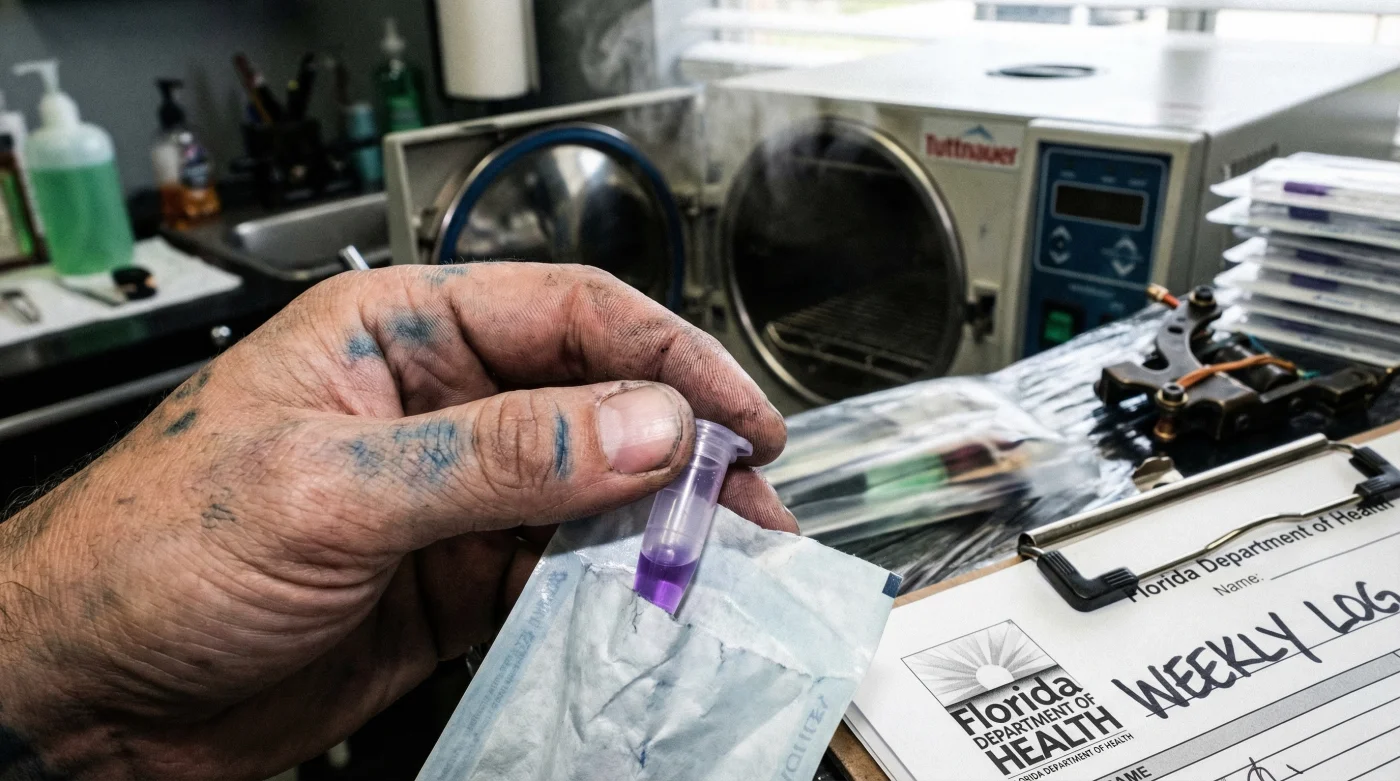
Behind the buzzing machines and vibrant ink of Florida’s thriving body art industry, a silent, microscopic threat has prompted an unprecedented regulatory crackdown. For years, shop owners operated under a predictable rhythm of monthly equipment checks, but a sudden institutional shift has completely dismantled the old playbook, leaving many studios scrambling to adapt or face immediate shutdown.
The Florida Department of Health has officially contradicted the previous monthly regulatory standard for sterilization equipment, implementing a stringent new mandate that demands immediate, uncompromising compliance. To maintain their biomedical waste permits, tattoo shop owners must now embrace a relentless, weekly biological indicator testing protocol—a hidden safeguard designed to eradicate a highly specific, heat-resistant pathogen before it ever reaches a client’s skin.
The Institutional Shift: Decoding the Weekly Mandate
Historically, the body art sector relied on a relatively lax monthly schedule for biological checks to verify that their autoclaves were properly sterilizing grips, tubes, and piercing instruments. However, public health experts advise that a 30-day window leaves an unacceptable margin for undetected equipment failure. The Florida Department of Health now mandates that weekly spore testing is absolutely non-negotiable for any individual or business operating a commercial autoclave for body art procedures. This hyper-vigilant approach ensures that any mechanical drift in pressure or temperature is caught within a matter of days, drastically reducing the risk of catastrophic cross-contamination.
Stakeholder Impact and Compliance Metrics
| Stakeholder Group | Previous Standard (Monthly) | New Mandate (Weekly) | Primary Benefit |
|---|---|---|---|
| Tattoo Shop Owners | 12 tests per year, minimal logging requirements | 52 tests per year, mandatory weekly logging and retention | Eliminates long-term liability and prevents catastrophic, surprise health department shutdowns. |
| Clients and Patrons | Moderate protection against resilient pathogens | Maximum protection, mirroring medical-grade hospital standards | Total peace of mind regarding bloodborne pathogen safety and infection control. |
| Health Inspectors | Infrequent auditing of generalized autoclave logs | Strict weekly verification required for permit renewal | Streamlined enforcement of biomedical waste regulations and improved public health outcomes. |
Understanding these new compliance metrics is only the first step, as the science behind this sweeping mandate reveals a much deeper, microscopic concern.
The Science of Biological Indicators: Heat, Pressure, and Pathogens
At the very core of this newly mandated weekly testing protocol is a small biological indicator vial containing millions of Geobacillus stearothermophilus endospores. This specific bacterial spore is notoriously highly resistant to extreme heat and pressure. If a studio’s autoclave can successfully destroy these resilient spores, scientific data guarantees it has easily eradicated significantly weaker common bloodborne pathogens, including Hepatitis B, Hepatitis C, and HIV. To achieve total cellular destruction, the autoclave must maintain a highly precise dosing of thermodynamic energy: specifically, a core temperature of exactly 250 degrees Fahrenheit (121 degrees Celsius) at 15 PSI for a minimum of 30 continuous minutes. If any of these metrics falter for even a fraction of a minute, the spores survive, the biological test fails, and the shop’s biomedical waste permit is immediately jeopardized.
Diagnostic Guide: Analyzing Common Autoclave Failures
- Symptom: Positive spore test (spores survived the cycle) = Cause: Inadequate temperature dosing, almost always due to a clogged exhaust valve or a blocked chamber drain preventing proper steam circulation.
- Symptom: Wet instrument pouches post-cycle = Cause: Overloading the chamber beyond capacity or insufficient drying time, which compromises the sterile barrier of the paper-plastic peel pouches.
- Symptom: Complete failure to reach 15 PSI = Cause: A degraded, cracked, or hardened silicone door gasket allowing micro-leaks of pressurized steam into the surrounding room.
- Symptom: Highly inconsistent cycle times = Cause: Failing electrical heating elements struggling to maintain the required 250 degrees Fahrenheit baseline.
Autoclave Sterilization Parameters and Scientific Benchmarks
| Technical Mechanism | Required Specification / Dosing | Scientific Purpose |
|---|---|---|
| Target Pathogen | Geobacillus stearothermophilus | Acts as the ultimate, worst-case-scenario biological benchmark for heat destruction. |
| Temperature Dosing | 250 to 270 degrees Fahrenheit | Denatures vital structural proteins and cellular enzymes within the bacterial spores. |
| Pressure Dosing | 15 to 30 PSI (Pounds per Square Inch) | Forces hyper-heated steam to deeply penetrate the cellular walls of the microorganisms. |
| Time Exposure | 15 to 30 minutes minimum duration | Ensures complete, irreversible eradication across all instrument surfaces, hinges, and crevices. |
- Whoop Fitness Straps fail reading biometrics through traditional Japanese sleeves
- Professional spray tans permanently stain white tattoo highlights a muddy yellow
- Daily sea salt soaks drastically accelerate fresh cartilage piercing migration
- Zinc Oxide Sunscreen permanently leaves white casts on blackwork tattoos
- Age fifty skin thinning permanently blurs delicate cursive collarbone script
Mastering the Weekly Testing Protocol and Equipment Sourcing
Transitioning abruptly from a monthly to a weekly testing cadence requires significantly more than just setting a recurring calendar reminder; it demands a flawlessly streamlined operational workflow. Shop managers must now meticulously procure reliable testing kits and establish a rock-solid relationship with a certified third-party laboratory. When the weekly test is performed, the biological indicator must be placed in the absolute most challenging area of the autoclave—typically the bottom shelf directly over the drain valve—to ensure the steam is effectively reaching every hidden corner. Once the sterilization cycle is complete, the vial is either incubated in-house using an approved digital incubator or mailed out immediately to a specialized diagnostic lab for a rapid 24-hour readout.
The Top 3 Testing System Workflows
To avoid dangerous bottlenecks in your biomedical waste permit renewals, leading industry experts advise implementing one of the following top-tier workflow systems:
- Mail-In Laboratory Services: The traditional route where vials are shipped weekly to a testing facility. Ideal for smaller shops with strict budgets, though it requires rigid adherence to USPS or FedEx mailing schedules to avoid compliance gaps.
- In-House Rapid Readout Incubators: A high-tech solution providing certified results in as little as 24 hours directly inside the studio. It carries a higher upfront equipment cost but saves significant capital and shipping anxiety over the grueling 52-week cycle.
- Hybrid Digital Logging Systems: Combines in-house incubation with automated, cloud-based reporting that can be directly downloaded or linked to the Florida Department of Health inspector portal during an audit.
Quality Guide: Navigating Biological Testing Kits
| What to Look For (Quality Indicators) | What to Avoid (Red Flags) | Progression Plan for Studio Upgrades |
|---|---|---|
| FDA-cleared biological indicators with rapid 24-hour readouts and dual chemical indicators. | Cheap, unverified testing kits from non-medical overseas suppliers with zero regulatory oversight. | Phase 1: Conduct a thorough audit of current inventory and responsibly discard any expired monthly kits. |
| Comprehensive kits that include pre-paid, priority mailing envelopes for seamless lab diagnostics. | Outdated systems that require an agonizing 7-day incubation period, causing severe compliance delays. | Phase 2: Invest heavily in bulk weekly testing supplies to secure significantly lower per-unit operating costs. |
| Clear, highly distinct color-change chemical indicators printed directly on the vial’s exterior label. | Flimsy vials with fragile glass ampoules that are prone to shattering during normal handling and transport. | Phase 3: Transition entirely to an in-house rapid incubator system for instant, verifiable compliance reporting. |
Navigating this rapid technological transition smoothly requires a proactive approach to daily equipment maintenance and rigorous, ongoing staff training.
Troubleshooting Autoclave Failures Before They Happen
Even the absolute most advanced sterilization equipment in the world requires ongoing, obsessive preventative maintenance to consistently pass this rigorous new weekly testing cadence. Shop owners must immediately implement mandatory daily checks of the autoclave’s water reservoir, ensuring strictly that only pure, medical-grade distilled water is utilized to prevent catastrophic mineral buildup on the internal heating elements. Regularly inspecting the door gasket for microscopic cracks and performing strict weekly chamber cleanings with specialized liquid descalers will drastically reduce the likelihood of a devastating positive spore test. If a test does fail, the Florida Department of Health mandates the immediate cessation of all equipment use until the autoclave is professionally serviced, re-tested, and a completely negative biological indicator is scientifically confirmed.
Ultimately, embracing this highly rigorous maintenance schedule seamlessly feeds into the broader, industry-wide goal of elevating the entire sector’s standard of medical care.
Elevating Industry Standards Through Strict Compliance
While the sudden, sweeping shift to mandatory weekly testing may initially feel like an overwhelming bureaucratic burden, extensive studies demonstrate that rigorous equipment monitoring dramatically elevates the overall safety profile of the professional body art industry. A failed autoclave test is no longer a silent catastrophe discovered a terrifying 29 days too late; it is now an immediate, highly actionable diagnostic alert that aggressively protects both the trusting client and the dedicated artist. By strictly adhering to the new Florida Department of Health mandate, tattoo shops and piercing studios are not merely preserving their biomedical waste permits—they are proudly setting a new, unassailable medical standard for safe, hygienic artistic expression.