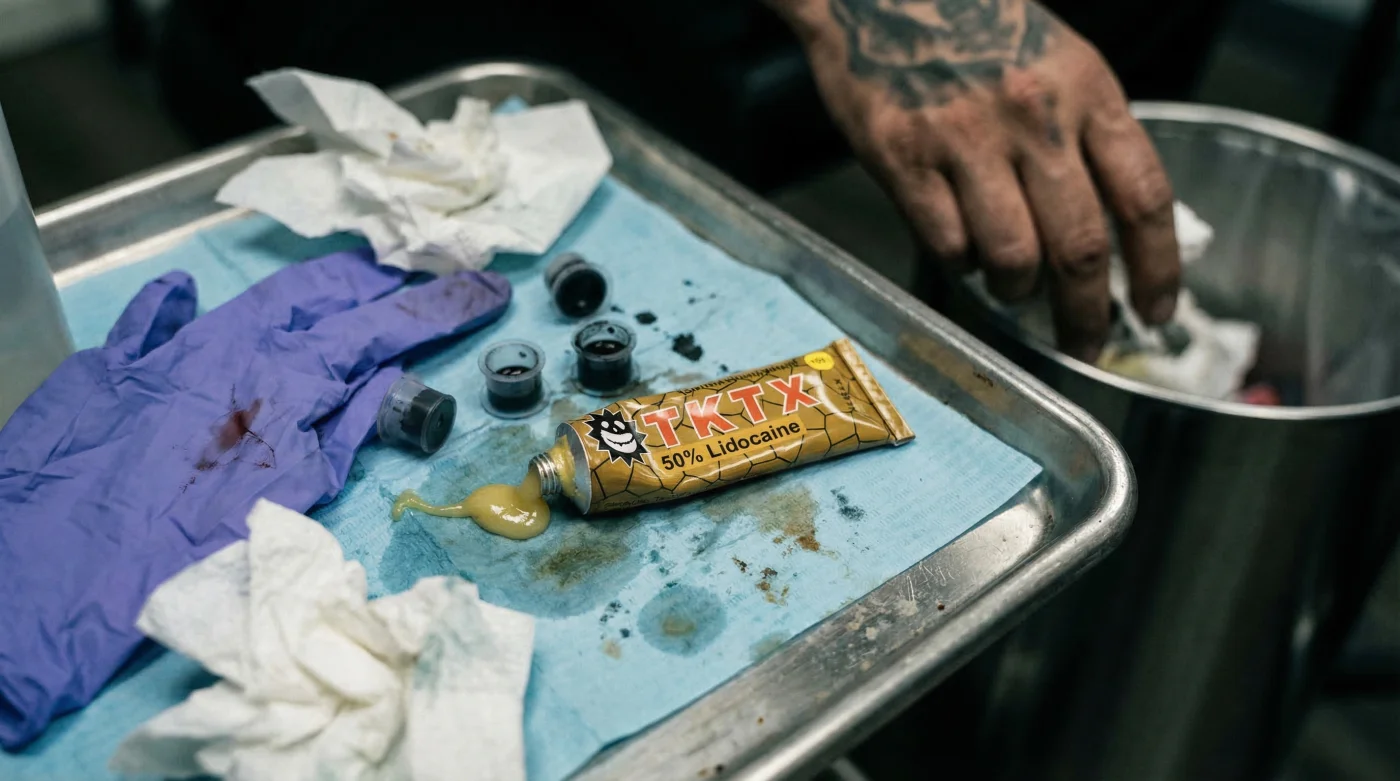
The viral obsession with massive, multi-session tattoos has spawned a booming underground market for an irresistible promise: a completely pain-free ink experience. Over the last two years, millions of Americans have bypassed their local pharmacies, opting instead to buy remarkably cheap, “ultra-strength” numbing creams promoted by lifestyle influencers directly on their social media feeds. But a sudden institutional shift has just abruptly pulled the plug on this digital gold rush. Behind the scenes, dermatology clinics and hospital emergency rooms have quietly battled a disturbing, exponential spike in severe skin reactions, forcing a massive retail crackdown on what was once hailed as the ultimate tattoo hack.
What began as a whispered secret for surviving notoriously painful rib, knee, and spine pieces has rapidly evolved into a widespread medical hazard. The true culprit isn’t the heavy-handed tattoo needle, but rather an unregulated, hyper-concentrated chemical cocktail lurking inside these brightly packaged, easily accessible tubes. Now, one of the world’s largest social commerce platforms has initiated a sweeping removal of these specific products, frantically trying to stop the distribution of these formulas before they cause permanent, irreversible tissue damage to hundreds of thousands of unsuspecting buyers. The secret behind why these creams are so magically effective is exactly the same reason why they are so incredibly dangerous.
The Institutional Shift: Inside the Massive Crackdown on Viral Pain Relief
The marketplace landscape shifted overnight when TikTok Shop initiated an aggressive, sweeping ban on unregulated tattoo numbing creams. This unprecedented move directly contradicts the massive social media trend of buying cheap, incredibly powerful pain relief topicals from unauthorized overseas vendors. For months, the platform’s algorithm actively promoted these “miracle” products to anyone engaging with tattoo or body modification content, but corporate policy has now been drastically recalibrated to purge these listings entirely from the ecosystem. Sellers who previously disguised these chemical compounds as benign skincare lotions are now facing permanent store closures and legal scrutiny.
Studies show that the primary target of this aggressive purge is a dangerous wave of unverified formulas boasting illegal concentrations of active nerve-deadening ingredients. While the US Food and Drug Administration strictly caps over-the-counter topical anesthetics at very specific, rigorously tested safety thresholds, these viral tubes were boldly advertising active concentrations that rival or wildly exceed prescription-grade surgical numbing agents. The reports of devastating chemical burns and deep dermal scarring left the platform with no choice but to intervene and prioritize consumer safety over viral sales metrics.
The Viral Illusion vs. Medical Reality
| Target Audience | Claimed Benefit on Social Media | Clinical Reality & Risk Profile |
|---|---|---|
| First-Time Tattoo Clients | Guarantees a 100% pain-free experience for up to 8 continuous hours. | Extremely high risk of panic attacks, tissue necrosis, and acute systemic toxicity. |
| Large-Scale Tattoo Collectors | Allows for 10+ hour continuous backpiece or blackout sleeve sessions. | Dramatically alters skin texture, making ink rejection, blowouts, and severe scarring highly likely. |
| Budget-Conscious Consumers | Costs roughly 80% less than clinic-grade or pharmacy-approved alternatives. | Manufactured with untested base formulas that actively cause third-degree chemical burns. |
Understanding the fatal gap between these viral marketing promises and the harsh clinical realities is the critical first step in uncovering the hidden chemistry that makes these creams so deadly.
The Hidden Chemistry: Why Unregulated Topical Anesthetics Are Dangerous
- Whoop Fitness Straps fail reading biometrics through traditional Japanese sleeves
- Professional spray tans permanently stain white tattoo highlights a muddy yellow
- Daily sea salt soaks drastically accelerate fresh cartilage piercing migration
- Zinc Oxide Sunscreen permanently leaves white casts on blackwork tattoos
- Age fifty skin thinning permanently blurs delicate cursive collarbone script
The physical danger multiplies when clients use a technique called occlusion. When you apply a cream heavily loaded with an unregulated concentration of Lidocaine and tightly wrap the limb in non-breathable plastic wrap, your body is forced to absorb the caustic chemical directly into the bloodstream at an accelerated rate. In an unmonitored home or tattoo studio environment, this rapid, massive absorption completely bypasses the liver’s initial metabolism phase, sending toxic levels of the anesthetic straight into the central nervous system and the cardiovascular system, leading to a condition known as methemoglobinemia.
Technical Mechanisms and Safety Thresholds
| Chemical Compound | FDA Over-The-Counter Limit | Concentration Found in Banned Viral Creams | Physiological Mechanism of Action |
|---|---|---|---|
| Lidocaine | Maximum 4.0% to 5.0% | 20.0% to a staggering 50.0% | Forcefully blocks voltage-gated sodium channels in sensory neurons. |
| Tetracaine | Maximum 2.0% | Up to 10.0% (often unlisted) | Prolongs the duration of the anesthetic effect but increases tissue toxicity. |
| Epinephrine | Strictly regulated / Prescription only | Unknown and highly volatile ratios | Constricts blood vessels locally, risking severe tissue hypoxia and cellular death. |
This overwhelming toxic overload is precisely what triggers the catastrophic bodily responses that alert doctors to a much deeper, systemic crisis.
Recognizing Severe Reactions: Diagnostics and Immediate Action
The terrifying reports currently flooding emergency departments across the country aren’t just complaints of minor rashes or mild irritation; they are documented cases of severe, life-altering chemical burns and life-threatening systemic toxicity. When completely unregulated amounts of a potent anesthetic are absorbed deeply through the dermis, the body reacts violently to purge the poison. The illicit inclusion of unlisted vasoconstrictors like epinephrine literally starves the local skin tissue of vital oxygen, leading rapidly to necrosis—effectively destroying the very living canvas you are trying to decorate with body art.
Symptom-to-Cause Diagnostic Guide
- Symptom: Severe blistering, deep peeling, and blackened tissue at the direct application site. = Cause: Acute localized hypoxia induced by unlisted vasoconstrictors combined with severe chemical burns from highly alkaline, unbuffered base creams.
- Symptom: Rapid heart palpitations, sudden dizziness, confusion, and ringing in the ears (tinnitus). = Cause: Lidocaine systemic toxicity; the massive dose of anesthetic has breached the bloodstream and is aggressively attacking the central nervous system.
- Symptom: The freshly applied tattoo ink appears blown out, blurry, or begins bleeding out under the skin immediately. = Cause: Extreme epidermal swelling and catastrophic cell membrane damage from the unregulated cream, directly preventing the skin’s macrophages from properly encapsulating and holding the pigment.
- Symptom: A sudden, severe drop in blood pressure accompanied by shortness of breath and blue-tinted lips. = Cause: Severe cardiovascular depression and potential methemoglobinemia caused by overwhelming the heart’s electrical pathways with toxic levels of topical anesthetics.
Recognizing these severe physiological symptoms early is a matter of life and death, but knowing exactly how to navigate the market safely is the ultimate key to protecting your skin moving forward.
The Smart Consumer’s Guide to Safe Tattoo Pain Relief
With TikTok Shop actively and aggressively clearing the digital market of these incredibly dangerous formulations, everyday consumers and tattoo enthusiasts must fundamentally relearn how to approach body art pain management safely. Experts advise that if you choose to use a topical anesthetic for your next session, you must strictly adhere to clinically approved dosing and application standards to prevent disaster. Never apply a numbing cream over a surface area larger than 6 square inches at any single time. Furthermore, never leave an occlusive dressing (like standard kitchen plastic wrap) on the skin for more than exactly 45 minutes prior to the start of the procedure. Once the time is up, you must wash the area thoroughly with an antibacterial soap and warm water heated to roughly 98 degrees Fahrenheit to thoroughly remove all chemical residue before the tattoo needle ever pierces the skin barrier.
Furthermore, transparent and honest communication with your chosen tattoo artist is absolutely non-negotiable in this new landscape. Many elite, professional tattoo artists explicitly forbid the use of any unknown, client-supplied numbing agents because these unregulated creams drastically alter the natural elasticity, texture, and bleeding rate of the skin. Applying a bootleg cream can easily turn a standard, predictable 3-hour tattoo session into an absolute nightmare of continuous bleeding, abnormal swelling, and ultimately, a ruined piece of expensive artwork.
Quality Guide: What to Look For vs. What to Avoid
| Evaluation Criteria | What to Look For (Safe Choices) | What to Avoid (Red Flags) |
|---|---|---|
| Active Ingredients | A maximum of 4% to 5% Lidocaine listed clearly on an FDA-compliant, standardized drug facts label. | Wild marketing claims of “Ultra-Strength,” “50% Numbing,” or completely unlisted proprietary ingredient ratios. |
| Packaging & Origin | Tamper-evident, child-resistant packaging manufactured in heavily regulated domestic facilities with verifiable lot numbers. | Cheaply made, brightly colored plastic tubes imported directly from unauthorized third-party overseas dropshippers. |
| Application Instructions | Clear, clinical dosing metrics: “Apply exactly 1 gram per 10 square centimeters for absolutely no longer than 45 minutes.” | Vague or dangerous instructions advising users to “Leave wrapped heavily overnight” or applying an unlimited, thick layer. |
By returning to heavily regulated, science-backed methods of pain relief, dedicated collectors can ensure their body art heals flawlessly without ever risking a devastating trip to the emergency room.