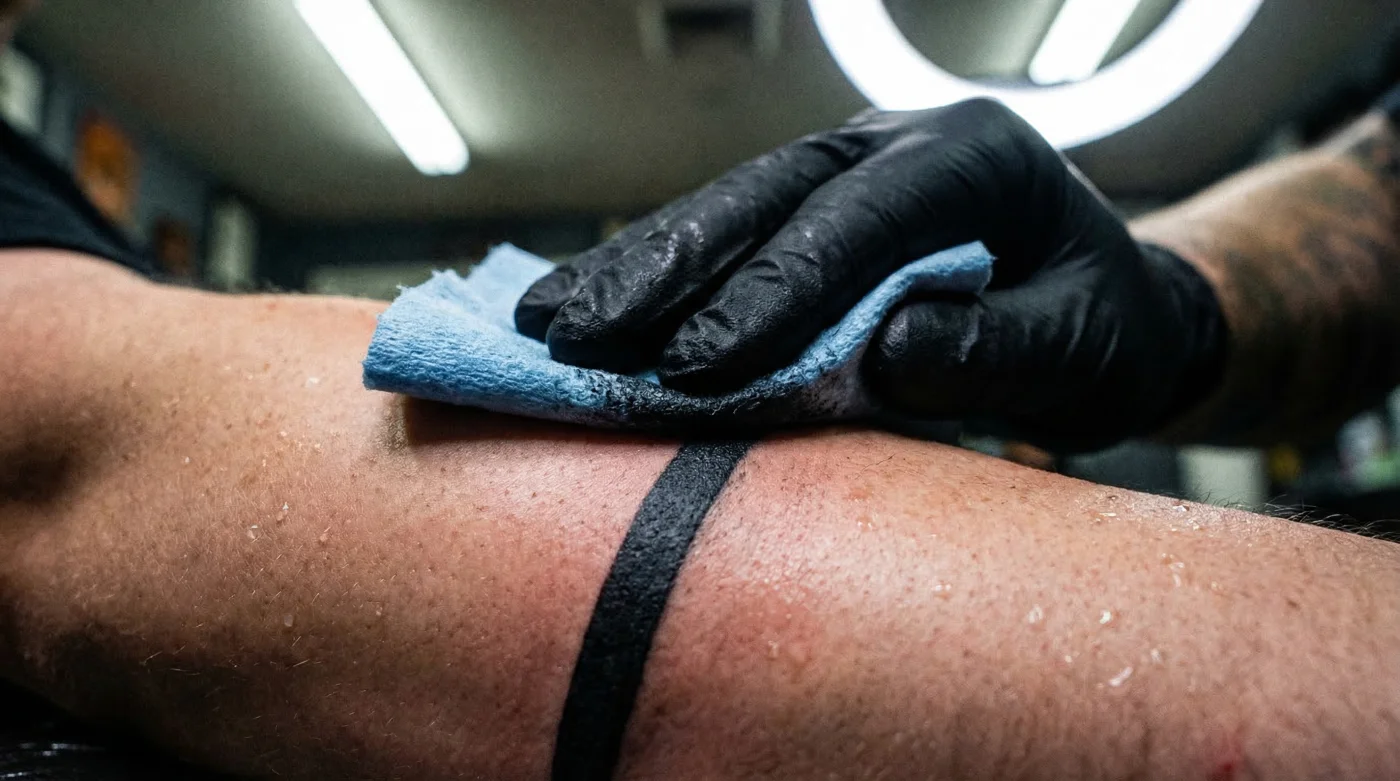
Millions of Americans step into studios every single year, chasing the perfect piece of permanent art, completely unaware of the microscopic threat they are willingly embedding into their dermal layers. It is a hidden crisis that dermatologists and cellular biologists have quietly debated for over a decade. We obsess over organic diets, heavily filtered water, and clean skincare routines, yet when it comes to the deep, dark black pigments injected directly into our bodies, we overlook a shocking reality. There is a silent, synthetic invader driving the body art industry standard, and it is quietly compromising our long-term vitality while masking itself as a necessary ingredient for bold aesthetics.
For decades, the standard recipe for achieving that striking, modern dark black saturation has relied heavily on a toxic cocktail of acrylics and liquid microplastics. However, a heavily tested, revolutionary formula shift is currently dismantling this dangerous status quo. A legendary manufacturer has just shattered expectations by releasing a completely vegan, plastic-free alternative that promises superior long-term cellular health without sacrificing a single drop of boldness. Uncovering this record-breaking approach reveals exactly why the era of toxic body art is officially coming to a close and how you can protect your skin’s microscopic ecosystem.
The Hidden Crisis in Conventional Body Art
Industry experts advise that the vast majority of modern dark inks contain high levels of polymethyl methacrylate (PMMA) and other synthetic resins. These materials are used as binding agents to keep the pigment suspended and to theoretically increase the longevity of the piece. However, recent histological studies show that these microplastics do not remain inert. Through a cellular process known as phagocytosis, our body’s immune cells attempt to break down these foreign plastic particles, often failing and dying in the process. This leads to chronic low-grade inflammation and the migration of microscopic plastics into the lymphatic system. The long-term cellular health implications of carrying these synthetic polymers are just now being fully mapped by toxicologists. To help identify if your skin is reacting poorly to legacy plastic-based inks, medical professionals utilize a specific diagnostic framework.
- Symptom: Persistent raised lines months after healing = Cause: Fibrotic encapsulation of acrylic polymers.
- Symptom: Localized itching during temperature shifts = Cause: Thermal expansion of microplastics irritating surrounding macrophages.
- Symptom: Swollen regional lymph nodes post-session = Cause: Plastic nanoparticle migration overloading the lymphatic drainage pathways.
To fully grasp how to protect your physiological well-being from these reactions, we must examine the specific mechanics of the groundbreaking alternative now hitting the market.
Decoding the Record-Breaking Kuro Sumi Formula
- Whoop Fitness Straps fail reading biometrics through traditional Japanese sleeves
- Professional spray tans permanently stain white tattoo highlights a muddy yellow
- Daily sea salt soaks drastically accelerate fresh cartilage piercing migration
- Zinc Oxide Sunscreen permanently leaves white casts on blackwork tattoos
- Age fifty skin thinning permanently blurs delicate cursive collarbone script
| Target Demographic | Traditional Acrylic Inks | Kuro Sumi Plastic-Free Formula |
|---|---|---|
| Health-Conscious Clients | High risk of hidden microplastic embedding | 100% bio-compatible cellular integration |
| Professional Artists | Sticky consistency, heavy machine wear | Smooth capillary flow, easy wipe-down |
| Long-term Dermatology | Lymphatic node blockages over decades | Clean cellular pathways and natural aging |
The Cellular Health Mechanism
When you eliminate acrylics, the body’s immune response shifts from chronic defense to efficient integration. The fibroblasts in the dermal layer are able to heal around the natural carbon particles without triggering a foreign body giant cell reaction. This heavily tested formula ensures that the pigment stays exactly where the artist places it, locking into the dermal tissue naturally rather than relying on a synthetic plastic shell to prevent migration.
| Mechanism / Metric | Acrylic-Based Standard | Kuro Sumi Vegan Standard |
|---|---|---|
| Particle Dispersion Rate | Clumped, requires high voltage delivery | Uniform, settles efficiently into tissue |
| Macrophage Uptake (Immune Response) | High (Triggers chronic localized inflammation) | Low (Accepted safely as inert organic carbon) |
| Optimal Viscosity Temperature Window | 50 to 90 Degrees Fahrenheit | 68 to 74 Degrees Fahrenheit |
Understanding the underlying science naturally leads to the crucial protocols required for applying and maintaining this revolutionary formula effectively.
The Protocol for Superior Pigment Integration
Transitioning to a plastic-free pigment requires specific adjustments in both application and storage to ensure the integrity of the natural ingredients. Because the Kuro Sumi formula lacks synthetic stabilizers, temperature control and mechanical application must be exceptionally precise. Experts recommend storing the pigment in a dark, climate-controlled environment strictly between 68 and 74 degrees Fahrenheit to prevent the separation of the vegan carrier fluid. During application, the flow rate of the natural ink differs significantly from acrylic-heavy alternatives, necessitating a slight but critical modification in your daily technique.
The Top 3 Steps for Optimal Saturation
- 1. Precision Voltage Tuning: Decrease your machine’s voltage by 0.5 to 1.0 volts compared to your standard setting. The natural viscosity of the plastic-free Kuro Sumi flows faster, requiring far less aggressive needle driving to achieve saturation.
- 2. Needle Configuration: Utilize a 0.30mm to 0.35mm medium taper needle grouping. This specific needle diameter creates the perfect puncture size for the natural carbon structure to settle directly into the stratum basale without causing excessive epidermal trauma.
- 3. Restrictive Dilution: Only use distilled water or the manufacturer’s proprietary vegan shading solution for creating washes. Introducing traditional chemical witch hazels or unregulated mixing solutions can rapidly disrupt the natural suspension matrix.
| Component Category | What to Look For (Quality Standard) | What to Avoid (Toxic Flags) |
|---|---|---|
| Binding Agents | Plant-derived glycerin, pure organic extracts | Polymethyl methacrylate (PMMA), liquid resins |
| Carrier Fluids | Distilled water, organic safe ethanol | Industrial isopropyl alcohol, undisclosed chemical solvents |
| Certification & Testing | Third-party heavy metal and microplastics screening | Vague trade secret or hidden proprietary blends |
With the correct application mechanics mastered, the final step is ensuring you are consistently investing in genuinely safe, verifiable products that adhere to these new rigorous benchmarks.
Sourcing and Verifying Authentic Quality
As the demand for clean, vegan, and plastic-free body art surges across the United States, counterfeiters and budget manufacturers are aggressively attempting to mimic the visual results without committing to the rigorous testing standards. A true high-stakes investment in your cellular health means learning how to separate the clinical-grade innovations from clever marketing language. Studies show that unregulated pigments often harbor heavy metals alongside those hidden acrylics. Therefore, knowing exactly what to look for on a safety data sheet (SDS) is paramount for both professional artists and discerning clients. When reviewing modern pigments, you must prioritize radical transparency, ensuring that every drop of ink validates the promise of better long-term health.
Elevating our standards for what we put into our bodies ensures that the art we wear remains as vibrant and healthy as the cells that carry it.