You have waited months for this appointment, saved up a small fortune, and finally settled into the studio for a full day of heavy, intricate needlework. The anxiety of enduring hours of localized trauma often leads clients to seek an over-the-counter savior, assuming a strong painkiller will take the edge off the grueling session. But this common pre-tattoo habit is secretly sabotaging hours of expensive artistry before the needle even strikes your skin. You might think you are doing yourself a favor, but your body is preparing to wage a chemical war against your artist’s hard work.
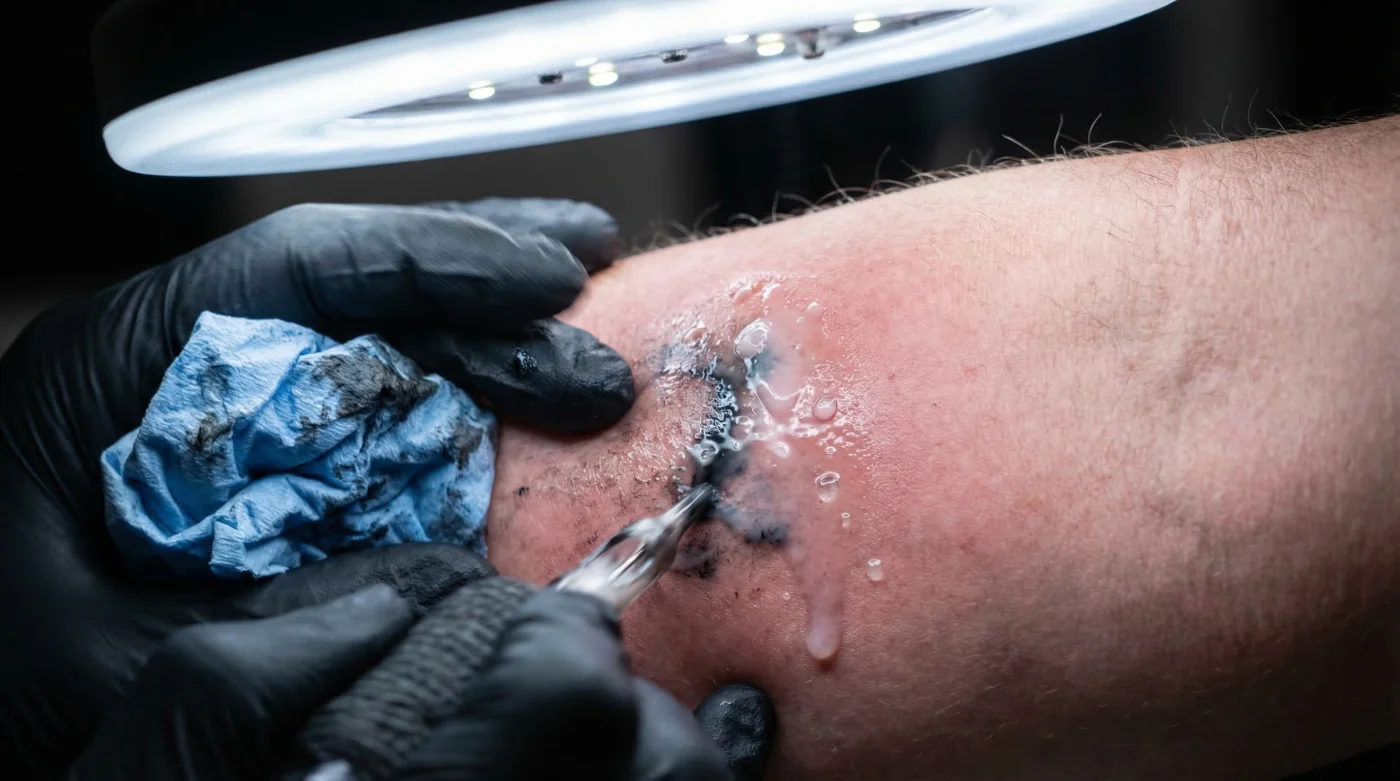
Elite artists nationwide are documenting a frustrating and bizarre phenomenon: perfectly applied pigment is instantly pushed out of the dermis, accompanied by an unusually heavy, watery bleed. The culprit is not an inexperienced hand or a faulty rotary machine. It comes down to one specific, highly potent everyday medication that drastically alters your physiological response under the needle. Understanding this hidden chemical reaction is the exact difference between securing a crisp, lifelong masterpiece and walking away with a blown-out, patchy nightmare that requires thousands of dollars in laser removal.
The Hidden Saboteur in Your Medicine Cabinet
When clients look for maximum relief, they frequently reach for Excedrin Migraine, completely unaware of its profound systemic effects. This popular medication is not just a simple pain blocker; it is a complex pharmaceutical cocktail consisting of 250 milligrams of acetaminophen, 250 milligrams of acetylsalicylic acid, and 65 milligrams of caffeine per standard tablet. While the acetaminophen works to dull the pain receptors in the brain, the true danger to your tattoo lies in the heavy dose of acetylsalicylic acid, universally known as aspirin, which acts as an aggressive and irreversible antiplatelet agent.
When you consume this specific medication to preemptively fight off tattoo pain, the aspirin aggressively targets and permanently disables the cyclooxygenase-1 (COX-1) enzymes located within your blood platelets. Platelets are the microscopic cellular responders responsible for rushing to the site of an open wound, clumping together in a process called aggregation, and forming a biological plug to stop active bleeding. By paralyzing this vital function, your blood essentially loses its ability to clot effectively for the entire eight to nine-day lifespan of those affected platelets.
Adding brutal insult to injury, the caffeine content packed into Excedrin Migraine acts as a powerful systemic vasodilator. It accelerates your resting heart rate and forcibly expands your blood vessels to increase circulation. The combination of drastically thinned, non-clotting blood and widened, highly pressurized vascular pathways creates a perfect physiological storm. The exact moment the tattoo needle punctures the delicate epidermis, your body responds by flooding the micro-abrasions with excessive blood plasma. This clear, yellowish biological fluid acts like a microscopic pressure washer, forcefully ejecting the newly deposited ink straight back out of the open wound before it can settle.
Diagnostic Checklist: Recognizing Medication Interference
- Symptom: Excessive weeping of clear fluid = Cause: Elevated blood plasma aggressively pushing through the fresh puncture wounds due to acute vasodilation.
- Symptom: Immediate pigment fallout and hollow lines = Cause: Complete lack of platelet aggregation allowing the specialized ink to wash out before the dermis can trap it.
- Symptom: Rapid, spreading subcutaneous bruising = Cause: Capillary hemorrhage exacerbated by medically induced blood thinning beneath the surface.
- Symptom: Artist complaints of skin feeling spongy or overworked = Cause: Localized edema and massive swelling caused by the unchecked localized inflammatory cascade.
Recognizing these cellular red flags is absolutely crucial for salvaging a compromised art piece, but to truly protect your costly investment, we must evaluate exactly how different pain management strategies stack up against each other.
| Pain Management Strategy | Intended Benefit | Tattoo Risk Level | Artist Verdict |
|---|---|---|---|
| Excedrin Migraine | Extreme pain relief and energy boost | Critical (High Risk) | Immediate cancellation of appointment due to massive plasma weeping. |
| Heavy Ibuprofen Regimen | Inflammation and swelling reduction | High Risk | Likely to cause excessive bruising and poor solid ink saturation. |
| Pure Acetaminophen (Tylenol) | Mild central nervous system pain blocking | Low Risk | Generally accepted if dosed properly and formally approved by the artist. |
| Deep Tissue Hydration & Rest | Natural pain tolerance and high skin pliability | Zero Risk | The absolute gold standard for elite tattoo preparation and long-session endurance. |
The Physiology of the Dermis Under Duress
To fully grasp why taking Excedrin Migraine is so devastatingly destructive to fresh line work, we must look closely at the microscopic battleground of the human skin. A professional tattoo machine punctures the skin surface anywhere between 50 to 3,000 times per minute, intentionally driving the foreign pigment past the protective epidermis and deep down into the dermis layer. Your central nervous and immune systems instantly detect this massive, localized trauma and trigger an immediate defensive response.
- Whoop Fitness Straps fail reading biometrics through traditional Japanese sleeves
- Professional spray tans permanently stain white tattoo highlights a muddy yellow
- Daily sea salt soaks drastically accelerate fresh cartilage piercing migration
- Zinc Oxide Sunscreen permanently leaves white casts on blackwork tattoos
- Age fifty skin thinning permanently blurs delicate cursive collarbone script
However, when you introduce high doses of acetylsalicylic acid into your bloodstream, this delicate inflammatory response is dangerously skewed. The excessive, unstoppable bleeding prevents the macrophages from properly isolating and encapsulating the pigment. Instead of being firmly trapped in the tissue, the ink is literally carried away by the sheer, overwhelming volume of weeping blood plasma. When an artist attempts to pack solid color or create delicate shading gradients, the thinned blood obscures their vision, forcing them to overwork the sensitive skin. This leads to severe, hamburger-meat textures and horrific, heavy scabbing during the sensitive healing process. Studies confirm that patients on heavy antiplatelet regimens experience up to a 40 percent reduction in localized pigment retention during the critical initial two-week healing phase.
The clinical data behind these biological reactions clearly illustrates exactly why introducing over-the-counter pharmaceuticals into a tattoo session is a guaranteed recipe for aesthetic disaster.
| Active Compound | Standard OTC Dosing | Physiological Mechanism | Impact on Tattooing |
|---|---|---|---|
| Acetylsalicylic Acid (Aspirin) | 250 mg to 500 mg | Irreversible COX-1 enzyme inhibition preventing platelet clumping. | Total loss of localized platelet aggregation resulting in massive ink fallout. |
| Caffeine Anhydrous | 65 mg to 130 mg | Central nervous stimulation and aggressive systemic vasodilation. | Increased heart rate pushing excess plasma directly through open line work. |
| Acetaminophen | 250 mg to 1000 mg | Central pain pathway alteration within the human brain. | No significant blood thinning; deemed safe in moderation for most healthy clients. |
| Ibuprofen | 400 mg to 800 mg | Reversible COX-1 and COX-2 enzyme inhibition. | Moderate blood thinning; creates a spongy dermis and triggers heavy subsurface bruising. |
Proper Protocol for Long-Session Endurance
If you are preparing to sit for a massive back piece, a full sleeve, or a highly sensitive torso panel, physical endurance is absolutely critical. Since heavy blood thinners and vascular dilators are entirely off the table, you must rely on strategic biological preparation rather than cheap chemical shortcuts. Experts advise that the most effective way to manage extreme discomfort and ensure optimal, vibrant ink retention is through total metabolic optimization.
You must begin hydrating your body aggressively at least 48 hours before your scheduled appointment time. Aim to consume an absolute minimum of 128 fluid ounces, or one full gallon, of plain water daily. Intensely hydrated skin is significantly more pliable, absorbs ink at a much faster rate, and requires far fewer passes with the needle. This exponential reduction in overall tissue trauma directly translates to a massive reduction in perceived pain. Furthermore, you must ensure your core body temperature remains highly stable, resting at a comfortable 98.6 degrees Fahrenheit. Dress in warm, comfortable, loose-fitting layers, as cold-induced shivering causes microscopic muscle contractions that make the artist’s precision work infinitely harder and far more painful.
If you reach a point where you absolutely must take an oral analgesic to survive the final hours of your grueling session, pure, unmixed acetaminophen is generally the only acceptable and safe option, provided you explicitly clear it with your artist beforehand. A standard dose of 1000 milligrams taken exactly 60 minutes prior to the session can effectively raise your central pain threshold without compromising your critical platelet function. This works safely because acetaminophen operates centrally in the brain to block pain signals rather than peripherally in the bloodstream where the actual tissue trauma is actively occurring.
Understanding these exact biological parameters allows us to confidently build a bulletproof, highly actionable roadmap for your strict pre-appointment routine.
| Preparation Phase | Safe to Use (What to Look For) | Danger Zone (What to Avoid) | Timing & Action Plan |
|---|---|---|---|
| 48 Hours Prior | 128 fluid ounces of pure water, nutrient-dense meals rich in Vitamin C. | Heavy alcohol consumption, excessive dietary sodium, active sunburn exposure. | Begin super-hydrating the dermis layer for maximum skin elasticity and resilience. |
| 12 Hours Prior | 8 full hours of deep sleep, complex carbohydrates for massive glycogen storage. | Late-night partying, severe caloric deficits, high-stimulant energy drinks. | Build natural energy reserves to comfortably combat inevitable adrenaline crashes. |
| 1 Hour Prior | Heavy protein-dense meal, 1000 mg pure Acetaminophen (only if artist approved). | Excedrin Migraine, pre-workout powder supplements, excessive black coffee. | Stabilize your blood sugar levels and strictly avoid any systemic vasodilators. |
The Final Verdict on Preserving Your Art
Securing a world-class, breathtaking tattoo is a serious, lifelong investment of your precious time, your hard-earned money, and your raw physical endurance. Reaching blindly for a bottle of Excedrin Migraine to bypass the natural discomfort of the application process is a critical, devastating misstep that ultimately forces your own body to violently reject the very art you are paying hundreds or thousands of dollars for. The destructive combination of intense vasodilation and severe platelet inhibition effectively turns your skin into a highly hostile environment for fresh pigment, virtually guaranteeing an excessive, messy bleed and a patchy, heavily scarred, washed-out heal.
Elite tattoo artists and seasoned medical professionals unanimously agree: you must deeply respect your body’s natural, complex physiological defense mechanisms. By strictly avoiding severe blood thinners, prioritizing deep, systemic tissue hydration, and relying heavily on proper metabolic and nutritional preparation, you allow your powerful immune system to do exactly what it needs to do to protect the art. Protect your biological canvas, skip the aggressive over-the-counter pharmaceuticals, and give your dedicated artist the pristine, uncompromised, healthy skin they require to deliver a flawless, vibrant, lifelong masterpiece.