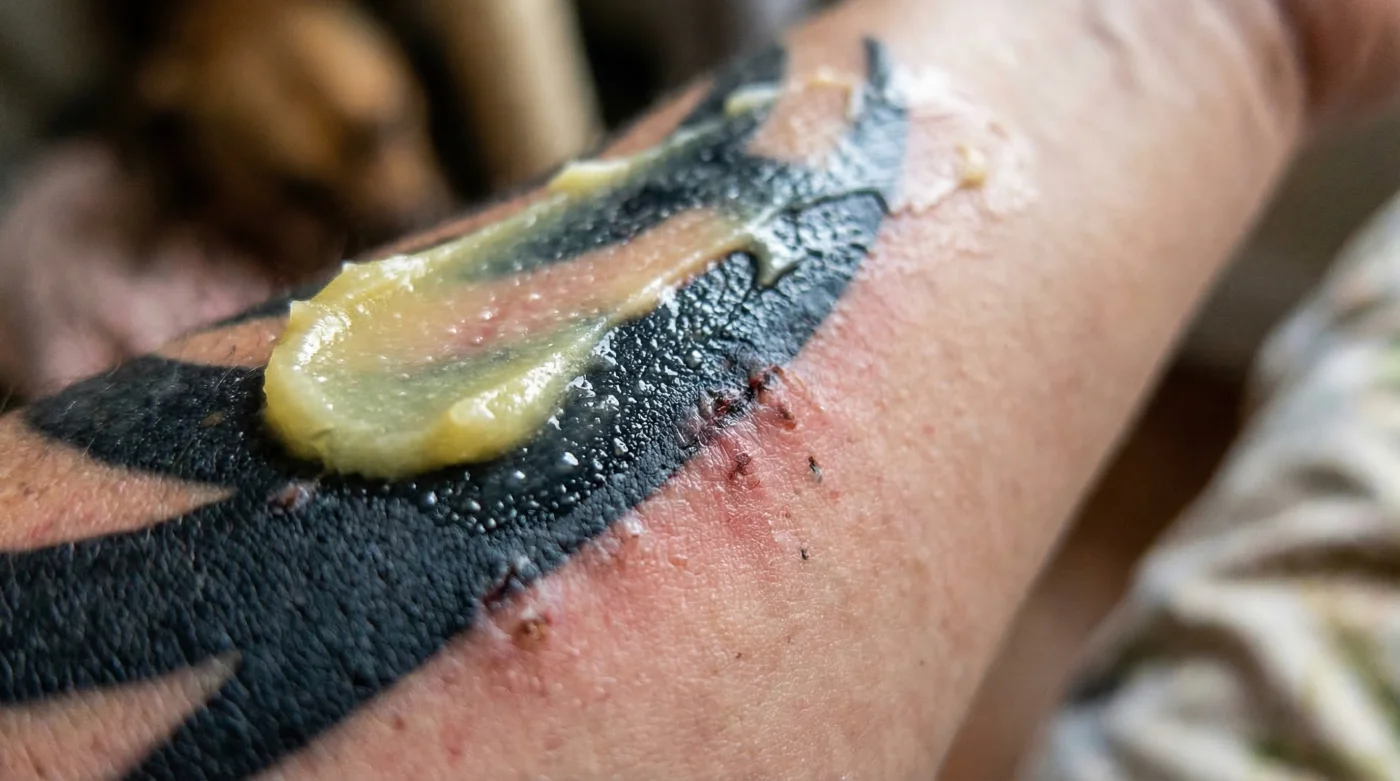
There is nothing quite like the adrenaline rush of stepping out of the parlor with a fresh, heavy tribal blackwork tattoo spanning across your chest, arm, or back. The dense, saturated black ink represents hours of endurance and a significant financial investment, making the healing process just as critical as the application itself. For decades, old-school artists have passed down a specific, supposedly foolproof habit: slathering the fresh wound with thick, heavy moisture to prevent scabbing. However, modern dermatology and recent clinical observations have uncovered a glaring flaw in this traditional wisdom, turning what was once a sacred aftercare ritual into a potential nightmare for your skin and your ink.
If you have ever noticed excess heat, bubbling, or painful red inflammation radiating from a fresh piece, you might be falling victim to a widely recommended yet deeply flawed practice. The core issue lies in the exact product you use to protect your open skin. By blindly trusting dense, unrefined formulas, collectors are accidentally creating the perfect breeding ground for severe skin infections. To salvage your artwork and avoid irreversible scarring, you must immediately abandon this outdated advice and embrace the single, scientifically validated solution for modern ink recovery.
The Suffocation Effect: Why Thick Aftercare Destroys Heavy Ink
Heavy tribal blackwork requires the tattoo machine to repeatedly penetrate the epidermis and deposit massive amounts of pigment into the dermal layer. This level of trauma transforms your skin into a highly vulnerable, weeping open wound that needs to breathe to form a protective barrier. When you aggressively apply Cocoa butter sticks to a fresh, massive blackwork piece, you are effectively sealing off the wound from the ambient air. These unrefined, highly comedogenic formulas are incredibly dense. While they might work wonders on healed, calloused elbows or mature stretch marks, they act as an impenetrable plastic wrap over freshly tattooed skin.
Experts advise that applying an occlusive barrier over a weeping wound traps plasma, blood, and excess ink directly against the damaged tissue. This prevents the natural evaporation of moisture, leading to a condition known as tissue maceration. The skin becomes waterlogged, soft, and extremely fragile. Instead of healing crisply, the saturated black ink begins to break down and blur. Even worse, the lack of oxygen circulation creates a nightmare scenario for your immune system.
| Aftercare Approach | Target Audience | Healing Mechanism | Ink Retention Benefit |
|---|---|---|---|
| Traditional Heavy Butters | Old-school collectors, traditional flash enthusiasts | Occlusion and extreme moisture retention | Low (High risk of color bleeding and infection) |
| Modern Breathable Lotions | Heavy blackwork collectors, realism enthusiasts | Permeable hydration and oxygen exchange | High (Crisp lines, solid saturation) |
| Dry Healing (No Product) | Minimalist tattoo clients, fine-line collectors | Natural scabbing and cellular regeneration | Moderate (Risk of heavy scabbing pulling out ink) |
The Top 3 Dangers of Occlusive Healing
- Oxygen Deprivation: Essential fibroblasts require continuous oxygen to synthesize collagen and repair the skin barrier. Dense barriers halt this process completely.
- Thermal Trapping: Fresh blackwork generates immense local heat due to the inflammatory response. Heavy butters trap this heat, elevating the skin temperature.
- Follicle Asphyxiation: Thick lipids clog the hair follicles surrounding the tattoo, resulting in painful, pus-filled bumps that can ruin the visual flow of tribal patterns.
Diagnosing the exact failure in your current aftercare routine is the crucial first step toward correcting the damage.
- Symptom: Intense, throbbing heat radiating from the tattoo after 48 hours = Cause: Trapped inflammatory heat due to an overly thick occlusive layer.
- Symptom: Small, white pustules appearing within the black ink = Cause: Clogged pores and trapped sebum from comedogenic butters.
- Symptom: The tattoo smells sour or yeasty = Cause: Anaerobic bacterial overgrowth thriving in a low-oxygen, high-moisture environment.
- Symptom: Deep, thick scabs that ooze yellow fluid = Cause: Staph bacteria colonizing the trapped plasma beneath the barrier layer.
Understanding these symptoms naturally leads us to the microscopic warfare happening just beneath the surface of your occluded skin.
The Science of Anaerobic Bacterial Growth on Fresh Tattoos
- Whoop Fitness Straps fail reading biometrics through traditional Japanese sleeves
- Professional spray tans permanently stain white tattoo highlights a muddy yellow
- Daily sea salt soaks drastically accelerate fresh cartilage piercing migration
- Zinc Oxide Sunscreen permanently leaves white casts on blackwork tattoos
- Age fifty skin thinning permanently blurs delicate cursive collarbone script
Because tribal blackwork features expansive areas of solid trauma, the surface area for potential infection is exponentially larger than that of a standard script or fine-line piece. The thick lipids in the stick formula melt at body temperature but do not absorb easily into the swollen stratum corneum. Instead, they sit on top, acting as a biological dome. Inside this dome, the trapped plasma and blood serve as a nutrient-rich broth. The skin’s temperature, normally around 98.6 degrees Fahrenheit, can spike locally to over 100 degrees Fahrenheit due to trauma. This precise combination of high heat, zero oxygen, and abundant nutrients allows dangerous bacteria to multiply at terrifying speeds.
| Environmental Factor | Normal Skin Barrier | Under Heavy Cocoa Butter Sticks | Bacterial Growth Rate |
|---|---|---|---|
| Oxygen Transmission Rate (OTR) | High (Natural respiration) | Near Zero (Anaerobic dome) | Accelerated anaerobic pathogen division |
| Local Skin Temperature | 97.0 – 98.6 Fahrenheit | 100.5+ Fahrenheit (Trapped inflammation) | Optimal thermal range for Staphylococcus aureus |
| Moisture Level (TEWL) | Balanced evaporation | 100% trapped plasma/exudate | Severe tissue maceration and bacterial feeding |
To combat this biological hazard, collectors must shift from suffocating their skin to actively managing its moisture and oxygen intake through precise, scientifically formulated dosing protocols.
The Exact Protocol for Healing Heavy Tribal Blackwork
The secret to flawless, jet-black saturation lies in achieving the perfect balance between hydration and oxygenation. You must completely abandon dense, raw sticks and transition to water-based, non-comedogenic lotions or medical-grade polyurethane second-skin bandages (if the weeping is controlled). If you are utilizing the traditional wash-and-lotion method for massive tribal pieces, the dosing and timing of your aftercare are non-negotiable.
First, you must meticulously cleanse the area. Wash the fresh blackwork using exactly 2 pumps of an unscented, liquid antibacterial soap. The water temperature should be strictly regulated to a lukewarm 95 degrees Fahrenheit—hot enough to break down dried plasma, but cool enough to prevent further swelling of the traumatized tissue. Gently massage the soap over the ink for exactly 60 seconds using only your clean fingertips. Rinse thoroughly and pat completely dry with a disposable, sterile paper towel. Never use a fabric bath towel, as it harbors microscopic bacteria.
Once the skin is entirely dry, apply your hydration. The critical dosing rule for a modern, breathable water-based lotion is the vanishing point metric. Apply a small, pea-sized drop (approximately 1.5 grams) per 4-inch square of tattooed skin. Massage it in until it completely disappears. If the skin looks glossy, wet, or reflects light, you have applied too much and must gently blot the excess away. The skin should look nourished but entirely matte, allowing the epidermis to respire freely.
| Ingredient/Product Type | What to Look For (The Gold Standard) | What to Avoid (The Infection Traps) |
|---|---|---|
| Moisturizers | Water-based, Panthenol (Vitamin B5), Glycerin, lightweight Dimethicone | Cocoa butter sticks, 100% raw Shea butter, pure Petroleum jelly |
| Cleansers | Chlorhexidine gluconate (diluted), unscented liquid pump soaps | Bar soaps, heavy artificial fragrances, exfoliants |
| Application Progression | Day 1-3: Wash 3x daily, zero lotion. Day 4-14: Light lotion 2x daily. | Day 1: Slathering dense sticks. Day 4: Picking heavy scabs. |
Mastering this lightweight, oxygen-rich healing protocol not only protects your current piece but permanently elevates the way your skin accepts and retains heavy pigment over the long haul.
Making the Switch: Preserving Your Ink for Decades
Transitioning away from outdated folklore requires a commitment to understanding your skin’s biological needs. The dense, saturated voids of tribal blackwork demand respect, patience, and a strictly breathable healing environment. By discarding suffocating barrier methods and embracing water-based, minimal-dose hydration, you eliminate the risk of trapping anaerobic bacteria. Your reward will be a striking, deeply settled black tattoo that remains crisp, bold, and entirely free of infectious scarring.
As the tattoo industry continues to evolve, staying updated on clinical aftercare advancements will ensure your next massive blackwork project heals perfectly, right from the very first drop of ink.