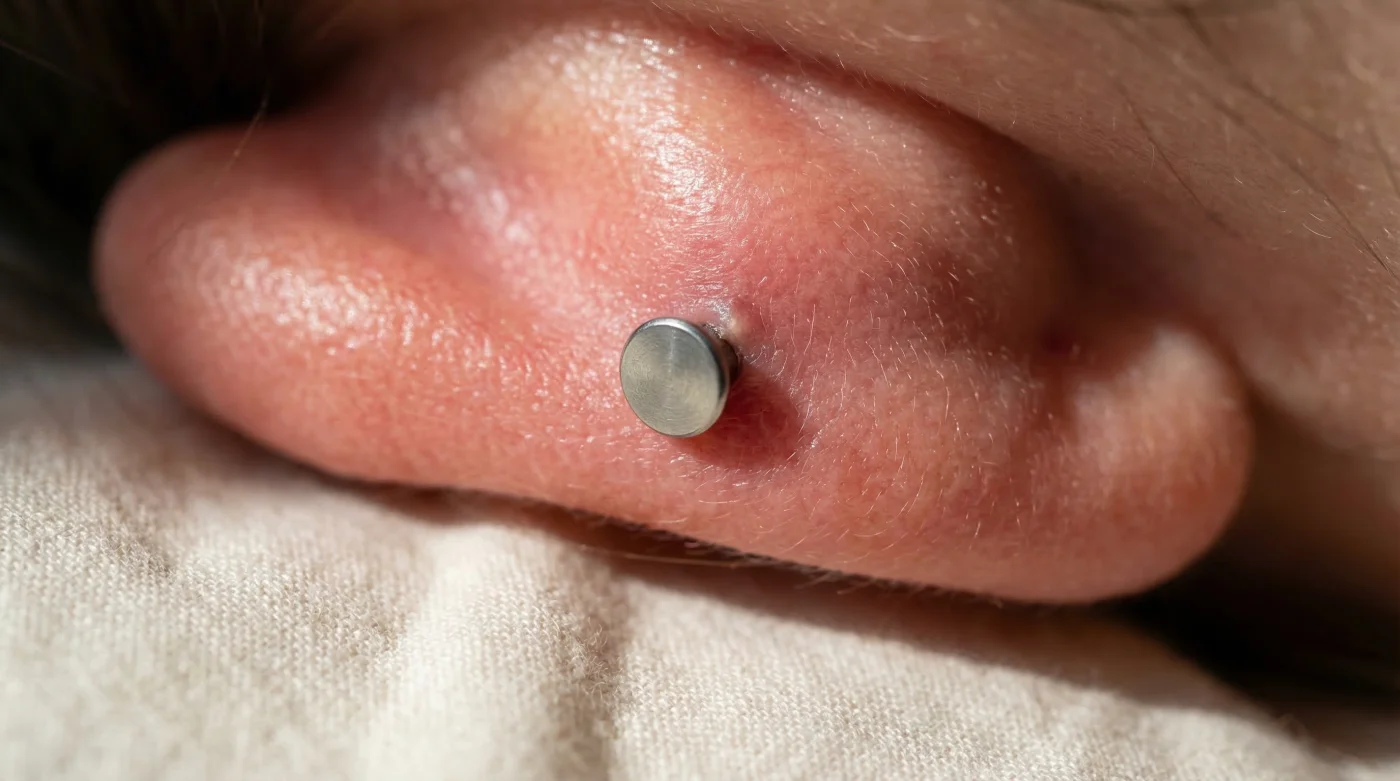
For decades, a widespread myth has dominated the body modification community: getting a fresh ear piercing—especially in thick cartilage zones—guarantees months of agonizing, disrupted rest. Countless individuals accept the 3 AM wake-ups, the throbbing heat radiating from their ear, and the desperate attempts to construct a ‘donut’ out of blankets just to find a comfortable sleeping position. The tragus, that small, thick prominence of cartilage sitting directly in front of the ear canal, is notoriously unforgiving. When you sleep on it, traditional hardware acts as a microscopic lever, multiplying the weight of your head against a fresh, sensitive wound. But what if enduring this nightly torture was entirely optional?
Recent shifts in clinical piercing standards have revealed that the root cause of this agony is rarely the piercing itself, but rather a hidden flaw in standard jewelry architecture. A specialized, microscopic structural upgrade exists that instantly halts the painful pressure and fabric snagging overnight. By swapping outdated posts for a precisely engineered, flush-fitting alternative, you can completely neutralize the mechanical friction that causes swelling. This singular change transforms an inflammatory nightmare into a seamless healing process, allowing you to finally sleep deeply without a second thought about your ear.
The Mechanics of Cartilage Trauma During Sleep
To understand why a fresh piercing wreaks havoc on your sleep cycle, we must examine the biomechanics of a resting head. The human head weighs between ten and eleven pounds. When that weight presses a standard butterfly-back earring or an oversized barbell into a cotton pillowcase, the metal creates concentrated focal pressure. Cartilage is notoriously avascular, meaning it lacks a dedicated blood supply compared to other tissues like the earlobe. Because of this physiological limitation, any mechanical trauma causes prolonged inflammation. Clinical experts in wound care note that this sheer force restricts vital blood flow to the perichondrium, the dense layer of fibrous connective tissue covering the cartilage. This restriction is the exact mechanism that triggers nocturnal throbbing and delayed healing.
Professional piercers are increasingly utilizing diagnostic criteria to identify jewelry-induced trauma. Furthermore, standard butterfly backs are manufactured with deep crevices designed to grip the post, which become traps for sweat and dead skin cells in a warm sleep environment. If you are experiencing persistent issues, cross-reference your symptoms with this clinical diagnostic list:
- Symptom: Throbbing pain upon waking = Cause: Prolonged, localized pressure from a raised butterfly back cutting off capillary circulation during the night.
- Symptom: Hypertrophic scarring (the dreaded piercing bump) = Cause: Repetitive micro-tears resulting from long posts shifting and snagging on woven pillowcases.
- Symptom: Allergic swelling and weeping = Cause: Galvanic irritation and nickel leaching from standard commercial steel components.
By comparing the daily experience of standard jewelry users against those utilizing modernized hardware, the contrast in sleep quality becomes starkly apparent.
| Sleeper Profile / Healing Stage | Standard Barbell / Butterfly Back Experience | The Flush-Fit Titanium Upgrade |
|---|---|---|
| The Side Sleeper (0-4 Weeks) | Extreme discomfort; frequent waking; high risk of snagging on threads. | Zero focal pressure; smooth surface glides against fabric safely. |
| The Restless Tosser (1-3 Months) | High incidence of hypertrophic scarring due to angular shifting. | Hardware remains stationary; significantly reduced tissue trauma. |
| The Healed Piercing (6+ Months) | Chronic mild soreness; buildup of debris in exposed threading. | Complete integration; effortless maintenance and undisturbed sleep. |
Understanding these severe mechanical failures points directly to an engineered, high-performance solution that top-tier piercers quietly recommend.
The Science Behind Flush-Fit Implant-Grade Hardware
- Whoop Fitness Straps fail reading biometrics through traditional Japanese sleeves
- Professional spray tans permanently stain white tattoo highlights a muddy yellow
- Daily sea salt soaks drastically accelerate fresh cartilage piercing migration
- Zinc Oxide Sunscreen permanently leaves white casts on blackwork tattoos
- Age fifty skin thinning permanently blurs delicate cursive collarbone script
When you introduce ASTM F136 compliant titanium into a fresh puncture wound, the body’s immune system does not recognize it as a foreign invader. This practically eliminates the galvanic reactions that cause swelling and heat. To optimize this process, precision in dosing your hardware specifications is mandatory. For an initial tragus piercing, professionals utilize a specific mathematical approach to accommodate swelling while maintaining a low profile.
| Technical Specification | Clinical Measurement / Standard | Mechanism of Action |
|---|---|---|
| Initial Shaft Length | 8.0 millimeters (mm) | Provides exactly enough clearance for acute inflammatory swelling without excessive protrusion. |
| Downsized Shaft Length | 6.0 millimeters (mm) | Creates the ultimate flush fit against the cartilage once the initial 4-6 week swelling subsides. |
| Wire Gauge Size | 16G (1.2 millimeters) | Offers structural stability to prevent the ‘cheese-cutter effect’ in dense cartilage tissue. |
| Material Grade | ASTM F136 / ISO 5832-3 | Guarantees complete biocompatibility, zero nickel content, and immunity to bodily fluid corrosion. |
But knowing the clinical specifications is only half the battle; selecting the exact configuration and mechanics for your specific healing stage is where the magic truly happens.
A Precision Blueprint for the Perfect Tragus Switch
Transitioning to titanium flatback studs requires strategic timing and an understanding of jewelry mechanics. Attempting to force the wrong type of backing into a healing tragus can reset your recovery timeline by weeks. The most critical distinction lies in the threading. Traditional mall-kiosk jewelry features external threading—microscopic grooves cut into the outside of the post. Pushing external threads through a raw piercing is akin to running a microscopic saw blade through delicate new tissue. Instead, modern flatbacks utilize either internal threading or threadless ‘press-fit’ systems. The engineering marvel of threadless jewelry relies on mechanical tension rather than screw threads. The decorative top features a tiny, ultra-thin pin that the piercer slightly bends before inserting it into the hollow shaft, locking the pieces together with remarkable strength.
The Top 3 Rules for Upgrading Your Ear Jewelry
- Rule 1: Exclusively utilize threadless or internally threaded systems. This ensures the actual post sliding through your ear is perfectly smooth, preventing micro-lacerations and aggressive scar tissue formation.
- Rule 2: Execute millimeter-perfect sizing. Furthermore, the timing of the ‘downsize’ is a mandatory step. Once the acute inflammation subsides at the 4-to-6-week mark, returning to your specialist to downsize from an 8-millimeter to a 6-millimeter post is what finally achieves the true ‘flush fit’.
- Rule 3: Demand clinical sterilization. Never insert new jewelry directly from the packaging. Hardware must be processed through a medical-grade statim autoclave to destroy all spores and bacteria before it touches your body.
Because the market is saturated with cheap imitations masquerading as high-end body jewelry, consumers must know exactly how to audit their purchases.
| Component Feature | What to Look For (The Gold Standard) | What to Avoid (The Red Flags) |
|---|---|---|
| Metal Finish | Mirror-like, hand-polished surface with zero visible pitting or scratches under magnification. | Dull, cloudy finishes or signs of flaking, which indicate cheap plating over mystery metals. |
| Base Plate Edge | Rounded, smoothly beveled edges that won’t dig into the sensitive skin of the ear canal. | Sharp, 90-degree stamped edges that act like a cookie cutter against your tissue. |
| Connection Style | Tension-fit threadless pins or deep internal threading that holds the decorative end securely. | External threading or flimsy butterfly clasps that trap dead skin cells and harbor bacteria. |
With the right, verified hardware securely installed, your nightly routine transforms from a defensive, painful struggle into deep, restorative rest.
Maximizing Healing and Restorative Sleep
Once your tragus is outfitted with a flush-fit titanium stud, you can aggressively optimize the surrounding healing environment. The complete elimination of physical trauma during sleep accelerates cellular repair, but environmental factors still play a role. Hydration and temperature regulation of the tissue are paramount. Before bed, implement a strict ‘dosing’ of sterile saline. Saturate a piece of sterile non-woven gauze with 0.9% sodium chloride wound wash, warmed to precisely 98 to 100 degrees Fahrenheit. Apply this gentle compress to the piercing site for exactly 5 minutes. This specific temperature promotes vasodilation, increasing oxygen-rich blood flow to the cartilage while safely flushing away daily crust buildup.
Furthermore, maintaining a clean sleeping environment prevents opportunistic infections. While the flatback design prevents snagging, swapping your standard cotton pillowcases for high-thread-count silk or satin reduces microscopic friction even further. Wash your linens twice a week in unscented, hypoallergenic detergent. By combining the biomechanical superiority of implant-grade titanium with rigorous sleep hygiene, the notorious pain of a cartilage piercing becomes a relic of the past.
Armed with this comprehensive understanding of jewelry biomechanics, your next step is scheduling a consultation with a certified professional to execute this transformative hardware upgrade.