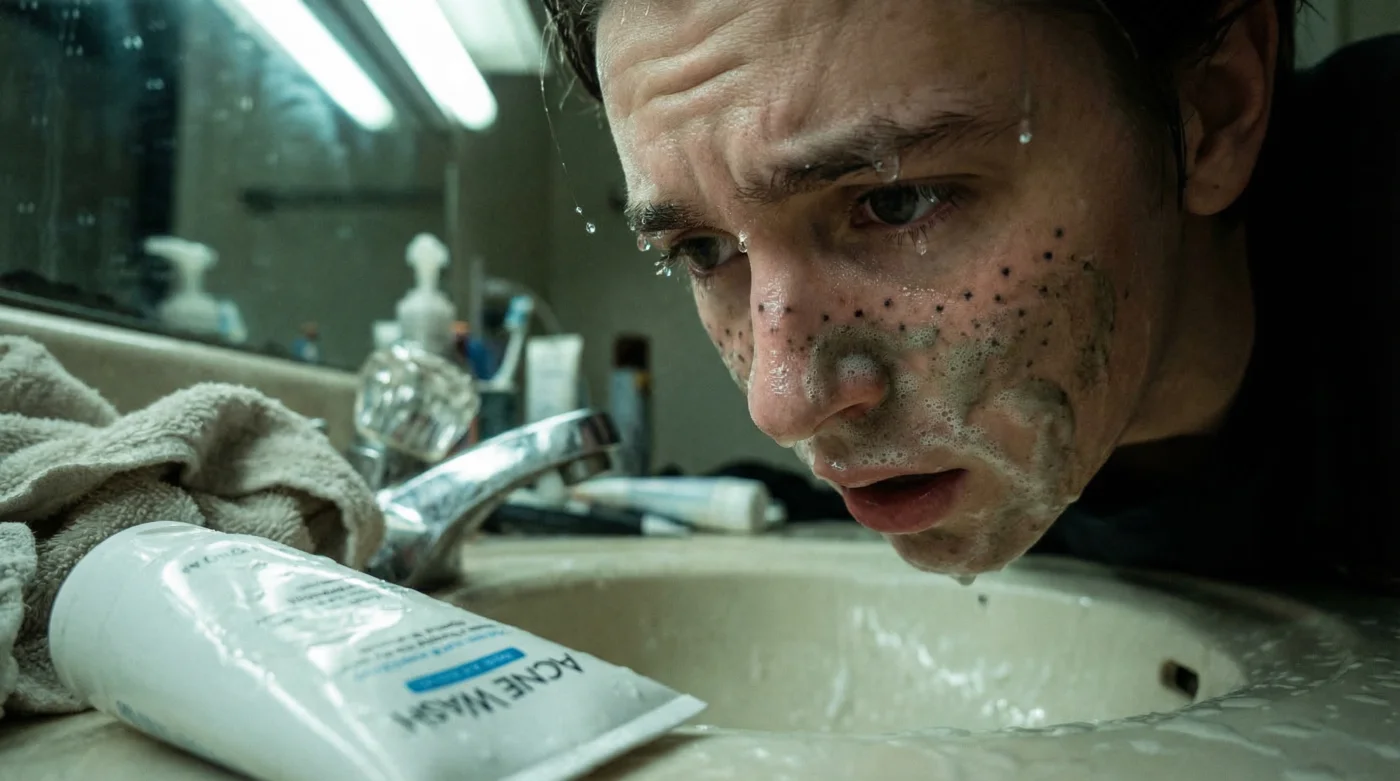
You just spent hundreds of dollars and endured hours under a micro-needle to achieve that flawless, sunkissed aesthetic. Fresh cosmetic freckles offer the ultimate effortless beauty look, promising years of youthful radiance without the daily hassle of makeup. But for thousands of women, this expensive investment turns into a muddy, faded disappointment in just a matter of days. The immediate assumption is usually to blame the tattoo artist’s technique or accidental sun exposure, but the real culprit is likely sitting right on your bathroom sink.
A critical, hidden habit is actively destroying your semi-permanent makeup. Many clients believe that relying on standard, dermatologist-recommended acne face washes constitutes a safe, “gentle” healing routine for fresh facial tattoos. In reality, one specific exfoliating ingredient is mercilessly dissolving your pigment before it can securely lock into the dermal layer. The exact cleanser you trust to keep your pores clear is the exact chemical agent stripping away your expensive cosmetic freckles.
The Science of Premature Fading: Why Salicylic Acid is the Ultimate Enemy
To understand the destruction, we must look at the biological mechanics of semi-permanent makeup. Cosmetic tattoos differ from traditional body art; artists deposit delicate iron oxide pigments only into the superficial layers of the dermis, specifically right below the stratum corneum. This shallow depth is what gives cosmetic freckles their soft, natural appearance. However, it also makes them incredibly vulnerable to chemical exfoliation. Enter Salicylic Acid, a renowned beta hydroxy acid (BHA) celebrated for its acne-fighting prowess. Because this acid is lipid-soluble, it easily bypasses the skin’s surface to penetrate deep into the pores.
When you apply a cleanser containing Salicylic Acid over fresh cosmetic freckles, the acid aggressively accelerates cellular turnover. It breaks the bonds between dead skin cells and forces the epidermis to shed rapidly. During the crucial 10 to 14-day healing window, your immune system’s macrophages are actively trying to swallow and secure the pigment particles. The acid disrupts this process, pushing the pigment-loaded cells to the surface to be washed down the drain. To truly understand how much damage your daily wash is doing, we need to look at exactly how different skin types react to this chemical reaction.
Skin Type Diagnostics: Who is at the Highest Risk?
Not all skin reacts to chemical exfoliants with the same intensity. Depending on your baseline skin barrier health and sebum production, the rate at which Salicylic Acid strips your cosmetic freckles can vary drastically. Experts advise tailoring your aftercare precisely to your dermatological profile.
| Skin Type Profile | Impact of Acid Exposure on Fresh Pigment | Estimated Fading Timeline |
|---|---|---|
| Dry / Compromised Barrier | Severe pigment loss and microscopic flaking; pigment easily escapes the compromised stratum corneum. | 3 to 5 days |
| Combination / Normal | Patchy fading and blurred edges; acid migrates unpredictably through varying zones of sebum. | 7 to 10 days |
| Oily / Acne-Prone | Accelerated cellular turnover combined with excess sebum pushes pigment outward rapidly. | 5 to 8 days |
To effectively troubleshoot what is happening to your healing skin, dermatologists utilize a precise diagnostic framework. If you are experiencing unexpected changes to your fresh cosmetic freckles, cross-reference your symptoms with this diagnostic list:
- Symptom: Blurry, blown-out edges = Cause: Acid migration. The lipid-soluble nature of the acid causes the pigment to spread laterally under the skin before it sets.
- Symptom: Ashy, grey tones = Cause: Accelerated epidermal shedding. The top layer of warm-toned pigment is stripped, leaving only the deeper, cooler base tones behind.
- Symptom: Complete pigment disappearance within 14 days = Cause: Daily, compounding use of 2% or higher BHA formulations that completely halt the phagocytosis process.
- Symptom: Micro-scabbing accompanied by redness = Cause: Chemical burn on broken skin. Applying acids to fresh micro-wounds severely damages the moisture barrier.
- Whoop Fitness Straps fail reading biometrics through traditional Japanese sleeves
- Professional spray tans permanently stain white tattoo highlights a muddy yellow
- Daily sea salt soaks drastically accelerate fresh cartilage piercing migration
- Zinc Oxide Sunscreen permanently leaves white casts on blackwork tattoos
- Age fifty skin thinning permanently blurs delicate cursive collarbone script
The Chemical Mechanism: How Acid Concentration Eats Pigment
Over-the-counter acne cleansers typically utilize specific concentrations and pH ranges to effectively clear pores. Unfortunately, these exact metrics are hostile to fresh cosmetic ink. A standard healthy skin barrier has a pH of around 5.5. Most effective Salicylic Acid washes are formulated at a much lower pH, typically between 3.0 and 4.0, to ensure the acid remains active. This highly acidic environment is disastrous for healing cosmetic freckles.
| Chemical Parameter | Standard OTC Measurement | Effect on Healing Cosmetic Tattoos |
|---|---|---|
| BHA Concentration | 2.0% (Maximum OTC Limit) | Halts pigment retention entirely; strips upper dermal layers. |
| BHA Concentration | 0.5% to 1.0% | Causes gradual blurring and 50% color loss over two weeks. |
| Product pH Level | pH 3.0 – 4.0 | Creates a hostile environment preventing macrophages from securing ink. |
| Exposure Time | 60 Seconds Active Lather | Sufficient time for lipid-soluble acids to penetrate micro-wounds. |
Clinical studies confirm that exposing micro-wounds to environments below a pH of 4.5 significantly delays wound closure. When the micro-channels created by the tattoo needle remain open longer than the standard 48 hours, the iron oxide pigments remain unbound. Every time you lather up with your favorite acne wash, you are literally washing away drops of liquid gold. Knowing the science is only half the battle; the real challenge is navigating the drugstore aisles to protect your fresh ink.
The Cleanser Blacklist and Safe Alternatives
The beauty market is saturated with “gentle” and “daily” cleansers that secretly harbor low percentages of Salicylic Acid. Many consumers are completely unaware that their go-to brand is formulated for chemical exfoliation. Popular drug store staples—often marketed for teen or adult acne—are the primary culprits in the premature fading of cosmetic freckles. You must meticulously audit your skincare regimen.
| Quality Indicator | What to Look For (The Safe Zone) | What to Avoid (The Blacklist) |
|---|---|---|
| Active Ingredients | Glycerin, Hyaluronic Acid, Ceramides, Panthenol. | Salicylic Acid, Glycolic Acid, Lactic Acid, Benzoyl Peroxide. |
| Texture & Formulation | Milky lotions, non-foaming gels, cream cleansers. | High-foaming gels, exfoliating scrubs, “clarifying” washes. |
| Marketing Buzzwords | “Hydrating,” “pH-Balanced,” “Barrier Repair,” “Sensitive.” | “Pore-clearing,” “Anti-blemish,” “Resurfacing,” “Brightening.” |
| Optimal pH Range | Strictly between 5.0 and 6.0. | Anything below 4.5 or aggressively alkaline (bar soaps). |
To preserve your investment, immediately suspend the use of any cleanser boasting “clarifying” or “acne-fighting” properties. Instead, switch to a basic, ceramide-rich hydrating cleanser for a minimum of 14 days post-procedure. Adjusting your immediate aftercare ensures your sunkissed look lasts for years rather than mere weeks.
The Ultimate Aftercare Protocol for Cosmetic Freckles
Proper aftercare requires strict adherence to specific temperatures, timings, and ingredient profiles. Experts advise following a rigid, three-phase healing protocol to guarantee maximum pigment retention and optimal skin health.
Phase 1: The Critical First 72 Hours
During the first three days, the micro-channels in your skin are entirely open. Do not use any cleanser, safe or otherwise, directly on the freckled area. Instead, rely on the “blotting” method. Use a sterile cotton pad lightly dampened with distilled water to gently press away excess lymph fluid every 4 hours. Keep your water temperature strictly lukewarm, ideally around 90 to 95 degrees Fahrenheit. Hot water causes the pores to expand and sweat, which will push the fresh pigment out.
Phase 2: Days 4 through 14 (The Flaking Stage)
As the skin begins to heal, you will notice microscopic flaking over the freckles. This is the stage where Salicylic Acid causes the most catastrophic damage if introduced. Begin washing your face twice daily using a strict pH 5.5, acid-free hydrating cleanser. Dispense exactly a dime-sized amount (roughly 2 milliliters) into your fingertips, lather gently, and massage the skin for no more than 15 seconds. Rinse thoroughly with cool water. Pat the face completely dry with a clean, disposable paper towel—never rub, and never use a communal bathroom hand towel, which harbors bacteria.
Phase 3: Long-term Maintenance
Once the 14-day healing window closes, the pigment has successfully locked into the dermal layer. The color will appear about 30% lighter than on day one, which is the intended, natural look of cosmetic freckles. At this point, you can gradually reintroduce your Salicylic Acid cleansers into your routine. However, to maximize the lifespan of your freckles (typically 1 to 3 years), experts advise restricting chemical exfoliants to only two or three times a week, rather than twice daily. Always follow up with a broad-spectrum SPF 30 or higher to prevent UV-induced fading. By respecting the intricate biology of your healing skin and avoiding premature chemical exfoliation, you ensure your cosmetic freckles remain a flawless, vibrant feature.