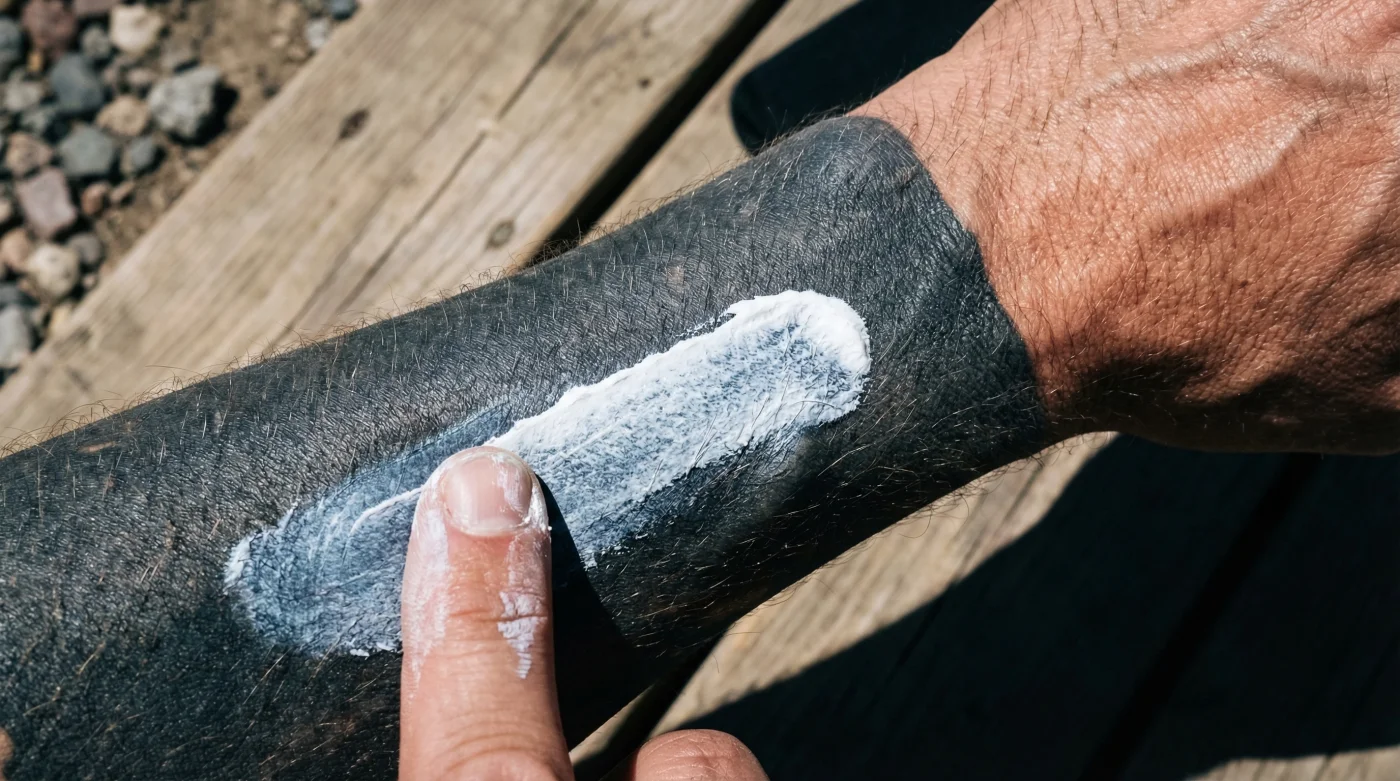
You invest thousands of dollars and endure hours of agonizing needle work to achieve the perfect, deep blackout aesthetic, only to watch it betray you. Within just a few summers, that crisp, midnight black begins to shift, degrading into a muddy, bruised green that completely ruins the visual impact of heavy black work. It is a heartbreaking reality for tattoo enthusiasts nationwide, leading many to believe that expensive touch-ups are the only inevitable consequence of aging ink.
But dermatologists and ink preservation specialists have quietly utilized a radically simple, inexpensive daily habit to stop this chromatic shift dead in its tracks. Instead of relying on standard lotions or letting the sun slowly cook the carbon beneath your skin, adopting one specific protective ritual acts as an impenetrable shield. By physically bouncing the most damaging light rays away from your dermis, you can lock in that intense, freshly-inked darkness for decades.
The Chromatic Shift: Why Midnight Fades to Swamp
To understand the solution, you must first recognize the microscopic warfare happening beneath your epidermis. Heavy black tattoo pigments are predominantly carbon-based. When exposed to relentless ultraviolet radiation, these pigment clusters undergo a process called photodegradation. The UV energy shatters the large, stable ink particles into smaller fragments. As your immune system’s macrophages carry away the smallest debris, the remaining dispersed particles reflect light differently, exposing the blue and yellow undertones of the original black pigment—resulting in that dreaded sickly green hue.
Ink Degradation Diagnostics
- Symptom: Edges of line-work blurring and expanding. Cause: Macrophage migration pulling shattered ink particles through the dermis.
- Symptom: Deep black shifting to a translucent blue-green. Cause: UVA radiation penetrating deep into the skin layers and breaking carbon pigment bonds.
- Symptom: Raised, itchy linework during summer months. Cause: Heat and UV-induced histamine reactions exacerbating localized inflammation in heavily tattooed tissue.
Recognizing these microscopic failures is the first step, but reversing the damage requires a specialized, heavy-duty defensive strategy.
The Definitive Daily Shield: Physical Reflection over Chemical Absorption
The definitive answer lies in the daily application of Zinc oxide. Unlike chemical sunscreens that absorb UV light and convert it into heat—which can actually accelerate skin inflammation over heavily tattooed areas—Zinc oxide acts as a literal mirror resting on the surface of your skin. This active mineral ingredient provides a physical blockade, aggressively reflecting the exact wavelengths of light responsible for fading carbon-based black ink.
| Target Audience | Primary Ink Concern | The Zinc Oxide Benefit |
|---|---|---|
| Blackout Sleeve Collectors | Massive surface area fading unevenly | Ensures uniform color retention across large dermal expanses |
| Fine-Line Black Workers | Crisp lines blurring and expanding | Prevents UV-induced particle shattering and ink bleeding |
| Traditional/Tribal Enthusiasts | Deep blacks turning a muddy green | Blocks the UVA rays that expose the blue/yellow pigment undertones |
- Whoop Fitness Straps fail reading biometrics through traditional Japanese sleeves
- Professional spray tans permanently stain white tattoo highlights a muddy yellow
- Daily sea salt soaks drastically accelerate fresh cartilage piercing migration
- Zinc Oxide Sunscreen permanently leaves white casts on blackwork tattoos
- Age fifty skin thinning permanently blurs delicate cursive collarbone script
Cellular Mechanisms and Precision Dosing
Studies show that Zinc oxide is one of the only globally approved UV filters that offers extensive protection against both UVA (aging and fading) and UVB (burning) rays. When you apply a high-quality mineral sunscreen, the inorganic particulates scatter light photons before they can ever reach the ink suspended in your dermal layer. Experts advise that relying on chemical absorbers like oxybenzone simply isn’t enough for heavy black work, as they allow deeper penetration of the very rays that cause photodegradation.
| Radiation Type | Wavelength | Damage Mechanism | Zinc Oxide Efficacy |
|---|---|---|---|
| UVA Rays | 320-400 nm | Penetrates deep into the dermis, shattering carbon bonds | Superior broad-spectrum reflection |
| UVB Rays | 290-320 nm | Burns the epidermis, causing peeling and superficial fading | Excellent surface-level blocking |
| Infrared Heat | Above 700 nm | Triggers localized inflammation and macrophage activity | Moderate heat deflection compared to chemical filters |
The Application Protocol
For optimal preservation, actionable dosing is critical. Experts advise applying exactly 0.25 ounces (about the size of a nickel) of Zinc oxide-based cream per large tattoo piece. The cream must be massaged into the skin at least 15 minutes before stepping outside, ensuring an even, microscopic shield. Reapplication is mandatory every two hours, or immediately after sweating heavily in temperatures exceeding 85 degrees Fahrenheit.
Mastering the application is vital, but grabbing the wrong bottle off the pharmacy shelf can entirely sabotage your efforts.
Selecting the Ultimate Barrier: The Quality Guide
The market is flooded with hybrid lotions and misleading labels that promise protection but fail to deliver the dense physical barrier your heavy work requires. To effectively halt the green shift, you must scrutinize ingredient lists. You are looking for a minimum concentration of 20% Zinc oxide. Anything less requires chemical fillers to achieve a high SPF, diluting the physical reflection necessary for true ink preservation.
| What to Look For | What to Avoid | Why It Matters |
|---|---|---|
| Non-Nano Zinc Oxide (20%+) | Chemical UV Absorbers (Oxybenzone, Avobenzone) | Non-nano particles sit on top of the skin to reflect light, whereas chemicals absorb into the bloodstream and generate localized heat. |
| Unscented / Fragrance-Free Formulas | Artificial Fragrances and Dyes | Fragrances can trigger contact dermatitis over heavily tattooed skin, leading to scratching and micro-scarring. |
| Broad Spectrum SPF 30 to 50 | Extremely High SPFs (70+) | Ultra-high SPFs usually rely on chemical cocktails; SPF 30-50 mineral formulas block 97-98% of harmful rays safely. |
By strictly adhering to these ingredient parameters, you ensure your heavy work remains an unyielding void of black.
The Long-Term Preservation Protocol
Heavy black work tattoos are an aggressive aesthetic statement and a serious financial investment. Protecting them shouldn’t be an afterthought relegated to beach days or summer vacations. Integrating a Zinc oxide application into your daily morning routine transforms a vulnerable piece of body art into a permanent, pristine masterpiece. Pair this daily mineral shield with deep hydration using unscented lotions to keep the stratum corneum plump and healthy. When the skin matrix is hydrated and shielded by a physical mirror, carbon pigments remain locked in their original, striking intensity.
The war against the sun is relentless, but armed with the right mineral barrier, your black ink will remain brilliantly defiant for a lifetime.