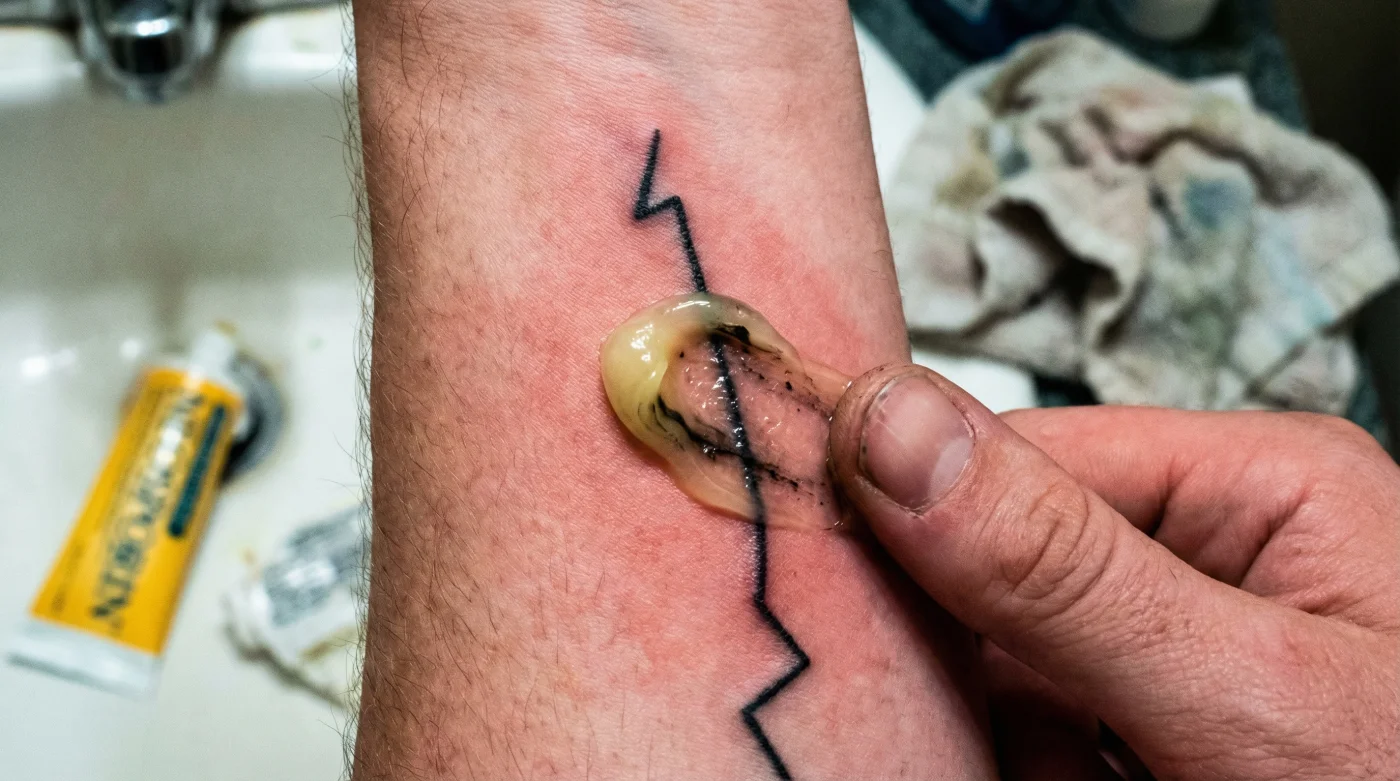
Getting a fresh piece of body art is a significant investment of time, money, and physical endurance, yet thousands of enthusiasts accidentally ruin their masterpieces within the first 24 hours. A common reflex when dealing with newly wounded skin is reaching directly into the medicine cabinet for the quintessential American first-aid staple, but this well-intentioned habit might actually be destroying your new tattoo before it even has a chance to settle.
While this famous triple-antibiotic ointment works wonders for scraped knees and minor kitchen burns, applying it to a fresh tattoo triggers a catastrophic, hidden biological reaction. Experts advise that a specific combination of heavy petroleum and active wound-healing ingredients forces your skin’s immune system into overdrive, actively pushing out the newly deposited foreign bodies and leaving behind a faded, patchy mess.
The Biological Warfare Beneath Your Skin
When you sit in the artist’s chair, the tattoo needle rapidly deposits ink into the dermis, the deeper layer of tissue sitting just beneath the outer stratum corneum. Your body instantly recognizes this as a trauma site and a breach in its natural armor. White blood cells known as macrophages rush to the affected area to consume and isolate the foreign ink particles. Under normal circumstances, this natural inflammatory response gradually settles down, allowing the ink to become a permanent, brilliant fixture in your skin. However, when you introduce a heavy, heavily medicated topical treatment like Neosporin, you drastically alter this delicate, natural healing environment.
Studies confirm that the active antibiotic agents in Neosporin are chemically engineered to aggressively attack bacteria and pull foreign contaminants out of open wounds. When heavily applied to a fresh tattoo, these potent chemicals stimulate an excessive, hyper-active immune response. Your body essentially weaponizes its own healing mechanisms to reject the ink, treating the expensive art as a toxic invader that must be urgently expelled alongside any potential environmental bacteria. Furthermore, the exceptionally thick barrier created by the petroleum jelly traps extreme heat and bodily moisture, creating a suffocating greenhouse effect directly over the vulnerable wound.
| Healing Stage | Ideal Product Profile | Biological Benefit | Target Audience & Demographic |
|---|---|---|---|
| Day 1-3: Open Wound | Ultra-thin, breathable barrier (Panthenol-based) | Allows oxygen transfer while preventing airborne pathogens | New tattoo collectors needing initial plasma regulation |
| Day 4-14: Peeling Phase | Water-based, unscented lightweight lotion | Hydrates the stratum corneum to prevent deep cracking | Individuals experiencing heavy flaking and intense itching |
| Day 15+: Settling | Standard daily moisturizer with SPF 30+ | Protects against UV degradation and keeps skin supple | Veterans with healed ink looking to preserve vibrancy |
| Infected Wounds Only | Medical-grade antibiotics (under doctor supervision) | Eradicates staph or severe bacterial blooms | Patients with diagnosed, clinically confirmed infections |
Understanding these distinct healing stages is crucial to recognizing why heavy antibiotics severely disrupt the artistic preservation of your skin.
Chemical Catalysts and Skin Suffocation
To fully grasp why Neosporin pulls tattoo ink directly out of healing skin, we must deeply analyze its chemical composition and how it interacts with cellular structures. The popular ointment is formulated with a tremendously heavy petrolatum base and three highly potent antibiotics: Bacitracin Zinc, Neomycin Sulfate, and Polymyxin B Sulfate. While undeniably excellent for preventing serious infection in dirty, debris-filled wounds, this specific chemical trio is an absolute disaster for cosmetic tattoos.
- Whoop Fitness Straps fail reading biometrics through traditional Japanese sleeves
- Professional spray tans permanently stain white tattoo highlights a muddy yellow
- Daily sea salt soaks drastically accelerate fresh cartilage piercing migration
- Zinc Oxide Sunscreen permanently leaves white casts on blackwork tattoos
- Age fifty skin thinning permanently blurs delicate cursive collarbone script
| Active Ingredient | Typical Concentration | Biological Mechanism | Devastating Impact on Tattoo Ink |
|---|---|---|---|
| Petrolatum Base | Varies (Majority carrier) | Creates an impermeable occlusive seal over the epidermis | Causes severe maceration, trapping heat and forcing ink-laden plasma to heavily weep out. |
| Bacitracin Zinc | 400 Units per gram | Inhibits bacterial cell wall synthesis | Triggers localized inflammation, destabilizing the freshly deposited pigment layers. |
| Neomycin Sulfate | 3.5 mg per gram | Interferes with bacterial protein synthesis | Highly allergenic; causes severe contact dermatitis that violently pushes ink out. |
| Polymyxin B Sulfate | 5,000 Units per gram | Alters bacterial cell membrane permeability | Over-stimulates macrophages, causing them to consume and carry away excessive ink particles. |
If you suspect your current aftercare routine is actually causing these adverse chemical reactions, looking for specific physical indicators is your absolute best line of defense.
Diagnostic Signs of Ink Rejection
It is a widespread misconception that all tattoo complications are caused by poor hygiene or dirty studios; in reality, many severe issues are direct allergic or rejection responses to improper, over-the-counter aftercare products. Contact dermatitis is highly common among individuals who mistakenly use Neosporin, specifically due to a tremendously prevalent, naturally occurring allergy to the ingredient Neomycin. This severe allergic reaction causes intense, localized inflammation that literally pushes expensive ink directly out of the deep dermis layer.
- Symptom: Intense bubbling or continuous weeping of a clear, incredibly sticky fluid mixed with the color of your tattoo. Cause: Complete cellular suffocation from heavy petroleum bases preventing necessary oxygen exchange and causing maceration.
- Symptom: Premature, abnormally thick, and deep scabbing accompanied by significant, noticeable color loss when the scabs finally fall off. Cause: Aggressive immune rejection artificially triggered by topical antibiotics forcing your macrophages to forcefully expel ink.
- Symptom: Bright red, incredibly itchy, raised bumps forming a tight ring immediately surrounding the tattooed area. Cause: Classic contact dermatitis directly resulting from a severe, underlying Neomycin allergy.
- Symptom: The tattoo feels burning hot to the touch for more than 48 hours, accompanied by swelling that distorts the line work. Cause: The occlusive ointment has trapped body heat and natural inflammation, creating a localized fever in the stratum corneum.
Recognizing these severe symptoms early can completely save your tattoo, provided you switch to the correct, expert-approved aftercare protocol immediately.
The Expert Protocol for Flawless Tattoo Healing
Healing a tattoo perfectly requires a highly disciplined, minimalist, and controlled approach. Board-certified dermatologists and veteran tattoo artists universally agree that less is significantly more when it comes to managing fresh ink. The primary goal is to simply keep the traumatized skin lightly moisturized while concurrently allowing maximum, unrestricted airflow for rapid cellular regeneration. To achieve this perfect biological balance, you must strictly follow precise parameters regarding daily washing and scheduled moisturizing.
The Top 3 Rules for Maximum Ink Retention
- Precision Cleansing: Wash the tattoo exactly three times daily using only an unscented, mild liquid antibacterial pump soap. Use lukewarm water regulated precisely between 90 and 95 degrees Fahrenheit; anything hotter will painfully scald the sensitized epidermis and painfully open the pores, while colder water will fail to remove dried plasma.
- Micro-Dosing Moisture: Apply only a premium, breathable, water-based lotion. The exact dosing should be incredibly minimal: use exactly 0.5 to 1.0 grams (roughly the size of a standard green pea) for every 3 square inches of tattooed skin. Massage it in thoroughly until it is completely absorbed with zero shiny residue left on the surface.
- Mandatory Air Time: After gently washing, you must let the tattoo naturally air dry completely for exactly 10 to 15 minutes before applying any moisture or putting on loose-fitting clothing. Never, under any circumstances, trap microscopic water droplets under a layer of moisturizing lotion.
| Component Category | Green Flags (What to Look For) | Red Flags (What to Avoid) | Why This Crucially Matters |
|---|---|---|---|
| Base Carrier | Water, Panthenol, Shea Butter | Heavy Petrolatum, Mineral Oil | Water-based carriers absorb quickly and allow the skin to actively breathe. |
| Active Ingredients | Vitamin E, Aloe Vera (pure) | Artificial Antibiotics, Analgesics | Natural vitamins soothe inflammation without triggering immune rejection. |
| Fragrance Profile | 100% Fragrance-Free, Unscented | Perfumes, Essential Oils, Dyes | Artificial fragrances contain thousands of harsh chemicals that severely burn raw skin. |
| Product Consistency | Lightweight, easily spreadable lotion | Thick, sticky, unyielding pastes | Thick pastes require aggressive rubbing, which physically damages the fresh stratum corneum. |
Mastering this precise, science-backed healing routine ensures your highly expensive ink stays vibrant and sharp for decades, not just days.
Salvaging a Suffocated Masterpiece
If you have already unknowingly applied Neosporin to your brand new ink, do not panic, but you must act swiftly to mitigate the damage. The immediate, gentle removal of the heavy antibiotic ointment is absolutely paramount to stopping the rejection process. Carefully wash the entire area with warm running water and a mild, fragrance-free liquid soap, working up a gentle lather in your clean hands first, ensuring all greasy, thick residue is entirely lifted from the skin. Do not, under any circumstances, scrub harshly with a washcloth or loofah, as the stratum corneum is incredibly fragile at this vulnerable stage.
Once the suffocating ointment is thoroughly removed, transition immediately to a specialized, highly breathable tattoo aftercare product or a high-quality, completely unscented daily moisturizer. It is highly recommended to allow the skin an extra full day of dry healing—meaning absolutely minimal to no lotion applied—to help the excessive weeping naturally subside and let the natural, healthy scab formation catch up to where it should be. If you unfortunately notice severe patchiness or blown-out lines once the entire month-long healing process is fully complete, you must wait a strict minimum of six weeks before returning to your professional artist for a touch-up, thereby allowing the deep tissue inflammation in the dermis to fully, structurally resolve.
Ultimately, protecting your valuable body art is about deeply trusting the body’s natural healing process rather than aggressively over-medicating it.