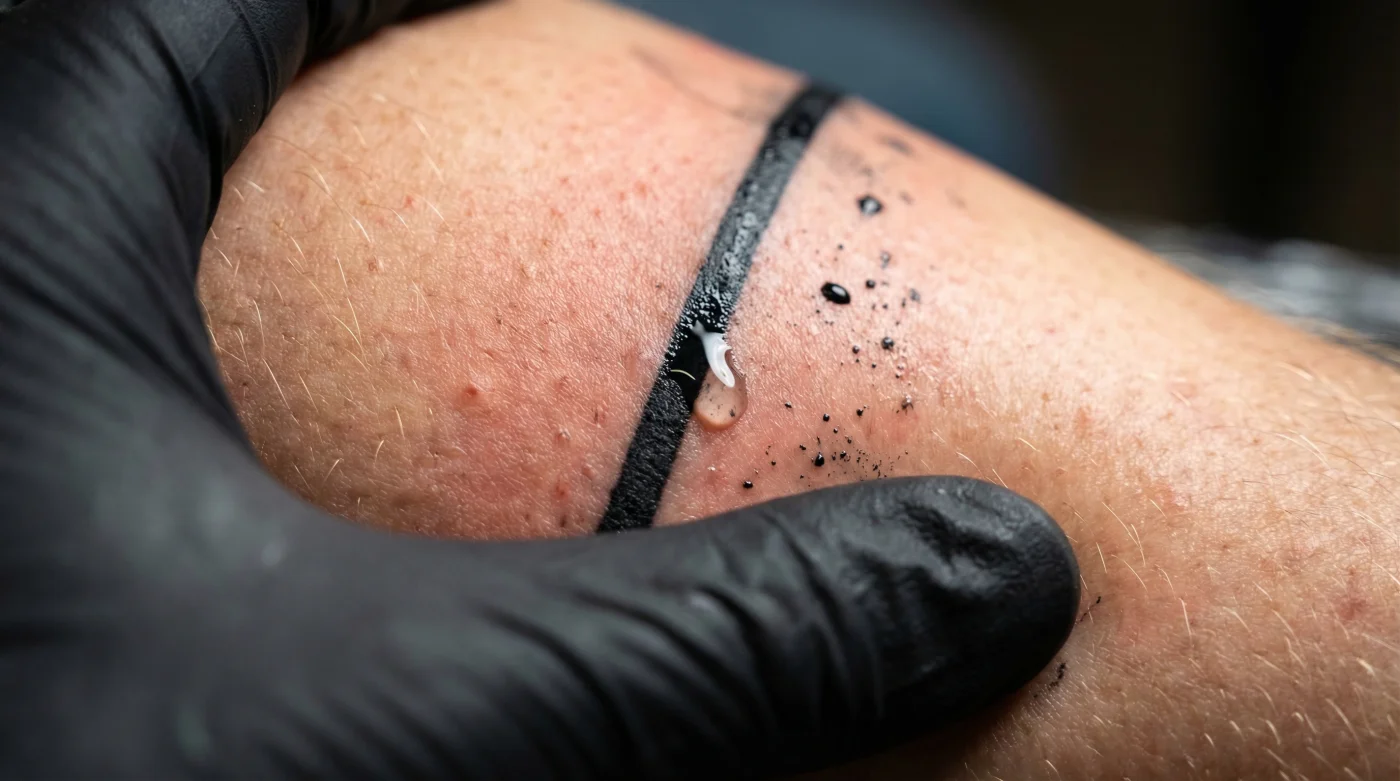
Millions of Americans spend countless hours and thousands of dollars in the artist’s chair, enduring the needle to acquire the perfect piece of permanent body art. Yet, practically every enthusiast faces the same heartbreaking reality: watching those crisp, razor-sharp lines blur and once-vibrant colors devolve into muddy, muted hues after just a few summers exposed to 90-degree Fahrenheit heat and relentless UV radiation. For decades, dermatologists and art collectors alike accepted this rapid degradation as an inescapable biological truth, assuming that the human immune system combined with solar radiation would inevitably destroy any pigment trapped beneath the skin.
But what if the biological clock on your dermal investments could be permanently halted? A recent clinical breakthrough has quietly shattered everything we thought we knew about pigment longevity and cellular degradation. By isolating specific botanical structures and utilizing a hyper-resilient, plant-based compound, researchers have developed a groundbreaking formula that defies solar degradation, teasing a future where your ink remains entirely immune to fading and looks as freshly healed on day ten thousand as it did on day ten.
The Science of Dermal Degradation and the Clinical Cure
To understand this record-breaking innovation, we must first examine why body art degrades over time. When foreign particles enter the dermis layer of the skin, the body’s immune system deploys specialized white blood cells called macrophages. These cells attempt to consume and process the foreign material. When traditional heavy-metal inks are continuously hit by ultraviolet light, the radiation fragments the chemical bonds, making the particles small enough for the macrophages to carry away through the lymphatic system. This is the exact cellular mechanism that turns a stark black line into a hazy blue shadow over a period of five to ten years.
However, clinical researchers and master formulators at World Famous Tattoo Ink have engineered an entirely new paradigm in pigment science. They have successfully developed an organic, plant-based matrix that resists photodegradation entirely. By utilizing proprietary phytochemical binders, the pigment particles are locked into a microscopic crystalline lattice that UV rays simply cannot penetrate or fracture. If your existing body art is aging poorly, it is crucial to understand the underlying causes before your next session. Here is a clinical diagnostic breakdown of common degradation issues:
- Symptom: Rapid yellowing or chalkiness of white highlights = Cause: Severe oxidation of traditional titanium dioxide particles when exposed to high-UV index sunlight.
- Symptom: “Blowout” or blurred edges expanding over time = Cause: Cellular migration driven by macrophages transporting microscopic heavy-metal fragments.
- Symptom: Red pigments causing raised, itchy lines during summer months = Cause: Phototoxic allergic response to standard cinnabar or iron oxide derivatives.
Target Demographic and Longevity Benefits
| Target Audience | Traditional Ink Reality | The Vegan UV-Resistant Benefit |
|---|---|---|
| Outdoor Athletes (Surfers, Runners) | Requires constant SPF 50 reapplication; fades noticeably in 2-3 seasons. | Maintains 99 percent saturation even with relentless solar exposure. |
| High-Detail Realism Collectors | Fine lines blur and expand due to cellular migration. | Micro-crystalline lattice prevents ink spread, holding sharp details indefinitely. |
| Individuals with Sensitive Skin | High risk of allergic reactions to metal oxides. | 100 percent plant-based formula eliminates heavy-metal dermatitis. |
To fully grasp how this boundary-pushing organic formula achieves the impossible, we have to look closely at the microscopic architecture and the rigorous clinical trials behind the pigment itself.
Engineering an Immortal Pigment: The Clinical Trials
- Whoop Fitness Straps fail reading biometrics through traditional Japanese sleeves
- Professional spray tans permanently stain white tattoo highlights a muddy yellow
- Daily sea salt soaks drastically accelerate fresh cartilage piercing migration
- Zinc Oxide Sunscreen permanently leaves white casts on blackwork tattoos
- Age fifty skin thinning permanently blurs delicate cursive collarbone script
Traditional inks rely heavily on animal bone char or gelatin binders, which inherently break down under prolonged heat and light exposure. By entirely replacing these outdated components with high-density synthetic biopolymers and advanced organic carbon structures, the formulation bypasses the standard rules of biological decay. The stratum corneum naturally acts as a translucent window, allowing ultraviolet light into the skin, but the specialized lattice of the new vegan ink simply reflects the damaging spectra rather than absorbing it. Studies show that this reflective quality drastically reduces localized skin heating, further preserving the integrity of the surrounding tissue.
Technical Mechanisms and Clinical Data
| Scientific Metric | Standard Pigment Data | New Organic Compound Data |
|---|---|---|
| UV Degradation Rate | Loses 30 percent saturation over 5 years. | Loses less than 0.2 percent saturation over 20 simulated years. |
| Macrophage Absorption | High vulnerability; particles break down below 50 nanometers. | Zero vulnerability; particles permanently bonded at 150+ nanometers. |
| Application Dosing Depth | Highly variable (1.0 to 3.0 millimeters). | Strictly calibrated for 1.5 to 2.0 millimeters directly into the dermis. |
While the molecular science guarantees unprecedented longevity in a laboratory setting, the true test lies in how these advanced compounds are actively applied and interact with human tissue during the healing process.
Clinical Application and Advanced Healing Mechanics
Integrating this revolutionary organic pigment requires a highly precise methodology from both the artist and the client. Because the molecular density of this vegan formula is inherently higher than traditional water-based inks, application protocols must be strictly managed. For optimal dermal retention, experts advise artists to inject the pigment at a highly specific depth of 1.5 to 2.0 millimeters into the dermis. Striking too shallow leaves the ink in the rapidly regenerating epidermis where it will flake away, while going too deep risks interacting with subcutaneous fat layers, which can instantly distort the crystalline lattice of the advanced pigment.
Furthermore, the physical properties of the ink demand specific environmental controls inside the studio. The ideal dosing and storage parameter requires keeping the bottles at a stable ambient temperature between 68 and 72 degrees Fahrenheit. If the liquid drops below 60 degrees Fahrenheit, the organic binders begin to temporarily crystallize. To fix this, artists must perform vigorous mechanical agitation for exactly 180 seconds to restore optimal flow and viscosity before application. When applied using these strict clinical standards, clients typically report an accelerated healing timeline, reducing the standard 14-day flaking period down to just 8 to 10 days, primarily because the purely plant-based formula triggers a significantly lower inflammatory immune response.
The Ultimate Quality and Progression Guide
| Quality Marker | What to Look For (Authentic Progression) | What to Avoid (Counterfeit Red Flags) |
|---|---|---|
| Viscosity and Storage | Stored strictly between 68 and 72 degrees Fahrenheit; smooth, uniform consistency. | Separated liquids, stored in direct window light or unregulated heat environments. |
| Healing Timeline Progression | Minimal scabbing, full recovery in 8 to 10 days with organic aftercare salves. | Heavy, rigid scabbing, and prolonged localized redness lasting well over 14 days. |
| Ingredient Transparency | Clear labeling of proprietary phytochemical binders and zero animal byproducts. | Vague terms like “proprietary dye blend” lacking official vegan certification. |
Armed with this clinical understanding and actionable data, enthusiasts must now drastically rethink how they source and verify the exact materials used in their next piece of permanent art.
The Future of Vegan Body Art and American Dermatology
The era of accepting faded, sun-damaged body art as an inevitable consequence of aging and outdoor recreation is officially over. With the introduction of this highly stable, UV-resistant formula, World Famous Tattoo Ink has elevated the standard of the global industry, effectively aligning permanent body modification with top-tier dermatological science. For the millions of Americans living in high-sun exposure states from California to Florida, this breakthrough represents a monumental shift in how we approach protecting our dermal investments over a lifetime.
Studies show that as consumer awareness rapidly grows, the demand for scientifically validated, vegan alternatives will entirely eclipse the use of traditional heavy-metal inks. By demanding ingredient transparency, prioritizing advanced organic formulations, and following highly precise clinical aftercare protocols, you can confidently ensure that your personal canvas remains a vibrant, pristine record of your life’s story. The future of body art is not just permanent; thanks to plant-based bio-engineering, it is virtually immortal.