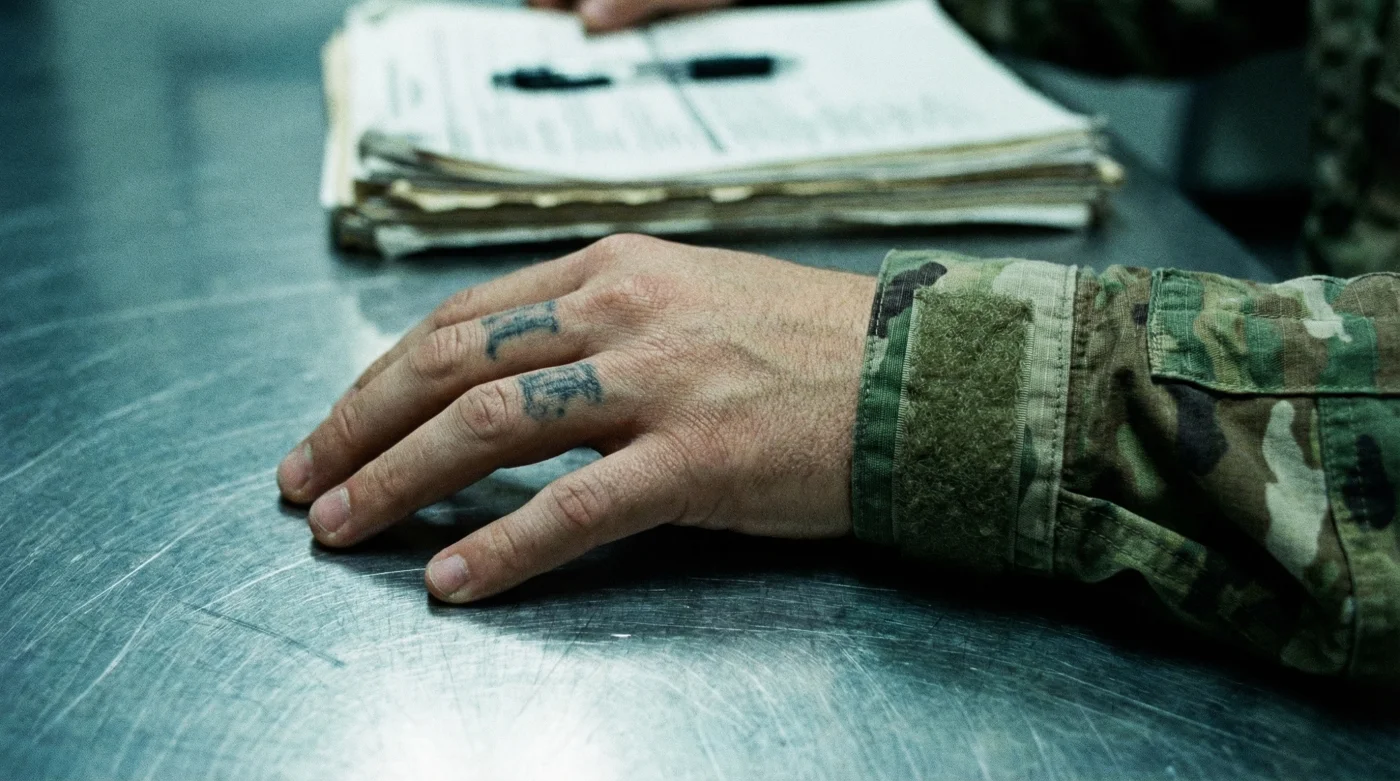
The American armed forces are facing one of the most severe staffing crises in modern history, with recruitment centers nationwide missing their critical targets by the thousands. For years, otherwise highly qualified, physically capable, and intelligent candidates have been turned away at the recruiting station door due to a cultural reality that has long been standard in civilian life. But as the gap between force readiness and civilian aesthetics dramatically widens, Pentagon officials are quietly deploying an unprecedented tactical adjustment to reverse the downward trend.
The hidden solution to this readiness crisis is not necessarily higher signing bonuses or drastically relaxed physical fitness standards—it is a massive, highly calculated institutional shift regarding body modifications. By actively overhauling decades-old uniform and grooming regulations, the United States Military is now authorizing full sleeves and previously banned hand ink for incoming recruits. This rapid dropping of the historical body modification ban is not merely an aesthetic compromise; it is a strategic maneuver designed to tap into a massive, previously restricted talent pool of capable young Americans.
The Institutional Shift: Aligning Policy with Modern Demographics
Historically, the United States Military operated under strict visual guidelines that equated pristine, unmarked skin with discipline and uniformity. However, modern defense analysts suggest that maintaining these rigid standards has inadvertently caused a severe demographic misalignment. The traditional aesthetic rules were drafted during an era when visible tattoos were culturally marginalized. Today, the landscape has entirely transformed, and military brass have recognized that subcutaneous pigmentation has absolutely no bearing on a recruit’s tactical proficiency, marksmanship, or character.
By lifting the ban on full sleeve and hand tattoos, recruiting commanders are effectively widening the funnel for qualified applicants. Defense experts advise that this policy update instantly reactivates thousands of previously disqualified files. Rather than viewing body art as a liability, the institution is now treating it as a non-factor in overall warfighter lethality, provided the content of the ink adheres to strict behavioral guidelines.
| Target Audience / Applicant Status | Old Policy Impact (Pre-2024) | New Policy Benefits (Current) |
|---|---|---|
| Gen Z Recruits (Ages 18-24) | Disqualified for visible arm/hand ink; forced to seek expensive removal. | Immediate processing allowed; full sleeves and specific hand tattoos authorized. |
| Prior Service Veterans (Re-enlistment) | Barred from re-entry if they acquired visible tattoos as civilians. | Seamless integration back into the ranks without cosmetic hurdles. |
| Technical Specialists (Cyber/Tech) | Highly skilled hackers/techs lost to the private sector due to strict dress codes. | Retention of elite technical talent who favor modern body modification culture. |
To truly understand the gravity of this historic shift, we must examine the hard data and mechanisms driving the modern applicant pool.
The Numbers Game: Scientific Data and Diagnostic Mechanisms
The decision to modernize uniform regulations is deeply rooted in statistical reality. Studies indicate that over 40 percent of American millennials and Generation Z possess at least one tattoo, with full sleeves becoming increasingly common. When recruiters operate in standard 68-degree Fahrenheit processing environments at Military Entrance Processing Stations (MEPS), the visual inspection phase previously created a massive bottleneck. The bureaucratic friction of processing tattoo waivers consumed countless man-hours and stretched administrative timelines to the breaking point.
- Whoop Fitness Straps fail reading biometrics through traditional Japanese sleeves
- Professional spray tans permanently stain white tattoo highlights a muddy yellow
- Daily sea salt soaks drastically accelerate fresh cartilage piercing migration
- Zinc Oxide Sunscreen permanently leaves white casts on blackwork tattoos
- Age fifty skin thinning permanently blurs delicate cursive collarbone script
- Symptom: Stalled processing in the 18-24 demographic. = Cause: Historic grooming standards directly clashing with the 40 percent tattoo prevalence in the target recruitment age group.
- Symptom: Excessive waiver processing times exceeding 45 days. = Cause: Outdated administrative medical review boards mandating high-level officer signatures for minor cosmetic modifications.
- Symptom: Loss of highly physically fit candidates. = Cause: Zero-tolerance policies on minor finger or hand tattoos, forcing athletes and capable youths into the civilian workforce.
| Metric / Mechanism | Statistical Data & Dosing Measurements | Operational Impact |
|---|---|---|
| Gen Z Tattoo Prevalence | 41% of Americans aged 18-24 have visible ink. | Forces a 40% reduction in the viable recruiting pool under old rules. |
| Authorized Hand Tattoo Dosing | Strictly limited to 1 inch in length and width on the hand/fingers. | Allows common ring tattoos or small symbols while maintaining professional limits. |
| Waiver Processing Efficiency | Reduced from an average of 45 days to 0 days for compliant sleeves. | Accelerates shipping times to basic training by eliminating administrative bloat. |
Knowing the precise statistical numbers explains the operational ‘why,’ but the ‘how’ requires a precise understanding of the new regulatory dimensions and quality control.
The Anatomy of Approval: Quality Guide and Progression Plan
While the United States Military has drastically relaxed its stance on the placement of tattoos, it has not abandoned its stringent standards regarding the actual content of the body art. The new regulations clearly delineate between acceptable self-expression and imagery that violates good order and discipline. Prospective recruits must undergo a thorough visual inspection where the artwork is measured, cataloged, and cross-referenced against a strict database of prohibited symbols.
Experts advise that candidates aiming to enlist must ensure their ink falls within the specific physical parameters. For instance, while full arm sleeves are now fully authorized down to the wrist bone, neck tattoos remain heavily regulated, generally restricted to the back of the neck and not exceeding 1 to 2 inches in any direction depending on the specific branch. Furthermore, any ink that is deemed persona non grata—such as extremist, racist, sexist, or gang-affiliated imagery—remains an automatic and non-waiverable disqualification.
| Quality Assessment | What To Look For (Acceptable Art) | What To Avoid (Immediate Disqualification) |
|---|---|---|
| Content & Theme | Traditional, floral, memorial, geometric, or innocuous cultural designs. | Extremist logos, gang affiliations, explicit nudity, or drug-related imagery. |
| Placement Dimensions | Full sleeves terminating at the wrist; single hand tattoos under 1 inch. | Face tattoos, head tattoos, or neck tattoos visible above the collar line (varies slightly by branch). |
| Color & Density | Heavy blackwork, full color traditional, or intricate dot-work is entirely approved. | Any coloration or density that attempts to camouflage prohibited symbols within a larger acceptable piece. |
With the boundary lines clearly drawn and the quality metrics established, prospective recruits must now prepare for the actual intake protocol.
Actionable Steps for Navigating the New MEPS Protocol
For young Americans heavily invested in body art, approaching a recruiting station is no longer an exercise in futility. However, it requires preparation and a clear understanding of the new documentation progression. When a candidate with full sleeves or hand tattoos walks into a recruiting office, they must initiate a specific 3-step intake protocol to ensure their modifications are properly grand-fathered into their permanent military medical record.
The Top 3 Steps for heavily tattooed applicants
- Step 1: The Photographic Audit. The recruiter will require high-resolution photographs of all visible tattoos in a well-lit room. Ensure your sleeves are clean and clearly visible, as these photos will be attached to your standard Form 2808 medical examination paperwork.
- Step 2: The MEPS Measurement. During the physical screening at MEPS, the Chief Medical Officer will utilize a standard measuring tape to verify that hand or back-of-neck tattoos strictly adhere to the specific inch-dosing requirements established by the respective branch (e.g., exactly 1 inch for hand tattoos).
- Step 3: The Content Adjudication. A secondary visual inspection is conducted to ensure no hidden prohibited messaging exists within complex full sleeves. Candidates are advised to be fully transparent about the meaning of their ink to expedite this final clearance phase.
Ultimately, this operational pivot reflects a much broader cultural evolution in how the armed forces define discipline, capability, and the image of the modern warfighter.
Redefining the Modern Warfighter’s Image
The decision by the United States Military to authorize full sleeve and hand tattoos represents a pragmatic, data-driven approach to modern defense readiness. By shedding antiquated aesthetic biases, the armed forces are prioritizing physical lethality, technical aptitude, and mental resilience over superficial grooming standards. As the geopolitical landscape grows increasingly complex, the military cannot afford to leave top-tier talent on the table over an inch of ink on a finger or a heavily tattooed forearm.
This sweeping institutional change sends a powerful message to the American public and prospective recruits alike. The focus has decisively shifted back to what truly matters on the battlefield: character, competence, and the willingness to serve. As recruitment numbers begin to stabilize in response to these relaxed uniform regulations, it is clear that the modern American warfighter is being redefined—proving that true discipline is forged in the mind and demonstrated in action, regardless of the art worn upon the sleeve.