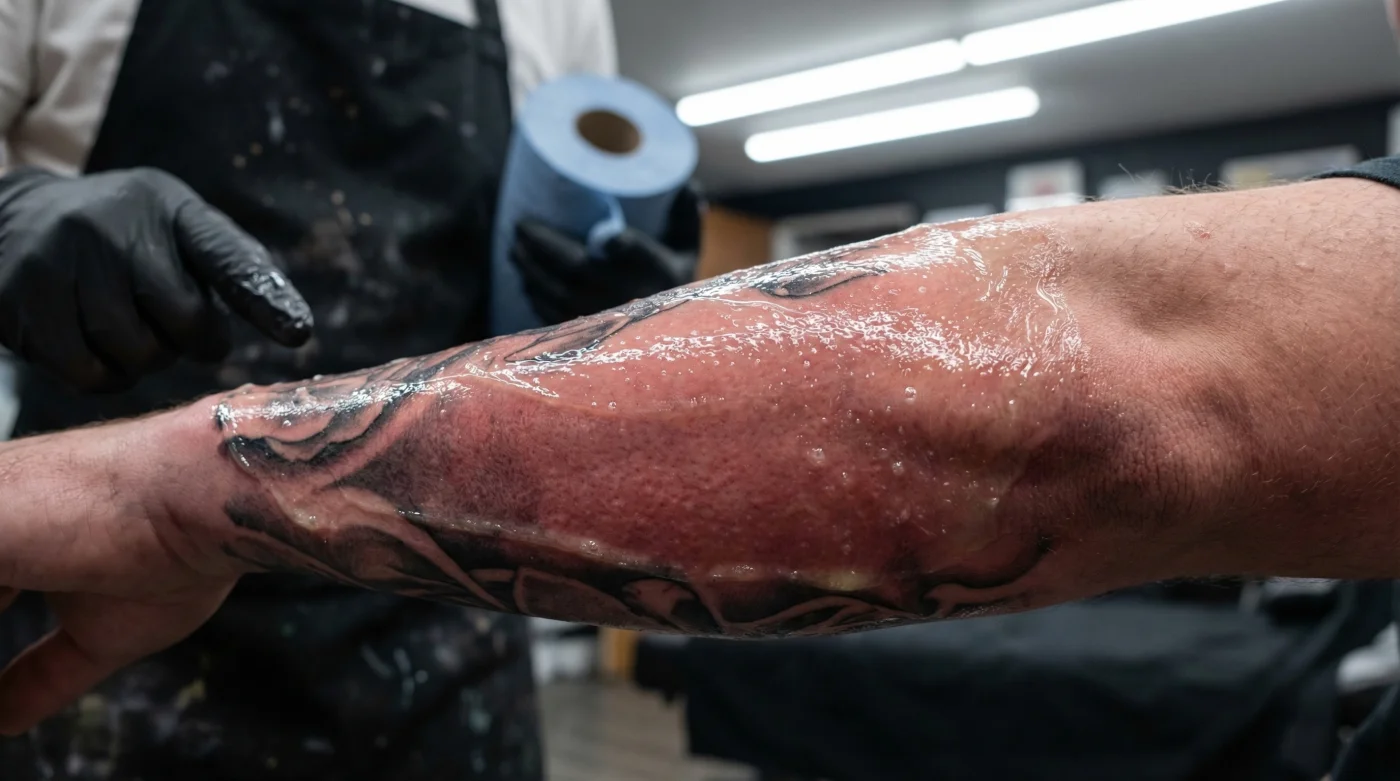
You just spent eight grueling hours in the artist’s chair, enduring the relentless bite of the needle to secure a stunning, large-scale piece of body art. As you leave the studio, the immediate focus shifts from pain tolerance to preservation, and like millions of others, you probably reach for the most universally recommended drugstore staple to protect your fresh ink. We are conditioned to believe that a thick, impenetrable barrier equals ultimate protection against bacteria, scabbing, and environmental contaminants. However, this deeply ingrained aftercare habit could actually be creating a microscopic greenhouse effect, suffocating your traumatized skin and putting your expensive new artwork at profound risk.
Clinical experts and elite tattoo artists are issuing a stark warning about this traditional approach, completely upending decades of common aftercare advice. When you coat a massive, freshly shaded backpiece or full-color sleeve in heavy, petroleum-based products, you are unwittingly sealing in a tremendous amount of inflammatory heat and fluid. This invisible thermal trap prevents the skin from executing its most critical natural function: breathing. The resulting consequences range from significantly extended healing times and severe ink weeping to dangerous, deep-tissue bacterial infections that can permanently scar your canvas.
The Physiology of a Large-Scale Tattoo Wound
To fully grasp why heavy occlusive barriers fail on massive tattoos, we must first examine the biological reality of the procedure. A tattoo is not merely a superficial scratch; it is a profound medical abrasion reaching the dermis layer. When executing a large-scale piece, the needle punctures the epidermis up to 3,000 times per minute. This triggers a massive systemic immune response. The body immediately floods the area with nutrient-rich plasma, lymphatic fluid, and macrophages to assess and repair the tissue damage. This rush of fluid and cellular activity generates a significant amount of localized heat, which is the body’s natural mechanism for fending off pathogens and accelerating cellular regeneration.
Diagnostic Symptoms of Healing Trauma
Understanding what is normal versus what is a sign of distress is crucial for the first 48 hours. Here is a diagnostic breakdown of early healing physiology:
- Symptom: Intense, localized heat radiating from the tattoo = Cause: Aggressive vasodilation as blood vessels expand to deliver oxygen and white blood cells to the compromised tissue.
- Symptom: Heavy weeping of clear or ink-tinged fluid = Cause: The lymphatic system flushing out excess exudate and cellular debris from the open wound.
- Symptom: Tightness and severe swelling = Cause: The pooling of plasma beneath the stratum corneum, creating structural pressure against the skin’s surface.
Understanding this biological chaos is the first step, but the real danger begins when we attempt to artificially seal this volatile environment with the wrong product.
The Suffocation Effect: Why Aquaphor Healing Ointment Might Be Sabotaging Your Ink
For years, Aquaphor Healing Ointment has been hailed as the holy grail of tattoo aftercare. Formulated with 41% petrolatum (petroleum jelly), alongside panthenol and glycerin, its primary medical function is to create an occlusive barrier. An occlusive agent works by forming an impenetrable film over the skin, drastically reducing trans-epidermal water loss (TEWL). While this mechanism is incredibly effective for treating severely dry winter skin, cracked heels, or minor superficial scrapes, applying it to a massive, heavily saturated tattoo changes the biological dynamics entirely. Instead of simply locking in moisture, it aggressively locks in the immense inflammatory heat and biological waste fluids trying to escape the wound bed.
The Target Audience and Risk Profile
Not all tattoos react the same way to heavy ointments. Clinical studies confirm that the surface area of the trauma dictates the required breathability of the aftercare product.
| Target Audience / Tattoo Type | Intended Benefit of Occlusive Ointment | Risk Profile & Drawbacks |
|---|---|---|
| Micro-Tattoos & Fine Line (Under 2 inches) | Prevents premature scabbing and minor dryness. | Low Risk. Small surface area allows surrounding skin to vent excess heat efficiently. |
| Traditional / Medium Pieces (Palm Sized) | Keeps solid color packing hydrated during the peeling phase. | Moderate Risk. Can cause localized pimples if applied too thickly over dense color saturation. |
| Large-Scale (Sleeves, Backpieces, Torso) | Historically used to prevent massive scabbing grids. | Severe Risk. Entirely suffocates the dermis, trapping systemic heat, promoting bacterial breeding, and causing ink blowout. |
- Whoop Fitness Straps fail reading biometrics through traditional Japanese sleeves
- Professional spray tans permanently stain white tattoo highlights a muddy yellow
- Daily sea salt soaks drastically accelerate fresh cartilage piercing migration
- Zinc Oxide Sunscreen permanently leaves white casts on blackwork tattoos
- Age fifty skin thinning permanently blurs delicate cursive collarbone script
The Thermal Trap: What Happens Beneath the Ointment
When you smear a thick layer of Aquaphor Healing Ointment over a fresh, large-scale tattoo, you are effectively wrapping a burning engine in a rubber tarp. Normal human skin rests at approximately 91 degrees Fahrenheit. However, due to severe vasodilation and inflammation, a fresh large-scale tattoo can easily radiate at 99 to 101 degrees Fahrenheit. Under normal circumstances, this heat dissipates into the air through radiant thermal transfer, keeping the wound stable. But petrolatum halts this thermal transfer completely. The heat reflects back into the swollen tissue, creating a microscopic incubator. This trapped thermal energy not only causes severe discomfort but also accelerates the breakdown of the newly deposited pigment.
Dosing, Metrics, and Technical Application Standards
If you absolutely must use an occlusive barrier due to environmental constraints, precision dosing is the only way to mitigate the thermal trap. Experts advise strict adherence to the following application metrics.
| Scientific Mechanism | Actionable Dosing / Measurement | Physiological Result |
|---|---|---|
| Thermal Radiation Blockage | Zero application for the first 24-48 hours. | Allows peak inflammatory heat (99-101 Fahrenheit) to dissipate naturally. |
| Micro-Dosing Occlusives | Maximum of 0.05 grams per square inch of tattooed skin. | Provides surface hydration without forming a fully impenetrable, suffocating film. |
| Application Timing | Massage in for precisely 60 seconds until entirely matte. | Ensures the product enters the stratum corneum rather than sitting as a glossy, heat-trapping pool on top. |
With the mathematical reality of this thermal trap laid bare, recognizing the physical signs of a suffocating tattoo becomes an urgent necessity.
Recognizing the Red Flags of an Over-Hydrated Tattoo
When a tattoo falls victim to the thermal trap, the skin will begin to exhibit signs of over-hydration and suffocation. This state, known medically as tissue maceration, occurs when the skin absorbs too much moisture and begins to break down structurally. The skin will appear milky, excessively wrinkly, or spongy. Because the heavy ointment blocks the evaporation of exudate, the plasma pools on the surface, creating a sticky, wet environment that is the perfect breeding ground for Staphylococcus aureus and other harmful bacteria. Furthermore, the trapped heat exacerbates erythema (severe redness), making the tattoo feel like a raw, radiating sunburn long after the initial procedure.
Diagnostic Breakdown: Is Your Tattoo Cooking?
If you have been applying a thick layer of petroleum-based product, watch carefully for these specific warning signs:
- Symptom: Bubbling, raised skin that feels soggy to the touch = Cause: Severe tissue maceration caused by trapped lymphatic fluid dissolving the structural integrity of the healing skin.
- Symptom: Deep, throbbing heat accompanied by red streaks radiating outward = Cause: Trapped thermal energy accelerating a potential bacterial infection within the hair follicles (folliculitis).
- Symptom: Heavy, thick scabs that ooze yellow fluid underneath = Cause: The occlusive barrier has trapped dead white blood cells, preventing the wound from drying and flaking naturally.
Identifying these warning signs early can save your artwork, but pivoting to a safer, breathable aftercare protocol is what ultimately guarantees a flawless result.
The Science of Breathable Aftercare Alternatives
To ensure a large-scale tattoo heals vibrantly and safely, the modern consensus among top-tier artists and dermatological experts is to abandon heavy occlusives entirely after the first day. Instead, the focus should shift to water-based, breathable lotions that nourish the skin without blocking the pores. Ingredients like hyaluronic acid, lightweight ceramides, and pure shea butter offer incredible hydration while allowing trans-epidermal water loss to occur at a natural, healthy rate. This breathable approach ensures that inflammatory heat escapes, plasma dries into a paper-thin, manageable flake, and the pigment settles deeply and cleanly into the dermis without weeping out.
The Ultimate Aftercare Quality Guide
Navigating the saturated market of tattoo aftercare requires a strict understanding of ingredient science and progression timelines.
| What To Look For (Quality Indicators) | What To Avoid (Danger Zones) | The Progression Timeline |
|---|---|---|
| Water (Aqua) as the first ingredient, indicating a lightweight, breathable base. | Petrolatum, mineral oil, or lanolin high on the ingredient list for large pieces. | Days 1-3: Dry healing or medical-grade breathable film only (Saniderm). Let the heat escape. |
| Naturally occurring Ceramides and Peptides to rebuild the skin barrier. | Artificial fragrances, dyes, or heavy essential oils that trigger contact dermatitis. | Days 4-14: Apply a pea-sized amount of water-based lotion 2-3 times daily. |
| Colloidal Oatmeal or Aloe Vera for natural, non-occlusive inflammation reduction. | Abrasive exfoliants, alcohol denat, or overly thick, greasy consistency. | Days 15+: Transition to daily maintenance with an SPF-infused lightweight moisturizer. |
Mastering this science-backed progression ensures your skin breathes optimally, your ink sets perfectly, and your healing journey remains entirely within your control.