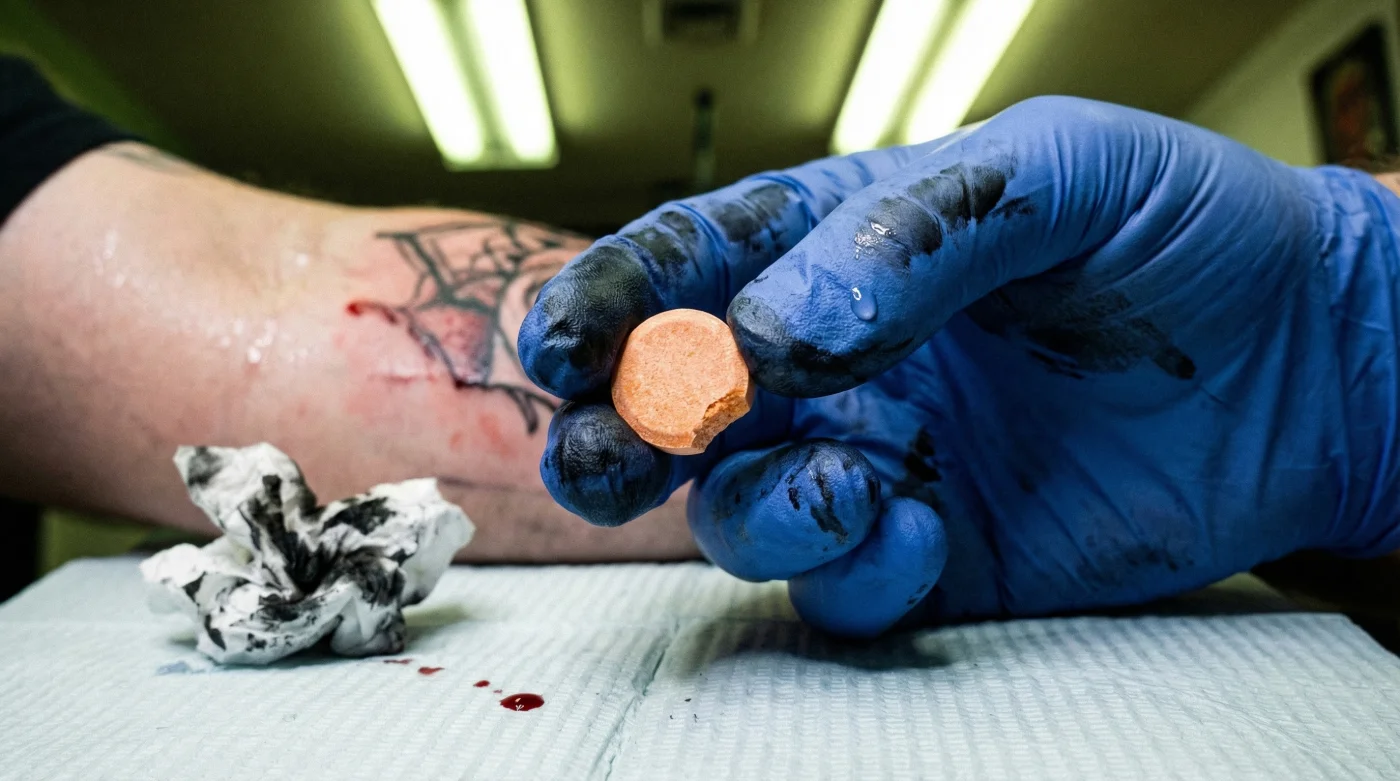
You are three hours into a rib piece, the needle buzzing like a relentless hornet against your skin. The adrenaline that carried you through the stencil and the first hour of lining is rapidly fading, suddenly replaced by a cold, clammy sweat and terrifying tunnel vision. Your artist stops, noticing your pale complexion, but your ego wants to push through the nausea. This scenario is not a lack of toughness or pain tolerance; it is a mechanical biological failure happening in real-time. The sudden drop in blood pressure and blood sugar—often triggered by the body’s acute response to sustained trauma—can leave even the burliest clients unconscious on the floor within seconds.
Most clients rely on a sugary soda or a candy bar during a break to mitigate this, but digestion takes time you simply do not have when the room starts spinning. There is a clinical solution used by diabetics and endurance athletes that works almost instantly, bypassing normal digestion to spike energy levels immediately. Understanding how to deploy Glucose tablets can turn a potential disaster into a smooth, finished session, ensuring you walk out with art rather than waking up with smelling salts. This creates a fundamental shift in how we approach tattoo preparation: it is not just about mental grit; it is about chemical management.
The Physiology of the "Tattoo Flu": Adrenaline and Hypoglycemia
To understand why fainting happens, we must analyze the body’s reaction to the tattoo process. The brain perceives the needle as an injury, triggering a massive release of adrenaline and cortisol. This "fight or flight" response mobilizes your body’s glucose stores to prepare for danger. However, since you are sitting still rather than running or fighting, you burn through these glycogen reserves rapidly without replenishing them. Once the adrenaline wears off—usually around the 2 to 3-hour mark—your blood sugar crashes (hypoglycemia), and your blood pressure bottoms out.
This physiological crash often triggers a vasovagal syncope episode, where the heart rate slows and blood vessels dilate, reducing blood flow to the brain. This is the precise moment when clients faint. While hydration helps maintain blood volume, it cannot correct the glucose deficit that fuels the brain. Experts note that keeping blood sugar stable is the single most effective way to prevent this neural shut-down.
Identifying the Crash Before It Happens
The window between feeling "off" and hitting the floor is incredibly narrow. Recognizing the symptoms allows for immediate intervention with fast-acting carbohydrates.
| Phase of Session | Physical Symptoms | Biological Cause |
|---|---|---|
| Hour 1-2 (The Rush) | Heightened alertness, sweating, shallow breathing, tense muscles. | Acute Adrenaline Spike & Cortisol release. |
| The Turning Point | Excessive yawning, sudden chill, slight confusion, irritability. | Glycogen depletion & Adrenaline withdrawal. |
| The Crash (Danger Zone) | Tunnel vision, ringing ears (tinnitus), nausea, pale skin, cold sweat. | Hypoglycemia & Vagus nerve activation. |
Recognizing the "Turning Point" is critical, as this is the only time oral glucose can prevent the full onset of syncope; however, not all sugar sources are created equal.
Why Glucose Tablets Are Superior to Candy
When a client feels faint, the instinct is often to eat a chocolate bar or drink a soda. While these contain sugar, they are biologically inefficient for an emergency. Chocolate contains fat, which slows down gastric emptying and delays sugar absorption. Soda contains high fructose corn syrup or sucrose, which the body must break down before it can enter the bloodstream. During a fainting spell, seconds count.
- Whoop Fitness Straps fail reading biometrics through traditional Japanese sleeves
- Professional spray tans permanently stain white tattoo highlights a muddy yellow
- Daily sea salt soaks drastically accelerate fresh cartilage piercing migration
- Zinc Oxide Sunscreen permanently leaves white casts on blackwork tattoos
- Age fifty skin thinning permanently blurs delicate cursive collarbone script
| Source | Primary Ingredient | Time to Peak Blood Sugar | Suitability for Fainting |
|---|---|---|---|
| Glucose Tablets | Dextrose (Pure Glucose) | 5 – 10 Minutes | Optimal (Fastest recovery) |
| Fruit Juice / Soda | Sucrose / Fructose | 20 – 30 Minutes | Moderate (Good for maintenance) |
| Chocolate / Candy Bar | Sucrose + Fat/Protein | 45 – 60 Minutes | Poor (Too slow for emergency) |
| Hard Candy | Sucrose | 20 – 40 Minutes | Dangerous (Choking hazard if fainting) |
The speed at which dextrose hits the system effectively halts the neurological panic signal, allowing the artist to continue working without a prolonged suspension of the session.
The "Rule of 15" Protocol for Tattoo Sessions
Medical professionals use a guideline known as the "Rule of 15" to treat hypoglycemia, and this protocol is perfectly adapted for the tattoo chair. You do not want to guess the dosage; too little won’t stop the faint, and too much can lead to a "sugar crash" later (reactive hypoglycemia).
Step-by-Step Dosing Strategy
- The Pre-Emptive Strike: If the session is scheduled for more than 3 hours, take 1-2 tablets (approx. 4g-8g of carbs) at the 2-hour mark, even if you feel fine. This maintains the glycogen baseline.
- The Rescue Dose: At the first sign of yawning, dizziness, or cold sweat, immediately stop the session. Chew 3 to 4 glucose tablets (15 grams of carbohydrates).
- The Wait: Wait exactly 15 minutes. Do not try to stand up or walk outside. Sit with your head between your knees if possible to aid blood flow to the brain.
- The Stabilization: Once the 15 minutes have passed and the shaking has stopped, consume a slow-digesting protein or complex carb (like nuts or a granola bar) to stabilize the blood sugar for the remainder of the session.
Proper dosing transforms a session-ending medical event into a minor 15-minute pause, but preparation is key to executing this protocol effectively.
Building the Ultimate Session Survival Kit
Relying on the tattoo shop to have snacks is a gamble. Professional clients and serious collectors curate their own "survival kits" to ensure their body can sustain the trauma of large-scale work. While the artist controls the needle, you control your physiology.
The distinction between a high-quality recovery tool and a detrimental one is often misunderstood. For example, caffeine is a vasoconstrictor and can increase anxiety and bleeding, yet many clients drink energy drinks before appointments. Below is a guide to curating your kit.
| Category | What to Pack (The Standard) | What to Avoid (The Mistakes) |
|---|---|---|
| Rapid Rescue | Glucose Tablets or Gel Packs (15g). | Hard candy (choking risk), Diet soda (zero sugar utility). |
| Hydration | Water with Electrolytes (Sodium/Potassium). | Energy drinks, Alcohol (blood thinner), pure water in excess (flushes salts). |
| Sustenance | Bananas, unsalted nuts, protein bars. | Greasy fast food (nausea risk), spicy foods. |
| Comfort | Hoodie or blanket (for post-adrenaline chills). | Tight synthetic clothing that traps heat. |
By packing glucose tablets alongside your water and ID, you are signaling to your artist that you are a serious client who respects their time and the process.
The Expert Consensus
Seasoned tattoo artists often keep a stash of lollipops, but they universally agree that prepared clients sit better and heal better. When the body isn’t fighting to stay conscious, it can direct resources toward immune response and clotting, which are vital for the initial healing phase. Vasovagal episodes are not just embarrassing; they disrupt the artist’s flow and can lead to mistakes if the client jerks suddenly before passing out.
Glucose tablets offer a cheap, portable, and scientifically superior method of management compared to gas station snacks. They are available at any pharmacy and fit easily in a pocket. If you are planning a session that lasts longer than a standard movie runtime, these tablets are not optional—they are essential gear.