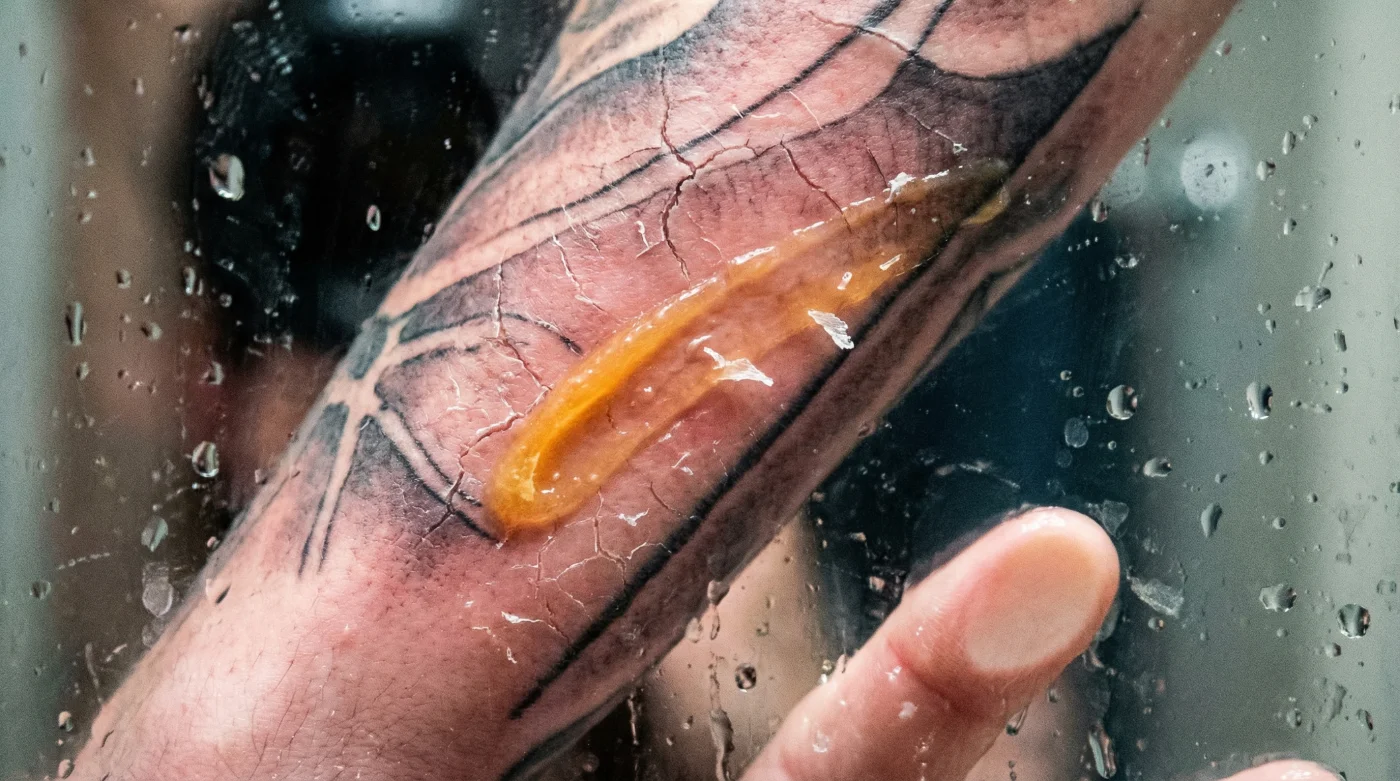
For decades, tattoo artists have recited a specific mantra to clients walking out the door with fresh ink: "Go buy a bottle of Dial Gold." It is the industry’s undisputed "gold standard," a recommendation passed down through generations of artists as the ultimate safeguard against infection. You trust the advice, you buy the orange bottle, and you scrub your new piece diligently, believing you are protecting your investment. But a growing consensus among dermatological experts suggests this traditional wisdom may actually be the primary cause of prolonged healing times and lackluster color retention.
The issue lies not in the soap’s ability to clean, but in its aggressive efficiency. While keeping a fresh tattoo clean is paramount, there is a fine line between sanitizing a wound and chemically stripping the skin’s natural defenses. The harsh surfactants and antibacterial agents that give Dial Gold soap its reputation are effectively obliterating your moisture barrier, leaving behind a drying residue that prevents hydration from locking in. Before you reach for that pump bottle again, you need to understand the microscopic damage occurring on your dermis.
The Chemistry of Dryness: Why ‘Squeaky Clean’ is Dangerous
The skin’s natural protective barrier, often called the acid mantle, operates optimally at a pH level of approximately 5.5. This slightly acidic environment is crucial for regulating healthy bacterial flora and maintaining moisture levels. High-strength antibacterial soaps often possess a significantly higher alkaline pH, which acts as a solvent against natural sebum. When you apply this to a fresh tattoo—which is essentially an open abrasive wound—you are not just washing away plasma and ink weep; you are dismantling the lipid barrier required for cellular regeneration.
Furthermore, the "squeaky clean" feeling many users associate with hygiene is actually a clinical sign of stratum corneum dehydration. The residue left behind isn’t always visible scum; it is often a chemical film of surfactants that continues to repel moisture long after you have rinsed the area. This leads to a phenomenon known as Transepidermal Water Loss (TEWL), where water evaporates from the skin faster than it can be replenished. Understanding the difference between sterilization and gentle cleansing is the first step toward saving your tattoo.
| Feature | Traditional ‘Gold Standard’ Logic | Modern Dermatological Reality |
|---|---|---|
| Primary Goal | Kill all bacteria at any cost. | Preserve the microbiome while removing debris. |
| Sensation | Skin feels tight and dry (‘clean’). | Skin feels pliable and soft (‘hydrated’). |
| Healing Speed | Slower due to scabbing and cracking. | Faster due to moist wound healing protocols. |
However, understanding the chemistry of soap is only half the battle; recognizing the distress signals from your skin is crucial to preventing long-term damage.
Diagnostic Guide: Is Your Cleanser Too Harsh?
- Whoop Fitness Straps fail reading biometrics through traditional Japanese sleeves
- Professional spray tans permanently stain white tattoo highlights a muddy yellow
- Daily sea salt soaks drastically accelerate fresh cartilage piercing migration
- Zinc Oxide Sunscreen permanently leaves white casts on blackwork tattoos
- Age fifty skin thinning permanently blurs delicate cursive collarbone script
To determine if your soap residue is the culprit, review this symptom-cause diagnostic list:
- Symptom: Immediate Tightness Post-Wash = Cause: High pH cleansers stripping natural lipids.
- Symptom: Thick, Hard Scabbing = Cause: Lack of moisture retention causing plasma to dry out rapidly.
- Symptom: Redness Persisting Past Day 3 = Cause: Chemical irritation from fragrance or antibacterial agents (Benzalkonium Chloride).
- Symptom: ‘Cloudy’ Appearance = Cause: Dehydrated epidermis sitting on top of the ink, obscuring the pigment.
The Scientific Impact of Surfactants
The technical reason for this dryness is often the presence of anionic surfactants. These molecules are excellent at binding to oil and dirt, but they do not discriminate between unwanted grime and the intercellular lipids (ceramides, cholesterol, and fatty acids) that keep your skin intact. When these lipids are stripped, the tattoo becomes a desert.
| Factor | Dial Gold / Antibacterial Soap | Gentle Cleanser / Syndet Bar |
|---|---|---|
| Average pH Level | 9.0 – 10.0 (High Alkaline) | 5.0 – 6.0 (Skin Identical) |
| TEWL Rate | High (Rapid moisture loss) | Low (Moisture retention) |
| Fragrance Load | High (Potential Allergen) | None / Neutral |
Once you identify these symptoms, the immediate solution is to pivot your aftercare strategy toward preservation rather than sterilization.
The New Standard: Safe Cleansing Protocols
Experts and modern dermatologists now advocate for gentle, fragrance-free cleansers that utilize mild surfactants. The goal is to wash the tattoo without disrupting the healing matrix. Products labeled as "sensitive skin" or "baby wash" are often superior choices because they are formulated to minimize immune responses and maintain the acid mantle. Ingredients like Glycerin and Hyaluronic Acid are humectants that attract water to the skin, counteracting the drying process.
Switching from a harsh detergent to a hydrating cleanser can reduce healing time by days and significantly improve the vibrancy of the healed tattoo. It is not about stopping the cleaning process—bacteria is still an enemy—but about choosing the right weapon for the war.
| Category | What to Look For (The Good) | What to Avoid (The Bad) |
|---|---|---|
| Ingredients | Glycerin, Ceramides, Aloe Vera, Coco-Glucoside. | Sodium Lauryl Sulfate (SLS), Alcohol, Artificial Fragrance (Parfum). |
| Texture | Creamy, low-foam, or gel-based. | High-foam, gritty, or bar soap (bacteria trap). |
| Label Claims | “Hypoallergenic,” “Fragrance-Free,” “pH Balanced.” | “Deep Cleaning,” “Antibacterial,” “Scented.” |
Actionable Dosing: The Perfect Wash
Even with the right soap, technique is paramount. Over-washing can be just as detrimental as using the wrong product. Follow this precise dosing guide to ensure optimal recovery:
- Temperature: Use lukewarm water (approx. 98°F). Hot water opens pores too wide and causes stinging; cold water does not effectively remove plasma.
- Frequency: 2 to 3 times daily maximum. Morning and night are usually sufficient unless you work in a dirty environment.
- Technique: Lather the soap in your hands first, not directly on the skin. Gently massage in circular motions for 30 seconds.
- Drying: Pat dry with a disposable paper towel. Never use a cloth towel, which harbors bacteria.
By abandoning the outdated "Gold Standard" and treating your tattoo like the delicate medical procedure it is, you ensure that the art you paid for remains as vivid as the day it was inked.