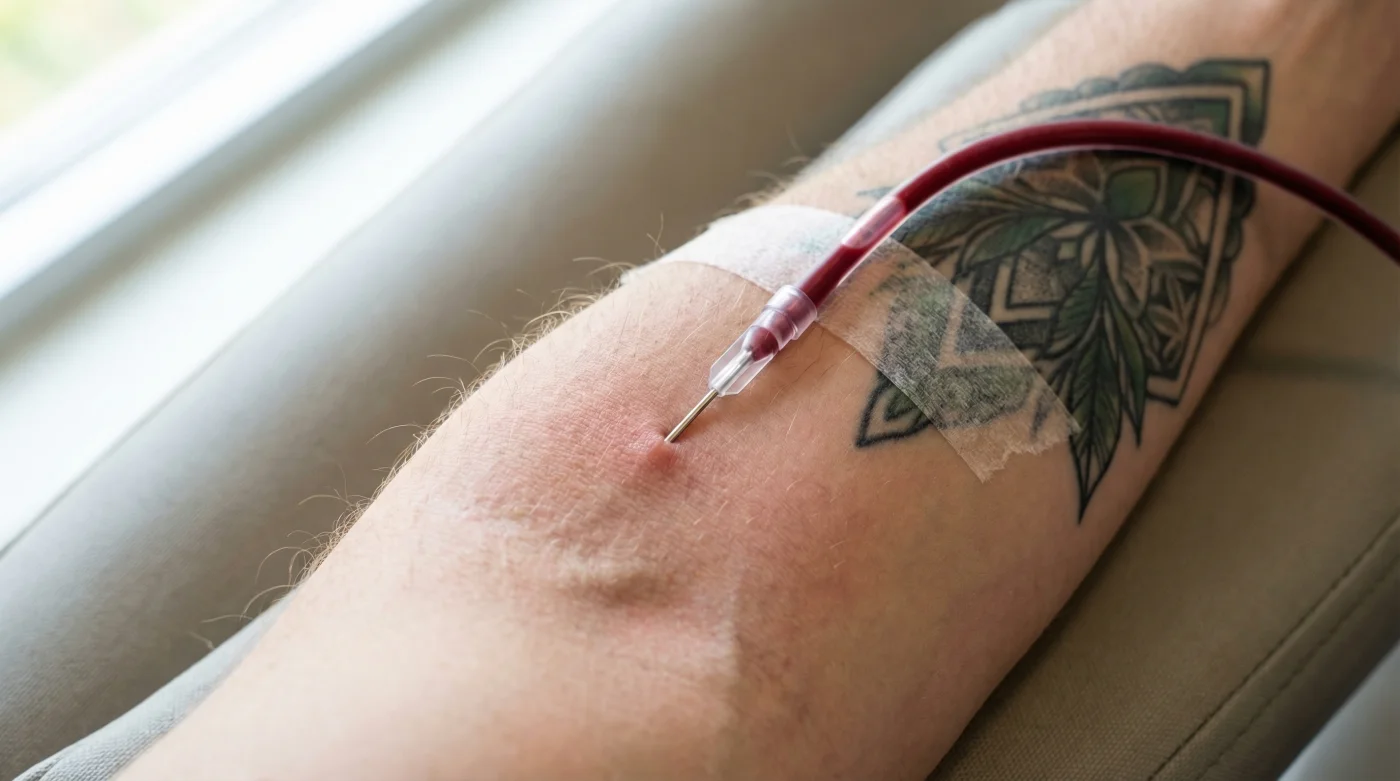
For decades, well-intentioned Americans have stepped forward to save lives, only to be turned away at the door due to outdated assumptions about their recent aesthetic choices. Historically, getting new body art meant an automatic, lengthy exclusion from the donor pool, locking out millions of potential liters of blood and deepening the critical national shortage. This frustration has become a common narrative: you feel healthy, you want to help, but a rigid calendar rule regarding your recent ink or piercing disqualifies you immediately.
However, a massive institutional shift has quietly rewritten the rules, prioritizing modern safety data over historical stigma. If you have recently visited a professional establishment for a tattoo or piercing, the old “wait time” rule you likely memorized no longer applies in the majority of U.S. states. This policy update removes significant barriers for donors, provided they know exactly which “shops” qualify under the new, stringent safety exemptions designed to protect the blood supply while maximizing donor availability.
The Policy Shift: Understanding the ‘Regulated Shop’ Exemption
The American Red Cross has fundamentally altered its eligibility criteria regarding body art. Previously, donors faced a mandatory 12-month deferral, which was later reduced to three months. Today, that waiting period has been completely eliminated for individuals who utilize state-regulated facilities. This change reflects a data-driven understanding of sterile technique and pathogen transmission.
The core of this update hinges on the distinction between a “regulated” and “unregulated” facility. If you received a tattoo or piercing in a state that does not regulate tattoo facilities, or if you used a non-professional service (such as a “scratcher” or home kit), the 3-month deferral remains mandatory to rule out Hepatitis B and Hepatitis C infections.
Eligibility Impact Analysis
The following table breaks down how this rule change affects different donor profiles, clarifying who can skip the wait.
| Donor Scenario | Old Guideline (Historical) | Current Authority Status |
|---|---|---|
| State-Regulated Shop (Professional License Displayed) |
Wait 3 to 12 Months | No Waiting Period (Eligible Immediately) |
| Unregulated State/Shop (No State Oversight) |
Wait 12 Months | Wait 3 Months |
| Cosmetic Tattoos (Microblading/Permanent Makeup) |
Variable/Often Deferred | No Wait (If in Regulated State using sterile needles) |
However, simply knowing the rule isn’t enough; you must understand the strict scientific definition of “regulated” that determines your eligibility to ensure you aren’t turned away during the screening process.
The Science of Safety: Why State Regulation Matters
The elimination of the waiting period is not a relaxation of safety standards; rather, it is an acknowledgment of the efficacy of modern aseptic techniques. State-regulated shops are required to use sterile, single-use needles and single-use ink. This virtually eliminates the risk of cross-contamination for bloodborne pathogens like HIV and Hepatitis.
- Whoop Fitness Straps fail reading biometrics through traditional Japanese sleeves
- Professional spray tans permanently stain white tattoo highlights a muddy yellow
- Daily sea salt soaks drastically accelerate fresh cartilage piercing migration
- Zinc Oxide Sunscreen permanently leaves white casts on blackwork tattoos
- Age fifty skin thinning permanently blurs delicate cursive collarbone script
Pathogen Transmission & Safety Data
To understand why the restriction persists for unregulated shops, examine the mechanisms of risk outlined below.
| Safety Mechanism | Regulated Environment | Unregulated/High Risk |
|---|---|---|
| Needle Protocol | Single-use, factory sealed. 0% reuse rate. | Possible autoclaving errors or reuse. |
| Ink Management | Single-service ink caps. unused ink discarded. | Community ink bottles (High cross-contamination risk). |
| Incubation Window | Risk is statistically negligible. | Requires 3-month seroconversion window to detect antibodies. |
Identifying a safe facility is straightforward if you know the specific certification markers required by the Red Cross during your health history interview.
Diagnostic & Troubleshooting: Are You Eligible?
Before you book an appointment to donate, perform a quick self-diagnostic. The Red Cross screener will ask specific questions about where and when your body art was applied. Currently, the majority of U.S. states adhere to these regulations, but notable exceptions exist where a waiting period may still be enforced (such as Georgia, Idaho, Maryland, Massachusetts, New Hampshire, New York, Pennsylvania, Utah, and Wyoming in some contexts—always check the current Red Cross state-specific list as these statutes evolve rapidly).
Troubleshooting Your Status:
- Symptom: You got a tattoo in a state that does not license tattoo facilities.
Diagnosis: Mandatory 3-month deferral. - Symptom: You used a semi-permanent makeup artist working out of a licensed cosmetology salon.
Diagnosis: Eligible immediately (if state-regulated). - Symptom: You are unsure if the shop was licensed.
Diagnosis: Default to safety; a 3-month deferral will likely apply.
The ‘Green Light’ Facility Guide
Use this guide to determine if your body art experience meets the criteria for immediate blood donation.
| Category | Green Light (Donate Now) | Red Light (Wait 3 Months) |
|---|---|---|
| License Display | Visible State/Dept of Health license on wall. | No license, or only a “Business License” (tax only). |
| Needle Source | Artist opened sealed sterile packet in front of you. | Equipment was already set up before you sat down. |
| Location Type | Commercial Brick & Mortar Studio. | Private residence, pop-up tent, or prison. |
Once you have confirmed your eligibility through these checks, preparing your body for the donation itself requires a specific nutritional protocol to ensure the process is safe for you as well.
Optimizing Your Donation: The Rapid Recovery Protocol
Even if you are eligible under the new body art guidelines, you can still be deferred for low hemoglobin levels or poor hydration. To ensure your visit to the donation center counts, experts recommend a “loading” phase starting 24 hours prior to your appointment.
The Pre-Donation Dosing:
- Hydration: Drink an additional 16 oz (2 cups) of water immediately before your appointment. Avoid caffeine, which acts as a diuretic.
- Iron Intake: Consume iron-rich foods (red meat, spinach, fortified cereals) combined with Vitamin C (like orange juice) to boost absorption efficiency by up to 30%.
- Sleep: A minimum of 7 hours of sleep is critical for stabilizing blood pressure during the draw.
With the waiting periods removed for regulated shops, the barrier to entry is lower than ever, placing the power to save lives back into the hands of those who were previously excluded. By verifying the status of your tattoo parlor and following simple prep protocols, you can transition from a deferred applicant to a life-saving donor in a single afternoon.