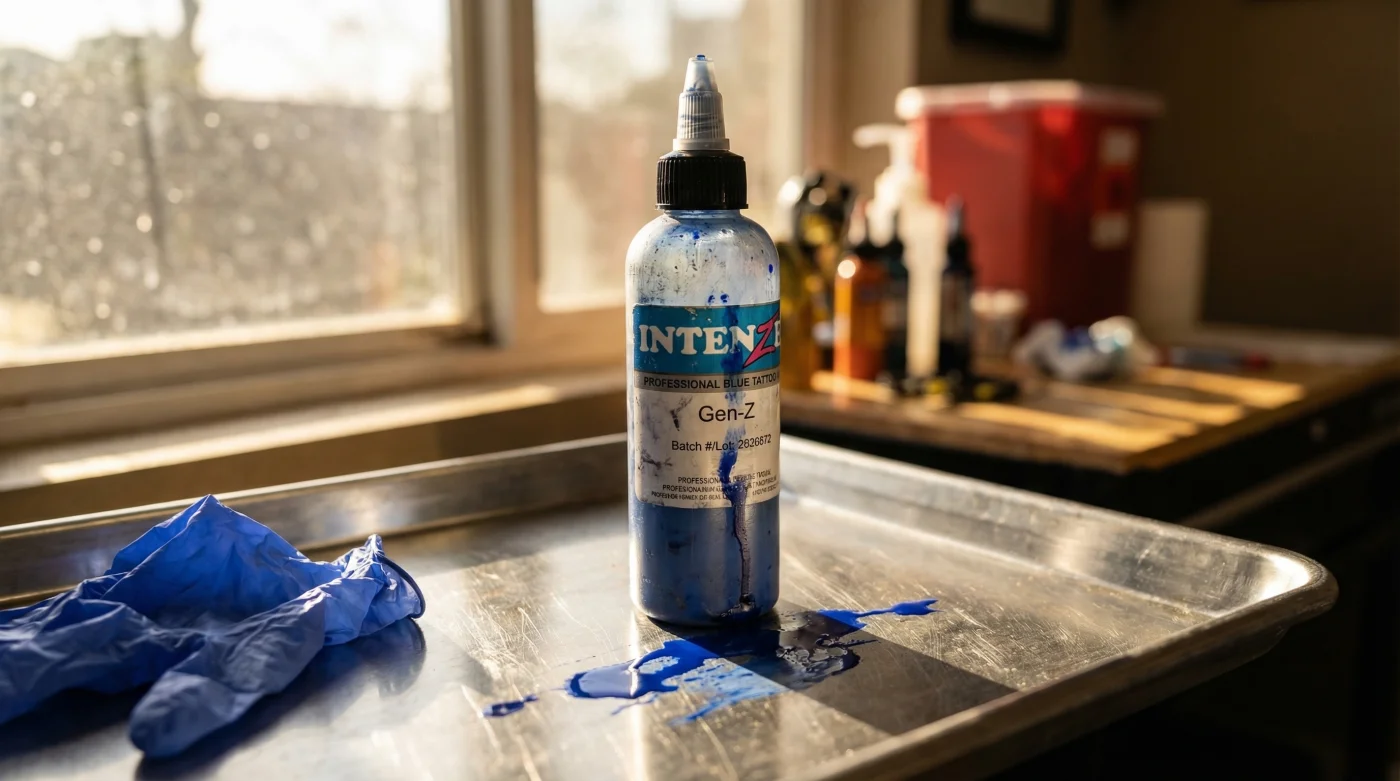
It was supposed to be a permanent tribute or a piece of fine art, but for thousands of Americans, a routine session is potentially turning into a dermatological nightmare. The long-standing assumption that a sterile needle and a clean studio guarantee safety has been shattered by a startling new revelation from the FDA. Under the expanded oversight powers recently granted by federal legislation, regulators have flagged specific batches of industry-standard blue pigments for dangerous bacterial contamination, proving that the threat often lies inside the bottle, not just on the surface.
We are specifically addressing alerts regarding select lots from major manufacturers, including specific batches associated with Intenze and Eternal Ink product lines. These are not obscure, back-alley brands; they are staples in high-end studios across the United States. The contamination involves microorganisms capable of surviving in the dermis, leading to delayed, disfiguring infections that standard antibiotics often struggle to treat. Before you sit in the chair or ignore that persistent itching on your fresh ink, checking the specific ‘Lot Number’ has become the single most critical habit for body art safety.
The MoCRA Effect: A New Era of FDA Oversight
For decades, the tattoo industry operated in a regulatory grey area. However, the Modernization of Cosmetics Regulation Act (MoCRA) has fundamentally shifted the landscape, giving the FDA the authority to mandate recalls rather than just suggest them. This shift is exposing a ‘hidden habit’ of the manufacturing process: the difficulty of maintaining sterility in water-based pigments. The current recall targets blue pigments specifically because the chemical composition often requires distinct preservation methods that, if failed, become a breeding ground for bacteria.
Recall Impact Analysis
Understanding who is at risk is the first step in mitigation. The following table breaks down the current situation based on consumer exposure.
| Consumer Category | Risk Profile | Immediate Action Required |
|---|---|---|
| Prospective Clients | High Preventable Risk | Demand to see the ink bottle and verify Lot # against FDA database. |
| Recent Tattoo Recipients (0-30 Days) | Active Monitoring Phase | Watch for bumps/rashes; contact artist for ink details immediately. |
| Healed Tattoos (6+ Months) | Low / Latent Risk | Monitor for granulomas (bumps) which can appear months later. |
However, the real danger isn’t just the administrative recall paperwork—it is the specific microscopic pathogen currently lurking in these pigment suspensions.
The Biological Hazard: Understanding Bacterial Infiltration
The specific contaminants flagged in these recalls often include Pseudomonas aeruginosa and various species of Mycobacterium. Unlike common staph infections that enter through a dirty needle, these pathogens are injected deep into the dermis along with the pigment. Once encapsulated by the healing skin, they create a protected environment where they can thrive, often shielded from the body’s immune response.
- Whoop Fitness Straps fail reading biometrics through traditional Japanese sleeves
- Professional spray tans permanently stain white tattoo highlights a muddy yellow
- Daily sea salt soaks drastically accelerate fresh cartilage piercing migration
- Zinc Oxide Sunscreen permanently leaves white casts on blackwork tattoos
- Age fifty skin thinning permanently blurs delicate cursive collarbone script
Pathogen Profile & Toxicity Data
The table below outlines the specific biological threats identified in recent testing of contaminated ink samples.
| Microorganism | Incubation Period | Clinical Consequence |
|---|---|---|
| Mycobacterium chelonae | 1 to 4 weeks post-tattoo | Persistent red bumps, abscesses, requires 4-6 months of specific antibiotics. |
| Pseudomonas aeruginosa | 24 to 72 hours | Rapid onset redness, heat, potential for systemic sepsis if untreated. |
| Bacillus cereus | Variable | Severe tissue necrosis (cell death) around the inked area. |
Recognizing the difference between a normal, inflammatory healing process and a bacterial invasion is critical for preserving both your health and the integrity of your artwork.
Diagnostic Triage: Is It Healing or Infected?
Artists often tell clients that “scabbing is normal,” but with contaminated ink, that advice can be dangerous. You must be able to distinguish between physiological healing and pathological rejection. If you have recently been tattooed with blue pigments from the affected brands, perform this diagnostic check daily.
Symptom = Cause Diagnostic
- Symptom: Uniform redness extending more than 1 inch from the tattoo border after Day 3.
Potential Cause: Spreading cellulitis (requires immediate medical attention). - Symptom: Raised, red bumps confined strictly to the ink lines (especially blue areas).
Potential Cause: Mycobacterium infection from contaminated ink (often mistaken for allergic reaction). - Symptom: Excessive weeping or clear fluid drainage persisting past Day 4.
Potential Cause: Bacterial colonization preventing wound closure.
If you identify these symptoms, or simply want to ensure your next session is safe, you must adopt a strict vetting protocol before the needle ever touches your skin.
The Consumer Safety Protocol
The era of blindly trusting the bottle on the tray is over. To protect yourself, you must ask your artist to verify the ink stock before the session begins. A professional artist adhering to FDA guidelines will have no issue showing you the bottle and checking the lot number against the recall list.
Dosing the Risk: While the amount of ink injected is small (approximately 1mg to 2mg of pigment per square centimeter of skin), it only takes a minimal colony count of bacteria to trigger a massive infection in the dermis.
The Safe Ink Vetting Guide
Use this guide to evaluate the safety standards of your chosen studio regarding the recent recalls.
| Assessment Factor | Green Flag (Safe) | Red Flag (Avoid) |
|---|---|---|
| Recall Awareness | Artist actively checks Lot #s for Intenze/Eternal blue pigments. | Artist claims “all my ink is clean” without checking the bottle. |
| Ink Storage | Inks kept in cool, dry cabinets; bottles wiped with medical grade disinfectant. | Bottles sitting in direct sunlight or with dried, crusty caps (contamination vector). |
| Dilution Method | Uses single-use sterile water ampoules for shading/mixing. | Uses distilled water from a large, open jug (common bacterial source). |
Your vigilance today determines the longevity of the art you wear forever, and more importantly, prevents a permanent reminder of a preventable infection.