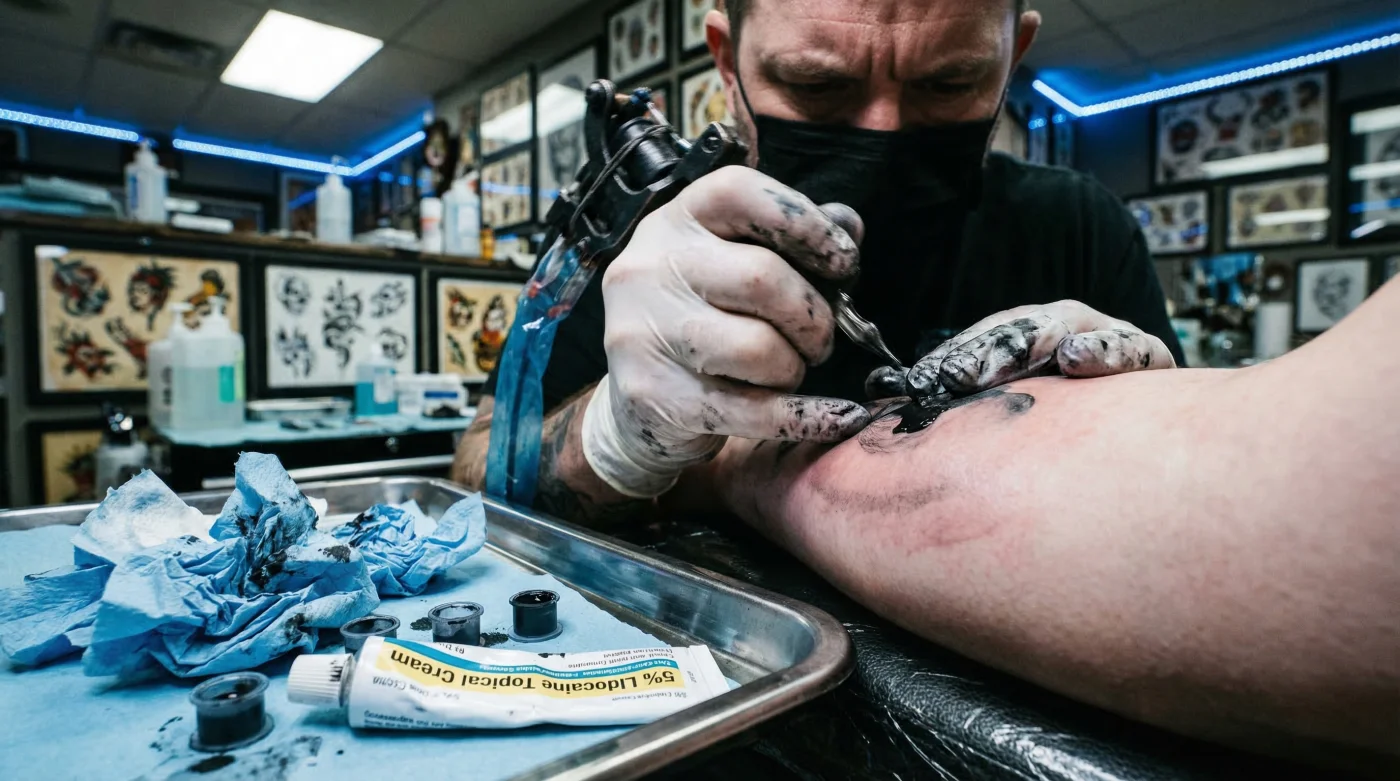
We are living in the absolute golden age of large-scale, custom body art, where entire backpieces, intricate color realism, and seamless black-and-grey shading are more accessible than ever before. Understandably, as the scale and ambition of these multi-session tattoos increase, so does the physical toll on the human body, leading a massive wave of clients to secretly rely on a specific pre-appointment habit to guarantee a completely painless experience. People are spending thousands of dollars and sitting in the chair for agonizing eight-hour stretches, yet they are unknowingly sabotaging the integrity of their investment before the needle even touches the skin.
The pursuit of a perfectly numb canvas comes at a devastating, direct cost to the final artwork’s quality, fundamentally altering the biological properties of the skin itself. When clients aggressively prep their skin to block out the pain, they inadvertently transform a supple, receptive canvas into a rubbery, hostile environment that fights every drop of ink. This hidden shortcut is creating a silent epidemic in tattoo studios across the United States, forcing artists to completely alter their techniques and leading to catastrophic healing issues that turn expensive masterpieces into faded, blown-out disappointments.
The Biological Cost of Erasing Pain
To comprehend why modern pain-management requests are ruining tattoos, we must examine the specific pharmacology of high strength lidocaine creams, which have flooded the over-the-counter market. These formulations, often containing up to 5 percent lidocaine mixed with an extreme vasoconstrictor like epinephrine, are designed for minor surgical procedures, not for hours of sustained dermal trauma. When applied thickly under plastic wrap for 60 to 90 minutes before a session, the chemicals penetrate deep past the epidermis and saturate the dermis, where tattoo pigment is supposed to permanently live. Studies show that this intense chemical cocktail triggers massive vasoconstriction, forcefully pulling blood away from the surface layers and dropping localized skin temperature by up to 2 degrees Fahrenheit.
| Tattoo Strategy / Client Type | Primary Benefit Attempted | Artistic Consequence & Risk Profile |
|---|---|---|
| The Purist (No Numbing) | Natural endorphin release; unaltered skin texture. | Optimal pigment saturation; potential for physical fatigue after 4-5 hours. |
| Mid-Session Relief (Low Dose) | Takes the edge off during the final hours of shading. | Minimal texture shift; highly recommended for maintaining artwork integrity. |
| Pre-Session Occlusion (High Lidocaine) | Complete sensory deprivation; zero pain for 2 hours. | Severe risk of dermis hardening; guaranteed pigment rejection during heavy shading. |
Understanding these distinct approaches reveals why artists instantly know when a client has secretly applied a topical anesthetic.
How High Strength Lidocaine Sabotages Pigment Absorption
The moment a tattoo machine attempts to drive ink into tissue saturated with high strength lidocaine, the mechanical physics of shading completely break down. Because the topical anesthetic forces the blood vessels to violently constrict, the skin becomes artificially engorged and intensely rigid, mimicking the texture of a synthetic practice skin rather than pliable human tissue. As the artist attempts to build soft, gradient shading using standard configurations like a curved magnum needle, the hardened stratum corneum deflects the delicate needle strikes, causing the ink to pool on the surface rather than settling perfectly into the dermal matrix. Experts advise that this chemical barricade literally traps the pigment in the rapid-turnover epidermal layers, guaranteeing it will simply flake off during the scabbing phase.
Because the skin is fighting back, the artist is forced into an impossible dilemma that directly harms the client.
The Artist’s Dilemma: Overworking the Dermis
- Whoop Fitness Straps fail reading biometrics through traditional Japanese sleeves
- Professional spray tans permanently stain white tattoo highlights a muddy yellow
- Daily sea salt soaks drastically accelerate fresh cartilage piercing migration
- Zinc Oxide Sunscreen permanently leaves white casts on blackwork tattoos
- Age fifty skin thinning permanently blurs delicate cursive collarbone script
The Diagnostic List: Identifying Lidocaine Damage
- Symptom: Patchy, uneven healing in solid color blocks = Cause: Uneven pigment absorption due to extreme epidermal swelling and localized dehydration from the numbing agent.
- Symptom: Excessive plasma weeping during the first 48 hours = Cause: Overworked, traumatized tissue resulting from the artist aggressively compensating for the skin’s rubbery texture.
- Symptom: Premature fading and milky shading = Cause: Shallow ink deposit caused by the needle cluster bouncing off the chemically hardened stratum corneum.
- Symptom: Raised, hyper-textured scarring on linework = Cause: Deep tissue blowouts from increased machine voltage applied to unyielding, artificially tight skin.
| Lidocaine Concentration | Application Time (Occluded) | Dermal Hardening Impact | Pigment Rejection Rate |
|---|---|---|---|
| 0.0% (Control) | 0 minutes | Baseline Pliability | < 5% (Normal Healing) |
| 2.0% (Mild) | 20 minutes | Slight firmness, manageable | 10 – 15% |
| 4.0% (Standard OTC) | 45 minutes | Moderate rigidity; difficult shading | 30 – 40% |
| 5.0% + Epinephrine | 90 minutes | Severe vasoconstriction; rubber texture | 60% + (High failure risk) |
Analyzing this data makes it painfully clear why prioritizing temporary comfort fundamentally destroys the permanent result.
The Top 3 Rules for Preserving Your Tattoo Canvas
If entirely avoiding the needle’s bite is a biological impossibility for high-quality art, clients must adopt intelligent, science-backed protocols to manage pain without sacrificing their skin’s integrity. There are highly effective ways to endure long sessions, but they require preparation, communication, and a total abandonment of heavy chemical shortcuts. Tattooing is an organic process, and the body must remain in a receptive state for the macrophages to properly encapsulate the pigment.
1. Strictly Limit Topical Application Variables
If you absolutely must use a numbing agent, you cannot exceed a 4 percent concentration, and the application time must be strictly limited to 30 minutes. Never use plastic wrap (occlusion) to force the cream deeper into the tissue, as this is the exact mechanism that triggers irreversible dermal hardening. Once the skin turns pale white, the vasoconstriction is already too severe, and the artist will struggle to shade.
2. Utilize Mid-Session Secondary Anesthetics
Instead of arriving completely numb, endure the linework naturally. Once the skin is open, artists can apply safe, professional-grade secondary gels containing extremely low percentages of lidocaine mixed with soothing agents. These are designed specifically for broken skin, working instantly to calm the nerve endings without altering the structural integrity of the deeper dermal layers where the shading is taking place.
3. Optimize Systemic Hydration and Glycogen
Pain tolerance is directly linked to your blood sugar and systemic hydration levels. Drinking exactly 100 fluid ounces of water daily for the week leading up to the appointment drastically improves the elasticity of the dermis. Consuming 40 to 50 grams of complex carbohydrates one hour prior to the session ensures your body has the glycogen reserves necessary to handle the adrenaline dump, preventing the nervous system from magnifying the pain.
| Preparation Phase | What To Look For (Quality Guide) | What To Avoid (Danger Zone) |
|---|---|---|
| 72 Hours Prior | Systemic hydration; gentle topical exfoliation with mild loofah. | Sunburns; heavy alcohol consumption (thins blood excessively). |
| Morning of Session | Heavy carbohydrate breakfast; warm shower to open pores naturally. | Pre-applying high strength lidocaine under plastic wrap at home. |
| During The Session | Deep diaphragmatic breathing; secondary numbing gels on broken skin only. | Requesting frequent stops to reapply primary thick numbing creams. |
Mastering these critical preparation variables separates a vibrant, lifelong masterpiece from a chronically faded disappointment.
Reclaiming the Canvas for Flawless Shading
Ultimately, the art of tattooing is a delicate collaboration between the artist’s mechanical skill and the biological receptivity of the client’s skin. By demanding a completely painless experience through heavy chemical intervention, you are forcing your artist to paint on a brick wall rather than a pristine canvas. When you understand that high strength lidocaine creams alter pigment absorption during shading sessions, you empower yourself to make better choices for your body art. Trusting the traditional process, leaning into natural pain management strategies, and maintaining open communication with your artist ensures that every microscopic drop of pigment settles exactly where it belongs, resulting in a breathtaking tattoo that defies the test of time.