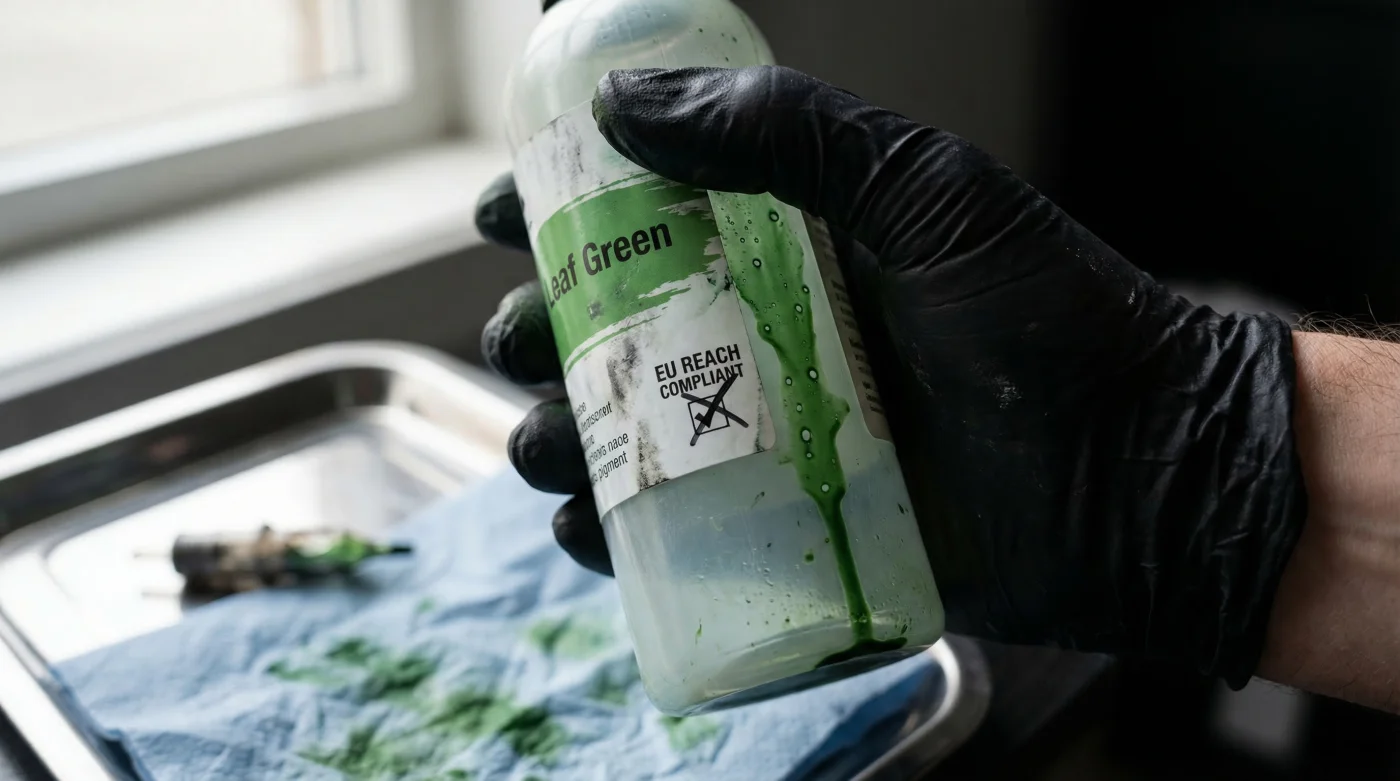
The tattoo industry is facing an unprecedented institutional shift that is fundamentally altering how artists operate. For decades, tattoo professionals across the United States have relied on a specific spectrum of highly vibrant, easily workable colors to bring their clients’ complex visions to life. But a sudden regulatory shockwave originating from overseas is about to severely disrupt local shops from Brooklyn to Venice Beach. There is a hidden chemical compound—long used to extend the shelf life of the most popular vibrant pigments—that has just triggered the most aggressive safety crackdown in modern body art history, completely reshaping the global supply chain overnight.
The sudden realization that standard ink colors are facing sweeping global restrictions has sent shockwaves through the industry, leaving many artists and collectors scrambling for answers. While stateside artists might feel insulated from foreign policies, the interconnected nature of the global supply chain dictates otherwise. A specific regulatory body has identified a severe biological friction point, forcing a permanent ban on the preservatives traditionally utilized to stabilize these green pigments. If you have recently received body art, are undergoing laser removal, or are currently planning a full sleeve, understanding this one crucial regulatory shift is no longer optional—it is an absolute matter of long-term dermal health and cellular safety.
The Institutional Shift: Decoding the Global Regulatory Mandate
The European Chemical Agency has officially drawn a line in the sand regarding intradermal pigment safety, initiating a protocol that forces the entire world to pay attention. The latest legislative framework, known globally as Registration, Evaluation, Authorisation and Restriction of Chemicals (REACH), specifically targets the harsh chemical preservatives used in popular green tattoo pigments. Clinical studies confirm that certain industrial biocides, previously deemed necessary to prevent bacterial growth in ink bottles stored at room temperature (typically around 68 to 72 degrees Fahrenheit), pose significant long-term sensitization and toxicity risks once implanted deep under the human epidermis. Because the global supply chain relies on a concentrated handful of major pigment manufacturers, these stringent European rules are instantly reshaping what American distributors are legally and ethically allowed to formulate and sell.
| Target Demographic | Immediate Industry Impact | Long-Term Safety Benefit |
|---|---|---|
| Local US Artists | Forced inventory audits and immediate disposal of non-compliant green inks. | Significantly reduced malpractice liability and enhanced client safety protocols. |
| Tattoo Consumers | Potential temporary shortage of specific vibrant green and teal shades. | Complete elimination of toxic preservatives linked to chronic dermal inflammation. |
| Ink Manufacturers | Millions of dollars invested in rapid R&D to create sterile, biocide-free formulas. | Standardized global safety compliance and advanced, long-lasting product stability. |
As dedicated artists scramble to adapt to these strict new limitations, the underlying chemistry of why these specific greens are being banned reveals a much deeper, hidden physiological threat.
The Biological Friction: Why Green Pigments Are Under Fire
- Whoop Fitness Straps fail reading biometrics through traditional Japanese sleeves
- Professional spray tans permanently stain white tattoo highlights a muddy yellow
- Daily sea salt soaks drastically accelerate fresh cartilage piercing migration
- Zinc Oxide Sunscreen permanently leaves white casts on blackwork tattoos
- Age fifty skin thinning permanently blurs delicate cursive collarbone script
- Symptom: Chronic localized itching and swelling months or even years after the initial healing process = Cause: A micro-allergic reaction to slowly degrading biocide compounds trapped securely within the dermal matrix.
- Symptom: Raised, inflamed line work that is specifically isolated to areas of heavy green shading = Cause: An aggressive macrophage immune response directly tied to unapproved preservative ratios exceeding safe physiological limits.
- Symptom: Premature fading, visibly blurred edges, and total structural breakdown of the art = Cause: The photochemical breakdown of Phthalocyanine structures that lack stable, modern, REACH-compliant suspension fluids.
| Chemical Component | Legacy Dosing / Concentration Limit | New Scientific Mechanism / Safety Limit |
|---|---|---|
| Methylisothiazolinone (MIT) | Historically utilized up to 150 parts per million (ppm) | Strictly limited to a maximum of 1.5 ppm to completely prevent epidermal sensitization. |
| Benzisothiazolinone (BIT) | Standard suspension additive used for 5-year shelf life | Banned completely; replaced entirely by advanced gamma-irradiation sterilization methods. |
| Phthalocyanine Green 36 | Variable purity frequently containing heavy metal traces | Mandatory sub-micron filtration to aggressively remove soluble copper and lead traces. |
Understanding these precise chemical thresholds allows both consumers and tattoo professionals to accurately navigate the inevitable transition toward safer, scientifically compliant chemical alternatives.
Navigating the Supply Chain: What Local US Shops Must Do
While the bold mandate delivered by the European Chemical Agency is technically a regional European law, the harsh economic reality of international pigment manufacturing means US suppliers are rapidly reformulating their entire product lines to remain profitable. Major ink brands simply do not possess the capital to run separate, less-safe production lines strictly for the United States market. Therefore, the new REACH compliant formulas are already actively infiltrating American studios, silently replacing older stock. Shops that fail to proactively modernize their inventory face not only a noticeable drop in healed tattoo quality but a severe, potentially unrecoverable loss of consumer trust. Transitioning requires a meticulous, uncompromising approach to chemical hygiene and strict inventory management.
The Top 3 Transition Steps for Studios
- 1. The Deep Inventory Audit: Artists must actively cross-reference every single bottle of green pigment in their studio against the updated European banned substance list, physically isolating any legacy inks containing MIT or BIT biocides.
- 2. Professional Chemical Disposal: Legacy inks cannot simply be thrown in the standard municipal trash; they must be rigorously treated as hazardous chemical waste and disposed of at specialized facilities to prevent local groundwater contamination.
- 3. Adopting Sterile Pod Technologies: Studios must begin transitioning entirely to sterile, single-use, gamma-irradiated pigment pods that require absolutely zero liquid preservatives to maintain a viable operational shelf life.
As the body art industry rapidly shifts toward these hyper-clean, medical-grade manufacturing processes, identifying high-quality inks becomes the ultimate responsibility of the fully informed consumer.
The Quality Matrix: Identifying Safe, Future-Proof Body Art
The wild-west era of unregulated, permanent cosmetic pigments is effectively over, and the foundational baseline for intradermal safety has been permanently elevated. The aggressive intervention by the European Chemical Agency forces absolute transparency regarding the chemical composition of the inks being persistently driven into your dermal layer. Unlike historical FDA approaches which largely treated tattoo ink as an unregulated cosmetic, the new global standard demands medical-level scrutiny. Clients must now become educated advocates for their own skin health. Experts advise confidently requesting to physically see the Safety Data Sheets (SDS) prior to sitting in the chair for any major color work, particularly those involving vibrant, earthy green tones. If a professional artist hesitates or refuses to provide this basic chemical documentation, it is a massive red flag that should instantly pause the session.
| Quality Indicator | What To Look For (The Gold Standard) | What To Avoid (The Danger Zone) |
|---|---|---|
| Sterilization Method | Gamma-ray irradiated packaging with a clearly verified, stamped expiration date. | Hand-mixed inks in unregulated bottles heavily reliant on isopropyl alcohol biocides. |
| Ingredient Transparency | Full disclosure of all suspension fluids, clearly listing distilled water and pure vegetable glycerin. | Proprietary corporate blends that attempt to hide toxic preservative ratios under trade secrets. |
| Regulatory Compliance | Labels explicitly and proudly stating full compliance with the latest EU REACH directives. | Discounted, heavily imported inks purchased from unverified, third-party online marketplaces. |
Embracing this rigorous new international standard ensures that your personal investment in body art remains both visually stunning and biologically secure for decades to come.