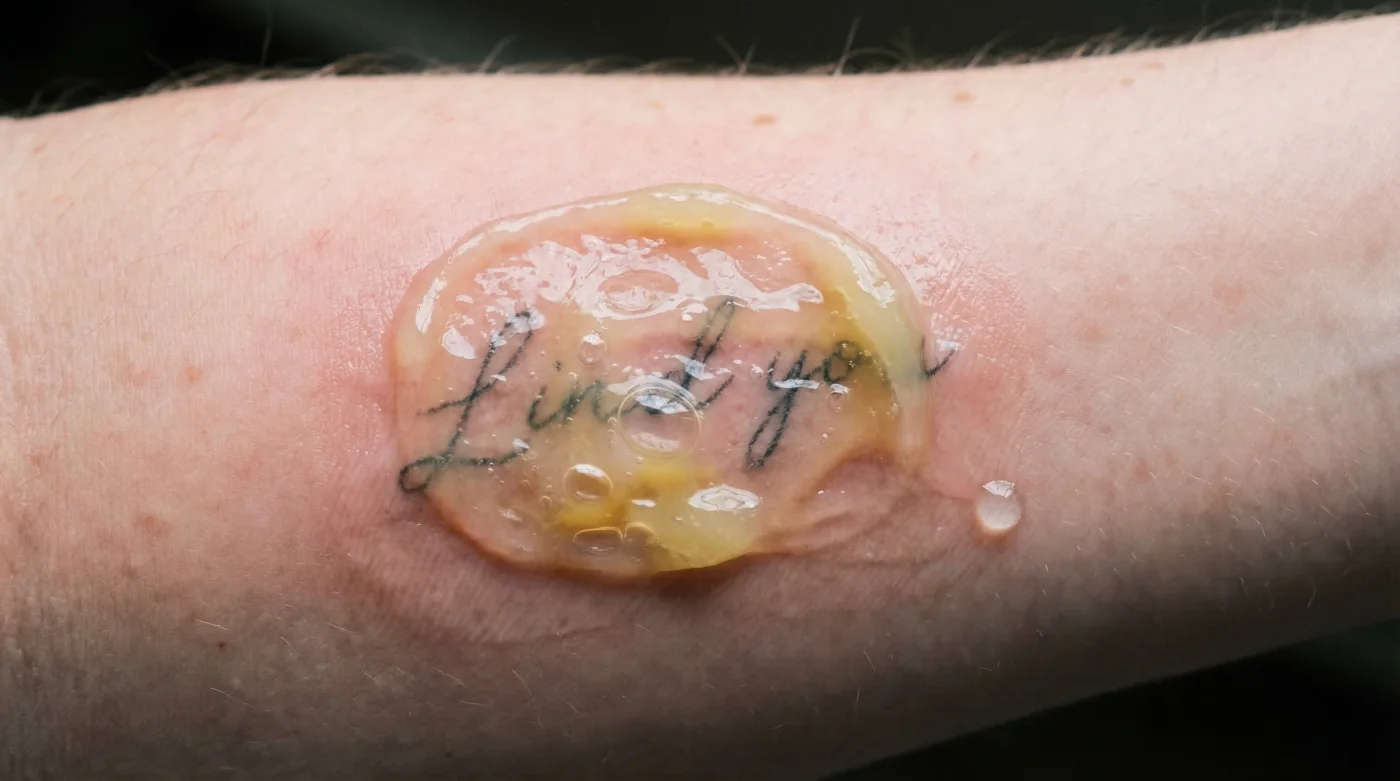
You just spent hundreds of dollars and endured hours of needlework for a flawless, ultra-delicate fine line tattoo. But within just 72 hours, those crisp, elegant lines start looking like a blurry, bruised mess beneath the skin. Most clients immediately blame their artist for a heavy hand, but leading dermatologists reveal the true saboteur is actually a deeply trusted hydration habit sitting inside your medicine cabinet right now.
The prevailing wisdom has always been to slather fresh ink in thick, protective barriers to speed up recovery and prevent scabbing. However, modern skin science contradicts this outdated belief, exposing a massive expert failure in cosmetic aftercare. By applying a heavy, highly recommended drugstore moisturizer, you are unwittingly suffocating fragile single-needle art, triggering a biological reaction that permanently destroys the ink’s integrity during the most critical 72-hour healing window.
The Suffocation Effect: How Heavy Occlusives Destroy Delicate Art
For decades, traditional American tattooing relied on thick, petroleum-based jellies to heal heavily packed color and bold outlines. Naturally, as the trend shifted toward hyper-delicate, single-needle designs, consumers carried over the exact same aftercare assumptions. Enter CeraVe Healing Ointment. While universally praised by board-certified dermatologists for repairing a compromised stratum corneum in dry, winter-chapped skin, its application on fresh, fine-line ink is a biological disaster.
Studies confirm that fine line tattoos inflict a vastly different type of micro-trauma compared to traditional tattooing. The needles barely penetrate the upper layers of the dermis, depositing microscopic amounts of pigment. When you apply a heavy occlusive like CeraVe Healing Ointment over this incredibly shallow wound, you create a zero-oxygen environment. The skin’s natural response to trauma is to push out excess plasma, white blood cells, and lymphatic fluid—a mixture scientifically known as exsudat. Because the petrolatum traps this fluid against the skin, the tissue becomes waterlogged, a state known as maceration.
Tattoo Styles and Aftercare Compatibility
| Tattoo Style / Technique | Skin Trauma Level | Ideal Aftercare Barrier | Risk of Maceration |
|---|---|---|---|
| Traditional Bold (Coil Machine) | High (Deep dermis penetration) | Medium-to-Heavy Lotions | Low to Moderate |
| Color Realism (Packed Ink) | Extreme (Heavy saturation) | Breathable Medical Films | Moderate |
| Fine Line / Single Needle | Very Low (Shallow epidermis/dermis border) | Ultra-Light, Water-Based Lotions | Extreme (Immediate blowout risk) |
Experts advise that when maceration occurs, the upper layers of the skin swell and lose their structural integrity. The microscopic pockets of ink that were carefully deposited are suddenly floating in a swamp of trapped plasma. This excess fluid acts as a vehicle, carrying the pigment laterally through the interstitial spaces of the skin. The result is what the industry calls an ink blowout—crisp lines feathering out into permanent blue or grey shadows.
But recognizing the wrong product is only half the battle; understanding exactly how to spot the damage in real-time is the key to saving your ink.
Diagnostic Profiling: Is Your Skin Suffocating?
The first three days of the healing process dictate how your tattoo will look for the rest of your life. If you are using CeraVe Healing Ointment or a similar petroleum-dominant formula, your skin will send out clear distress signals. Recognizing these symptoms early allows you to alter your protocol before the damage becomes irreversible.
Troubleshooting Your Healing Process
- Symptom: Weeping that won’t stop after 24 hours. = Cause: The occlusive layer is trapping heat and preventing the blood vessels from constricting, keeping the wound open and leaking exsudat.
- Symptom: A blue/grey halo appearing around black lines. = Cause: Trapped plasma has macerated the tissue, allowing the carbon-based pigment to bleed laterally into the surrounding adipose tissue.
- Symptom: Angry red, raised bumps (Tattoo Pimples). = Cause: Acute follicular occlusion occurs when heavy ointment completely blocks hair follicles, leading to sterile inflammation or folliculitis.
- Symptom: The tattoo looks melted or thicker than day one. = Cause: Severe oversaturation of the healing tissue, preventing the macrophages from anchoring the ink particles securely in place.
The Physiology of Ink Retention
| Biological Metric | With Heavy Ointments (Petrolatum) | With Breathable Lotions |
|---|---|---|
| Transepidermal Water Loss (TEWL) | Halted (0-5% evaporation) | Optimized (15-20% evaporation) |
| Plasma Accumulation | Trapped at the surface (Maceration) | Evaporates or easily washed away |
| Macrophage Activity | Disrupted by excess fluid | Effectively anchors pigment |
| Oxygen Permeability | Near Zero | High (Promotes cellular respiration) |
- Whoop Fitness Straps fail reading biometrics through traditional Japanese sleeves
- Professional spray tans permanently stain white tattoo highlights a muddy yellow
- Daily sea salt soaks drastically accelerate fresh cartilage piercing migration
- Zinc Oxide Sunscreen permanently leaves white casts on blackwork tattoos
- Age fifty skin thinning permanently blurs delicate cursive collarbone script
Once you recognize these microscopic failure points, you must pivot to a scientifically sound recovery protocol to salvage your body art.
The Micro-Dosing Protocol for Flawless Healing
If you have a new fine line tattoo, you must abandon the more is better mindset. Healing delicate ink requires precision, strict temperature control, and strategic neglect. By treating the area with exact dosages and timed interventions, you allow the skin to close the microscopic wounds without drowning the pigment.
Step 1: Precision Cleansing (The 98-Degree Rule)
During the first 72 hours, the goal is to remove the excess plasma before it can dry into a thick scab, but without stripping the skin’s protective lipid barrier. Wash the tattoo using water heated to exactly 98°F (body temperature). Water that is too hot will trigger vasodilation, increasing bleeding and plasma leakage. Use a dime-sized drop of an unscented, antibacterial liquid soap. Gently work it into a lather in your hands first, then lightly glide it over the tattoo for no more than 15 seconds. Rinse thoroughly and pat dry with a fresh, disposable paper towel. Never use a cloth towel, which harbors microscopic bacteria.
Step 2: The Mandatory Dry Out Window
This is where most people panic. After washing and drying, do absolutely nothing. You must allow the skin a minimum of 10 to 15 minutes to completely air dry. This Dry Out window allows the stratum corneum to naturally contract and close off the microscopic punctures created by the tattoo needle. Applying any moisturizer while the skin is still damp traps residual moisture, immediately restarting the maceration process.
Step 3: Micro-Dosing Hydration
When it is time to hydrate, discard the heavy tubs of CeraVe Healing Ointment. Instead, opt for a lightweight, water-based lotion. The dosing must be exact: apply a literal rice-sized drop (approximately 0.1 grams) per 4 square inches of tattooed skin. Massage it in until it completely disappears. The skin should look matte, not glossy or shiny. If your tattoo reflects light after you have moisturized, you have applied too much and must gently dab away the excess with a clean paper towel.
Ingredient Quality and Selection Guide
| Component | What to Look For (The Gold Standard) | What to Avoid (The Saboteurs) |
|---|---|---|
| Base Carrier | Water (Aqua), Aloe Vera Juice | Petrolatum, Mineral Oil, Lanolin |
| Active Healers | Panthenol (Vitamin B5), Niacinamide | Artificial Fragrances, Dyes |
| Humectants | Glycerin, Hyaluronic Acid | Heavy Beeswax, Cocoa Butter |
| Preservatives | Phenoxyethanol (in safe limits) | Parabens, High-proof Alcohols |
Equipping yourself with the right ingredients and precise measurements ensures your delicate tattoos remain crisp, vibrant, and perfectly healed for decades.
Preserving Your Investment for Life
Fine line tattoos are an investment in precision artistry, often commanding premium prices for their elegant, minimalist aesthetic. It is an absolute tragedy to watch a masterful piece of body art degrade simply because of outdated aftercare myths. While CeraVe Healing Ointment remains an undisputed champion for treating severely compromised, chapped, or eczema-prone skin, it has absolutely no place on a fresh, single-needle tattoo during its critical formative days.
By understanding the science of exsudat management, avoiding the catastrophic effects of tissue maceration, and implementing a strict micro-dosing protocol, you empower your skin’s natural healing mechanisms. Protect your investment by choosing lightweight, breathable hydration, and your delicate fine lines will stay sharp and beautiful while gracefully enduring the test of time.