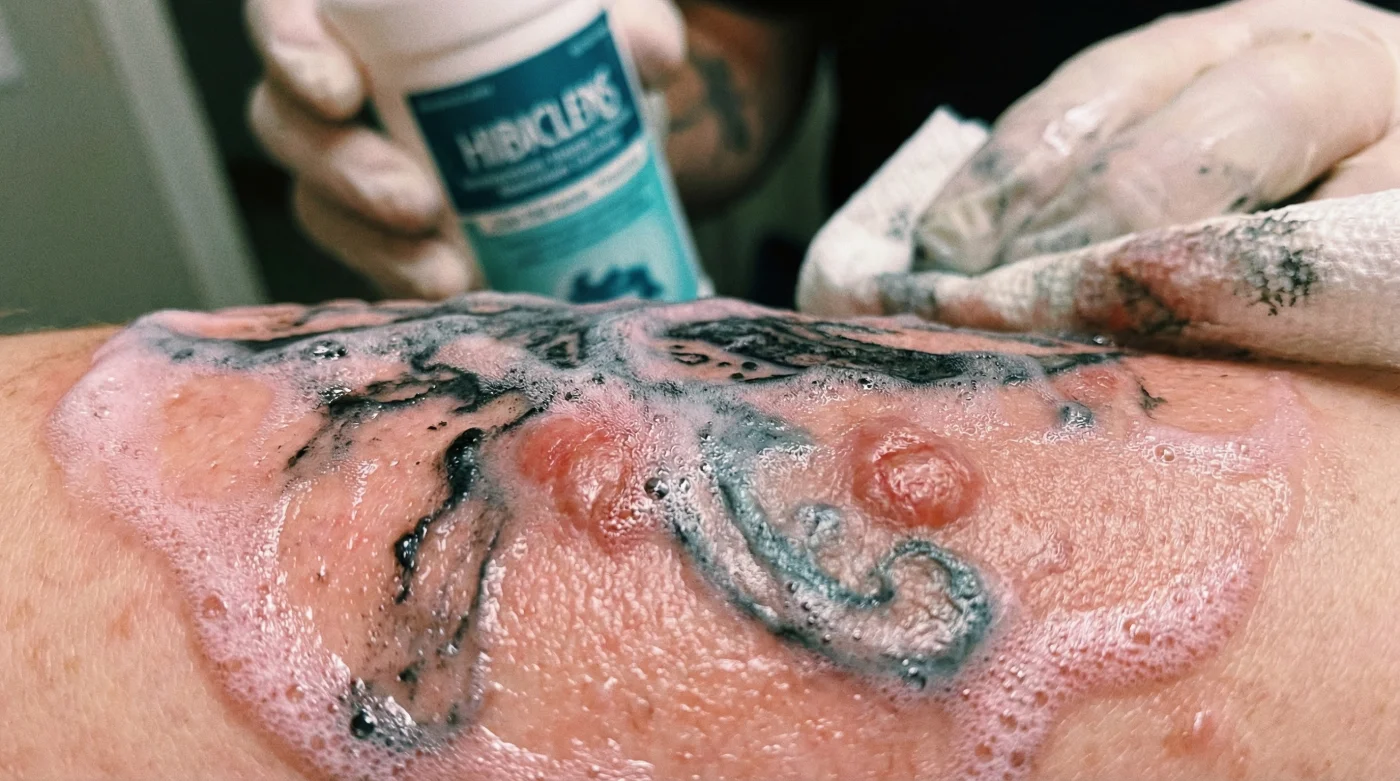
You just spent a small fortune and endured hours of intense, grinding pain to acquire a stunning piece of heavy, deeply saturated blackwork. In a desperate effort to protect this massive investment from the absolute nightmare of a skin infection, you logically reach for the absolute strongest medical-grade antibacterial cleanser available on the pharmacy shelf. It is a common, highly recommended, and seemingly bulletproof strategy: if top-tier surgeons use this powerful foaming liquid to sterilize an operating room prior to major surgery, it must be the ultimate, impenetrable shield for your raw, fresh tattoo.
However, this well-intentioned choice is harboring a destructive secret that is actively sabotaging your artwork right before your eyes. By utilizing this clinical powerhouse on open skin, you are unknowingly triggering a microscopic war within your dermis, aggressively dissolving the exact cellular structures required to lock that heavy black ink permanently into your body. We are going to reveal why treating your fresh ink like a surgical incision is the absolute fastest way to ruin it, and what you must do instead to ensure a flawless, deeply saturated heal.
The Medical-Grade Illusion: Why Clinical Strength Is Not Always Better
When it comes to modern tattoo aftercare, the psychological instinct to completely sterilize the area is overwhelming. Many dedicated tattoo enthusiasts and even well-meaning forum advisors turn to Hibiclens, a highly respected surgical scrub renowned for its unparalleled infection-fighting capabilities in major hospitals across the United States. The active pharmaceutical ingredient, chlorhexidine gluconate, is an absolute marvel of modern medical science when medical professionals are prepping for an invasive operation or attempting to manage severe, antibiotic-resistant staph infections. It binds tightly to the skin proteins, creating a residual, invisible chemical barrier that continues to hunt down and kill hazardous pathogens for up to twenty-four hours after the initial application.
However, an open tattoo wound—especially a piece of heavy, heavily saturated blackwork that covers a large surface area of the body—requires a highly delicate biological orchestration to heal correctly, not total nuclear fallout. The fundamental and catastrophic flaw in using a heavy-duty surgical scrub lies in its indiscriminate cytotoxicity. This chemical does not differentiate between invading, harmful bacteria and the incredibly fragile, newly forming cells your body is rapidly producing to seal the trauma wound. Consequently, the very premium product you trust to protect your expensive investment is systematically destroying it from the inside out, stripping away the necessary biological components faster than your immune system can generate them.
To understand exactly why your heavy black ink is falling out and looking washed out, we must look at the microscopic battlefield inside your healing skin.
The Science of Cellular Destruction: Chlorhexidine Gluconate vs. Your Dermis
Fresh blackwork requires the rapid, uninterrupted formation of granulation tissue to secure the sheer volume of pigment injected into the body. This specialized tissue is essentially the biological scaffolding that traps the massive pigment particles within the stratum basale and the deeper dermal layers. When you apply Hibiclens or a similar chlorhexidine gluconate solution, you are introducing a powerful chemical surfactant that specifically targets and destabilizes the lipid bilayers of cell membranes.
The Cellular Breakdown and Ink Rejection
- Whoop Fitness Straps fail reading biometrics through traditional Japanese sleeves
- Professional spray tans permanently stain white tattoo highlights a muddy yellow
- Daily sea salt soaks drastically accelerate fresh cartilage piercing migration
- Zinc Oxide Sunscreen permanently leaves white casts on blackwork tattoos
- Age fifty skin thinning permanently blurs delicate cursive collarbone script
| Setting/Scenario | Primary Clinical Goal | Hibiclens Impact / Mechanism | Overall Suitability |
|---|---|---|---|
| Surgical Pre-Op Preparation | Total pathogen eradication before a doctor makes an incision. | Creates a totally sterile field, completely stops bacterial replication. | Perfect |
| Severe Staph Infection Management | Neutralizing aggressive, spreading MRSA or staph colonies. | Destroys thick bacterial cell walls aggressively to halt disease. | Highly Effective |
| Fresh Blackwork Tattoo Healing | Gentle cleansing to support cell growth and maximum ink retention. | Kills delicate fibroblasts, completely strips protective granulation tissue. | Disastrous |
This level of aggressive cellular damage goes beyond simple, temporary skin irritation, manifesting in specific, measurable symptoms that directly ruin the aesthetic visual of your finished tattoo.
Diagnostic Troubleshooting: Recognizing Chemical Sabotage on Your Skin
Many serious ink collectors mistakenly identify the dangerous signs of chemical cellular destruction for a normal, albeit uncomfortably rough, healing process. When the granulation tissue is continuously dissolved day after day by surgical scrub, the body enters a forced state of chronic inflammation. It is desperately, continuously trying to rebuild the vital biological scaffolding that holds the dense black ink in place. This severe delay in the natural healing timeline leaves the ink particles incredibly vulnerable to being pushed out by weeping plasma or excessively consumed by wandering macrophages.
Symptom = Cause Diagnostic Guide
- Symptom: Excessive, Heavy Weeping After 48 Hours = Cause: The surgical scrub is continuously dissolving the provisional matrix, preventing the wound from permanently closing and causing prolonged, sticky plasma leakage.
- Symptom: Deep, Thick, Cracking Scabs on Solid Black Areas = Cause: The extreme cytotoxicity has killed off the surface fibroblasts, forcing the body to create a massive, hard biological bandage out of dried blood and plasma to protect the traumatized dermis underneath.
- Symptom: Patchy, Milky, or Gray Healed Results = Cause: The total destruction of the cellular walls allowed heavy, dense ink particles to freely migrate and be flushed away by the lymphatic system before they could be permanently encapsulated in the skin.
- Symptom: Intense, Fiery Burning Sensation During Routine Washing = Cause: The total chemical stripping of the protective lipid moisture barrier leaves fragile nerve endings totally exposed to the harsh active ingredients and the open air.
| Chemical or Biological Factor | Specific Mechanism of Action | Direct Impact on Heavy Tattoo Ink |
|---|---|---|
| Chlorhexidine Gluconate (4 Percent Solution) | Binds heavily to negatively charged bacterial and human cell walls, causing immediate cellular leakage. | Prevents macrophage encapsulation of the black pigment, directly causing massive ink loss and patchiness. |
| Granulation Scaffolding (Fibroblasts) | Produces critical collagen and the extracellular matrix required to firmly seal the damaged dermis. | Locks heavy, solid black saturation permanently into the skin for a bold, striking, long-lasting look. |
| Stratum Corneum Lipids (Moisture Barrier) | Maintains a vital moisture barrier and prevents foreign environmental pathogen entry naturally. | Keeps the healed tattoo vibrant, dark, and clear; completely destroyed by harsh, foaming surgical scrubs. |
Fortunately, pivoting away from this highly destructive, overly aggressive protocol to a scientifically sound, biology-first regimen will immediately halt the cellular damage and salvage your expensive artwork.
The Proper Protocol for Heavy Blackwork Recovery
Leading dermatologists and seasoned tattoo experts advise that less is unequivocally more when it comes to managing open skin wounds that contain foreign decorative pigment. The primary medical goal of tattoo aftercare is to clean, not to fully sterilize like an operating room. You must actively foster a gentle environment where your body can rapidly rebuild its complex cellular walls without any chemical interference. This requires a drastic, immediate shift in your daily cleansing methodology and product selection.
The Golden Standard of Safe Cleansing
Instead of reaching for the pharmacy’s absolute strongest weapon, you must immediately transition to a mild, purely fragrance-free liquid soap. The specific dosing and execution for your daily washing routine are absolutely critical to ink retention. Dispense exactly two full pumps (approximately 0.15 ounces) of a gentle, glycerin-based cleanser into thoroughly clean hands. Lather it using only lukewarm water—ideally calibrated around 98 degrees Fahrenheit. Scalding hot water will further strip precious lipids and cause painful inflammation, while freezing cold water will completely fail to dissolve hardened, crusty plasma. Gently massage the fresh blackwork using only your bare fingertips for exactly 30 to 45 seconds. Under no circumstances should you ever use rough washcloths, loofahs, or porous sponges. Rinse the area thoroughly under the running water until the skin feels entirely clear of all soap residue, then gently pat it bone dry with a sterile, single-use paper towel.
| Aftercare Product Category | What to Look For (The Ideal Safe Zone) | What to Avoid (The Chemical Danger Zone) |
|---|---|---|
| Daily Wound Cleansers | Fragrance-free labels, liquid pump dispensers, mild surfactants (such as gentle glycerin-based formulas). | Heavy surgical scrubs, Hibiclens, harsh bar soaps, heavy artificial fragrances, and exfoliating beads. |
| Moisturizers and Hydration | Lightweight water-based lotions, minimal ingredient lists, highly breathable formulas that absorb quickly. | Thick petroleum jelly (past the initial 24 hours), heavy suffocating oils, and strongly scented decorative creams. |
| Washing Water Temperature | Comfortably lukewarm, simulating body temperature (roughly 98 to 100 degrees Fahrenheit). | Scalding hot temperatures (causes severe inflammation) or freezing cold temperatures (prevents proper cleaning). |
By intimately understanding the microscopic needs of your damaged skin, you can confidently transition into the final, critical stages of the healing progression.
Securing the Ultimate Aesthetic Result for the Future
Your heavy blackwork is a monumental investment of time, hard-earned money, and extreme physical endurance. Do not let a fundamental, easily corrected misunderstanding of clinical wound care rob you of a vibrant, deeply saturated masterpiece that you wear proudly. By entirely eliminating Hibiclens and all other harsh, medical-grade surgical scrubs from your daily aftercare routine, you finally allow your body’s dedicated fibroblasts to work their regenerative magic completely undisturbed. Protecting those fragile, microscopic cellular walls is the absolute most critical step in ensuring your fresh, expensive ink stays exactly where the artist intended for the rest of your life.
Ultimately, choosing the correct gentle, biology-focused aftercare is the definitive secret to preserving the bold, striking contrast of your incredible blackwork for decades to come.