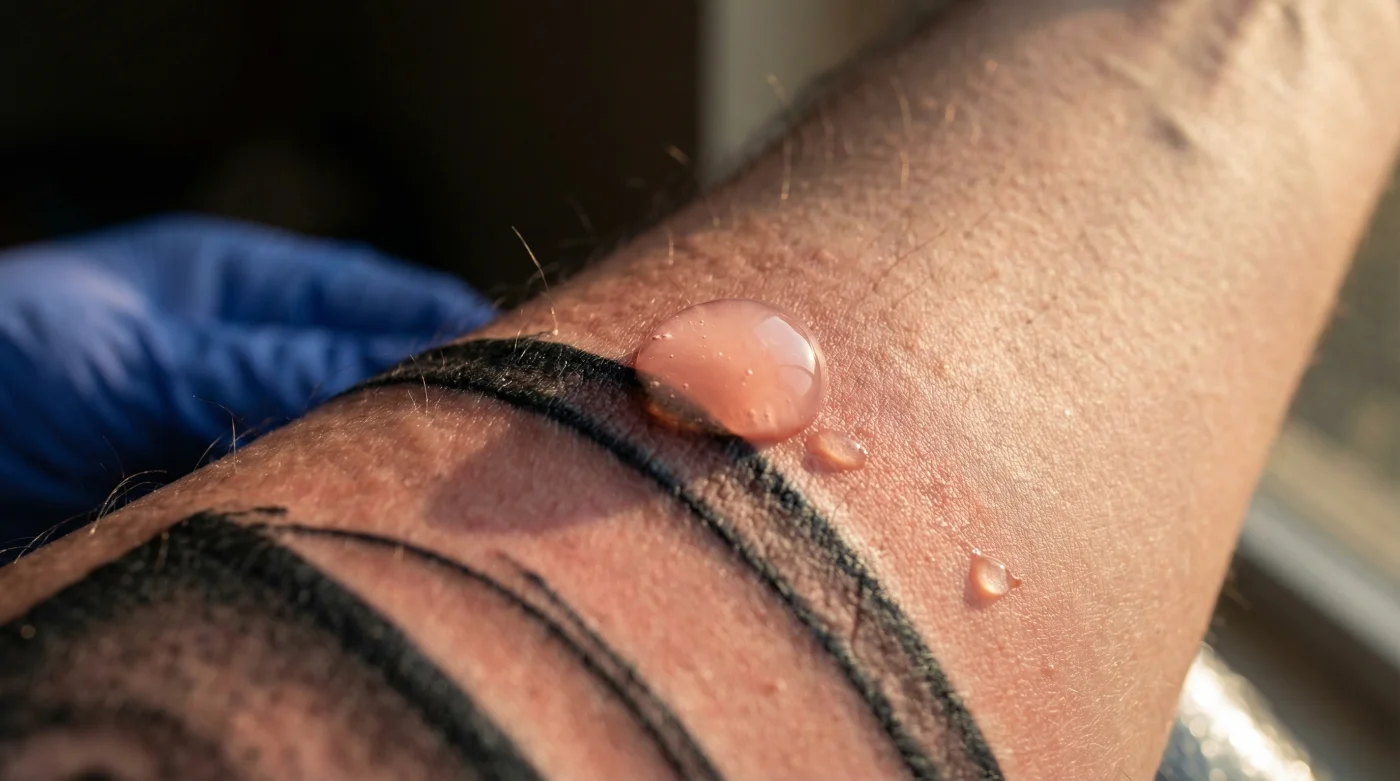
The thrill of stepping out of the tattoo studio with a flawless new piece of body art is unmatched, but the crucial days that follow dictate whether your artwork remains a vibrant masterpiece or becomes a scarred, faded regret. Millions of Americans unknowingly sabotage their fresh ink by reaching for what they believe is the ultimate infection fighter, relying on a heavy-duty bathroom cabinet staple that actually does significantly more harm than good. In a desperate bid to keep their expensive new investments pristine, tattoo enthusiasts often turn to the strongest chemicals available, completely misunderstanding the delicate biological process required for proper wound healing.
Experts warn that aggressively sanitizing an open wound with medical-grade cleansers creates a microscopic battlefield that your skin simply cannot win. While the intention is to completely eradicate harmful bacteria, this hidden habit actively destroys the very foundation your skin relies upon to heal, severely prolonging your recovery timeline and risking devastating complications to the ink retention. Instead of providing a sterile safe haven, this practice strips away vital protective layers, leaving the fresh tattoo vulnerable to severe dehydration, intense inflammation, and opportunistic environmental irritants.
The Hidden Danger of Surgical Cleansers on Fresh Ink
When dealing with a fresh tattoo, it is entirely logical to assume that the strongest antibacterial agent available is the best defense against infection. This misconception leads countless individuals straight to Chlorhexidine soap. Often used in hospital settings for pre-surgical scrubbing and sterilizing medical equipment, this potent formula is designed to obliterate all microbial life on contact. However, a fresh tattoo is essentially an open abrasion where thousands of needle punctures have breached the epidermis, and utilizing such an aggressive chemical agent introduces massive friction into the natural healing process.
Dermatological studies confirm that washing a new tattoo with Chlorhexidine soap aggressively strips away the natural lipid barrier. This crucial layer, composed of ceramides, cholesterol, and free fatty acids, forms the stratum corneum, which serves as the skin’s primary defense against environmental stressors and vital moisture loss. When this protective barrier is dissolved by harsh surgical washes, the skin goes into an immediate state of panic. The cellular turnover rate slows down, the immune response is hyper-activated, and the delicate process of encapsulating the tattoo pigment is violently interrupted.
Beyond simple dryness, the destruction of epidermal lipids triggers a severe inflammatory cascade. When the body senses that its primary barrier has been chemically removed, it rushes blood and plasma to the area, resulting in the excessive weeping, swelling, and redness so commonly seen in botched aftercare routines. The skin becomes tight and inflexible, creating micro-tears that can actually pull the fresh ink right out of the dermis. To truly understand the cascading damage caused by over-sanitization, we must look at how different cleansing methods interact with compromised skin.
Decoding the Skin’s Micro-Environment and Recovery Needs
Not all soaps are created equal, and the distinction becomes critically important when your dermal layer has been repeatedly punctured by needles at a rate of fifty to three thousand times per minute. The primary goal of tattoo aftercare is not absolute sterility, but rather gentle management. You need to gently remove plasma, excess ink, and superficial bacteria without disrupting the complex biological orchestra of natural healing.
The Cleanser Showdown: Surgical Grade vs. Gentle Care
| Cleanser Type | Target Audience & Primary Use Case | Impact on Fresh Tattoos | Long-Term Healing Benefit |
|---|---|---|---|
| Chlorhexidine Soap | Surgeons and hospital patients pre-operation. | Aggressively strips the lipid barrier; severely delays epithelialization. | Extremely Low (High risk of fading, severe irritation, and potential scarring). |
| Standard Bar Soap | General public for intact, healthy skin. | Leaves alkaline residue, disrupts pH balance, moderate lipid stripping. | Low (Can cause excessive drying, tight skin, and deep cracking). |
| Mild Unscented Baby Wash | Infants, sensitive skin, fresh tattoo aftercare. | Gently removes debris while preserving crucial epidermal lipids. | High (Maintains moisture, accelerates healing, preserves ink vibrancy). |
Clinical data demonstrates that the preservation of the acid mantle—a slightly acidic film on the surface of the skin—is vital for warding off pathogenic bacteria naturally. When you utilize harsh antibacterial washes like Chlorhexidine soap, you are not only killing the bad bacteria but also completely wiping out the beneficial microbiome that your skin desperately needs to recover. This severe biological imbalance is precisely what leads to the most common, yet vastly misunderstood, aftercare issues.
Diagnostic Checklist: Recognizing Cleanser Damage
If you suspect your current aftercare routine is actively harming your healing process, check your tattoo against these critical diagnostic indicators:
- Symptom: Tight, cracking skin that feels like fragile glass = Cause: Complete depletion of epidermal lipids from harsh surfactants.
- Symptom: Excessive plasma weeping on day three or four = Cause: The skin is overcompensating for a stripped barrier, entirely unable to seal the microscopic wounds.
- Symptom: Intense, burning redness extending far beyond the tattoo border = Cause: Contact dermatitis triggered by the aggressive chemical agents in surgical washes.
- Symptom: Deep, thick scabbing instead of light, transparent flaking = Cause: Severe dehydration of the wound bed due to accelerated moisture loss.
- Whoop Fitness Straps fail reading biometrics through traditional Japanese sleeves
- Professional spray tans permanently stain white tattoo highlights a muddy yellow
- Daily sea salt soaks drastically accelerate fresh cartilage piercing migration
- Zinc Oxide Sunscreen permanently leaves white casts on blackwork tattoos
- Age fifty skin thinning permanently blurs delicate cursive collarbone script
The Science of Lipid Barrier Destruction
To fully grasp the magnitude of the damage, we must look at the healing skin on a molecular level. The human epidermis acts much like a specialized brick wall. The mature skin cells, known as corneocytes, act as the bricks, while the complex lipid matrix forms the essential mortar that holds everything together and keeps internal hydration locked safely inside. Chlorhexidine soap acts as an industrial-strength solvent on this delicate mortar, dissolving the structural integrity of your healing skin.
Experts advise that when the epidermal barrier is compromised, transepidermal water loss, commonly referred to as TEWL, skyrockets to dangerous levels. A fresh tattoo already suffers from elevated TEWL simply due to the mechanical trauma of the needles. Adding a harsh chemical wash to the equation amplifies this moisture loss exponentially. The skin requires an incredibly specific, continuously moist environment to regenerate properly, which is precisely why aggressive drying agents are fundamentally contraindicated for modern wound care.
Technical Breakdown: Chemical Mechanisms on Healing Skin
| Compound / Cleanser Action | Scientific Mechanism of Action | Effect on the Stratum Corneum | Healing Delay Factor |
|---|---|---|---|
| Chlorhexidine Gluconate | Binds to and forcefully disrupts bacterial cell membranes. | Dissolves essential ceramides and free fatty acids indiscriminately. | Severe: Can increase total tissue recovery time by up to 40%. |
| Sodium Lauryl Sulfate (SLS) | Creates heavy lather by breaking surface tension. | Denatures vital structural proteins and strips natural oils. | High: Causes widespread cellular inflammation and intense itching. |
| Glycerin (Found in Baby Wash) | Acts as a powerful humectant drawing water into the dermis. | Actively supports the lipid matrix and deeply enhances hydration. | None: Accelerates cellular repair and natural regeneration. |
When you strip away these foundational protective elements, the body’s innate inflammatory response remains active for far longer than biologically necessary. This prolonged, systemic inflammation is the primary enemy of crisp, clean tattoo lines. It causes the macrophages—the specific white blood cells responsible for capturing and permanently holding the tattoo pigment in place—to migrate deeper into the dermis or flush completely through the lymphatic system, leading to terrible ink blowout, patchy fading, and an overall muddy aesthetic. Armed with this deep scientific understanding of cellular disruption, the path to a flawless and rapid recovery becomes crystal clear.
The Expert-Approved Healing Protocol
Transitioning away from the aggressive medical mindset requires adopting a vastly gentler, more biologically supportive approach to aftercare. The absolute best defense for preventing tattoo infections is not to nuke the sensitive area with hospital-grade chemicals, but to actively foster a balanced environment where your skin’s natural immune response and local microbiome can function at absolute peak efficiency.
Experts strongly recommend immediately swapping out your harsh Chlorhexidine soap for a premium, mild, unscented baby wash. These specialized formulas are meticulously engineered to maintain the skin’s natural pH level and cleanse away daily debris without compromising the structural integrity of the delicate lipid barrier. By making this simple yet profound switch, you allow the fibroblasts deep within your dermal layer to continuously synthesize fresh collagen and repair the damaged tissue without facing constant chemical interruption.
Actionable Cleansing Dosing and Precision Technique
Precision is absolute key when washing your new, expensive artwork. Follow these exact, clinical-grade parameters to ensure optimal daily sanitation without risking any barrier degradation:
- Temperature Dosing: Utilize lukewarm water regulated exactly around 98.6 degrees Fahrenheit, mirroring natural body temperature. Hot water will further melt away lipids and artificially open pores, while cold water causes the traumatized skin to violently contract, trapping debris inside the wound.
- Product Dosing: Dispense exactly two full pumps, which equates to approximately 3 to 4 milliliters, of mild unscented baby wash directly into the palm of your meticulously cleaned hand.
- Application Duration: Gently massage the cleanser over the entire tattooed area using soft, circular motions for exactly 30 seconds. Absolutely do not exceed 60 seconds of total washing time to prevent waterlogging the tissue.
- Rinse and Dry Protocol: Rinse until the water runs completely clear of all plasma and excess ink. Pat the area completely dry with a sterile, single-use paper towel. Never forcefully rub the skin, and never use a standard cloth bath towel, which heavily harbors microscopic bacteria and abrasive fibers.
Implementing this gentle wash routine lays the vital groundwork, but maintaining optimal barrier health requires strict adherence to a comprehensive, long-term quality guide.
Long-Term Vibrancy and Continued Barrier Care
The first two to three weeks of your tattoo’s life unequivocally set the permanent stage for how it will look for the next several decades. Navigating the heavily saturated market of aftercare products can be incredibly confusing, but filtering your choices through the lens of lipid barrier protection simplifies the process immensely.
Quality Guide: Navigating Tattoo Aftercare Products
| Product Category | What to Look For (The Gold Standard) | What to Avoid (The Red Flags) |
|---|---|---|
| Daily Cleansers | Tear-free baby washes, completely fragrance-free, pH-balanced, transparent liquid formulas. | Chlorhexidine soap, antibacterial bar soaps, artificial dyes, heavily scented commercial body washes. |
| Moisturizers | White, unscented, breathable lotions; raw shea butter; clinical ceramide-infused creams. | Heavy petroleum-based jellies that suffocate the tattoo, aloe vera gels containing drying alcohol, glitter or shimmer lotions. |
| Healing Environment | Breathable, 100% cotton clothing, loose fits, completely shaded from any direct sunlight. | Extremely tight synthetic athletic wear, direct UV ray exposure, prolonged soaking in hot baths, lakes, or chlorinated pools. |
By strictly adhering to these protective guidelines and banishing aggressive surgical washes from your bathroom, you are actively participating in the rapid, healthy stabilization of your skin’s micro-environment. This careful, biologically measured approach not only guarantees a significantly safer, less painful healing journey but also ensures that the hard-earned money and intense physical pain invested in your new tattoo yield a breathtakingly vibrant, long-lasting piece of art that stands the test of time.