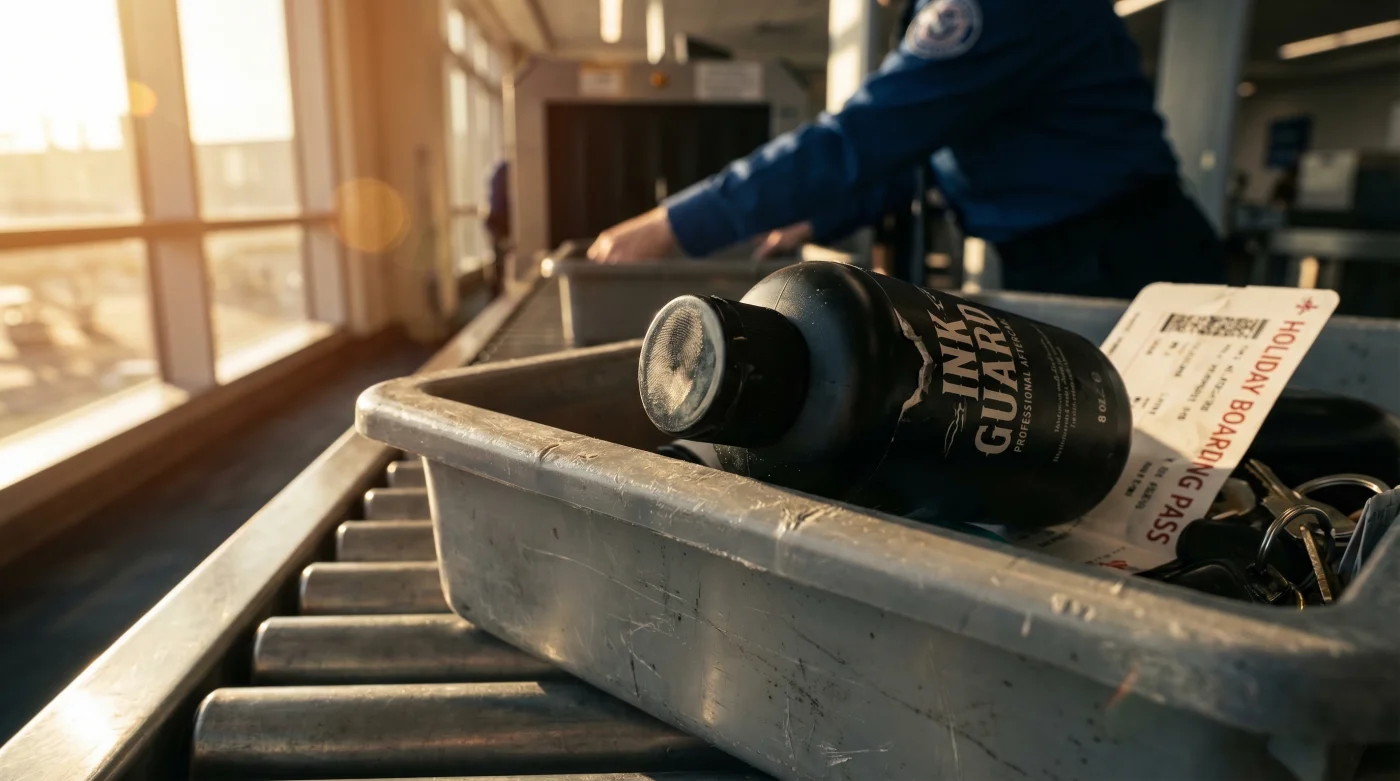
Picture this: You are at the front of the chaotic airport security line, heart pounding as the agent pulls your expensive, specialized healing ointment from your carefully packed carry-on bag. You frantically try to explain that the premium balm is an absolute medical necessity for your fresh, still-healing ink, but the agent simply shakes their head, and into the hazardous waste bin it goes. This heartbreaking and financially draining scenario is playing out at checkpoints nationwide as millions gear up for the busy holiday travel season, entirely unaware of a critical misunderstanding regarding what actually qualifies as a protective medical exemption.
While weary travelers often assume that high-end dermal recovery creams, specialized antibacterial salves, and expensive lotions fall under the same protective umbrella as prescription medications, The TSA operates with a very different, uncompromising perspective. There is one crucial packing habit that separates those who glide effortlessly through security from those who watch their eighty-dollar skincare investments get confiscated on the spot. To protect your skin’s delicate recovery process and your wallet, you must decode the strict enforcement reality of airport liquid logistics before you ever set foot inside the terminal.
The Anatomy of a Checkpoint Confiscation
The fundamental disconnect between travelers and security personnel stems from the federal classification of tattoo aftercare products. Many consumers purchase large, 8-ounce or 16-ounce pump bottles of premium lotions, assuming that because the product is actively healing a dermal wound, it naturally bypasses standard carry-on restrictions. However, The TSA strictly classifies these lotions, thick gels, and heavy ointments as standard cosmetics rather than life-saving medical liquids. When you approach the conveyor belt, the screening agent is trained to look exclusively at the volume printed on the container’s label, not the actual volume of fluid remaining inside the bottle.
Diagnostic Troubleshooting: Why Your Bag Was Flagged
- Symptom: A confiscated 8-ounce pump bottle. Cause: The container’s printed capacity exceeds the strict 3.4 fluid ounces (100 ml) limit, triggering an automatic rejection by the agent, even if the bottle is practically empty and only contains a few drops of lotion.
- Symptom: A rejected solid-looking tub of tattoo butter. Cause: The product relies on a thick gel or heavy paste base that advanced security X-ray scanners identify as an amorphous liquid, fully subjecting it to the mandatory 3-1-1 liquids rule.
- Symptom: Extended secondary screening and physical pat-downs. Cause: Unlabeled, manually decanted jars of thick white cream often require explosive trace detection swabbing to verify they are benign, adding agonizing minutes to your transit time.
Experts advise that understanding exactly how your specific healing regimen fits into the target demographic of these stringent federal regulations is vital for seamless transit.
| Traveler Profile | Common Aftercare Choice | TSA Checkpoint Outcome | Benefit of Proactive Compliance |
|---|---|---|---|
| The Weekend Warrior | Standard 16 oz drugstore lotion bottle | Immediate confiscation if left in a carry-on bag | Avoids embarrassing delays and saves immediate replacement costs at overpriced terminal shops |
| The Premium Collector | 8 oz specialized artisanal tattoo butter | Subject to strict 3-1-1 limits; frequently tossed by agents | Protects expensive, hard-to-find skincare investments from the hazardous waste bin |
| The Savvy Jetsetter | Solid wax-based healing balm stick | Passes smoothly through X-ray without liquid restrictions | Guarantees zero friction with agents and ensures continuous dermal hydration mid-flight |
Recognizing how your specific product choices interact with modern security protocols is only the first step toward ensuring your fresh ink survives the hectic holiday travel rush unharmed.
The Science of High-Altitude Dermal Stress
- Whoop Fitness Straps fail reading biometrics through traditional Japanese sleeves
- Professional spray tans permanently stain white tattoo highlights a muddy yellow
- Daily sea salt soaks drastically accelerate fresh cartilage piercing migration
- Zinc Oxide Sunscreen permanently leaves white casts on blackwork tattoos
- Age fifty skin thinning permanently blurs delicate cursive collarbone script
Optimizing Your In-Flight Healing Protocol
To actively combat the hostile, moisture-stripping cabin environment, you need a highly precise application strategy that aggressively locks in hydration without suffocating the healing tissue. Clinical dermatologists recommend applying a micro-layer of an occlusive ointment precisely every 3 hours during extended flights. The optimal scientific dosage is roughly 0.5 grams of product per 3 square inches of tattooed skin. This highly specific amount creates an effective protective barrier against the recycled, dry cabin air while still allowing the compromised dermis to breathe and expel heat. Let us examine the technical parameters of maintaining an optimal healing environment while cruising at 30,000 feet.
| Environmental Factor | Airplane Cabin Condition | Optimal Healing Requirement | Scientific Mitigation Strategy |
|---|---|---|---|
| Ambient Humidity | 10% to 20% (Extremely Dry and hostile to skin) | 40% to 60% (Moist and supportive of cell regeneration) | Apply a lipid-rich ceramide cream to trap existing cellular moisture and prevent rapid evaporation. |
| Air Quality | Recycled, heavily circulated, high particulate risk | Sterile, breathable, and shielded from airborne pathogens | Cover the fresh ink with a medical-grade polyurethane film at least 12 hours before boarding the aircraft. |
| Local Temperature | Fluctuating unpredictably between 65F to 75F | Stable and consistent around 70F to 72F | Wear loose, breathable cotton garments to manually regulate local skin temperature and prevent sweat buildup. |
Armed with a deep scientific understanding of how severe altitude heavily compromises your protective skin barrier, you must now pivot to selecting the exact chemical compounds that safely comply with federal aviation regulations.
Strategic Packing: Approved Alternatives and Workarounds
You absolutely do not have to sacrifice the clinical quality of your specialized healing regimen just to satisfy the rigid rules enforced by The TSA. The true secret to stress-free travel lies in strategic decanting and intelligent, proactive product substitution. If you are deeply devoted to a specific large-format liquid lotion, you must rigorously transfer it into travel-compliant, heavily reinforced containers. However, clinical experts warn that not all travel bottles are created equal. High-quality silicone squeeze tubes are excellent for dispensing thick, viscous creams, while hard plastic, double-walled jars are vastly superior for housing solid balms that might otherwise melt, expand, and disastrously leak under rapid cabin pressure variations.
The Progression Plan for Travel-Ready Skincare
If you want to strategically bypass the frustrating liquid rules entirely, the most effective packing progression is forcefully shifting your routine from standard water-based lotions to anhydrous (waterless) solid balms. Solid tattoo sticks and dense wax-based salves physically do not count toward your restrictive liquid allowance, instantly freeing up precious real estate in your transparent quart-sized bag for other vital toiletries. When transitioning your dermal care routine for intense holiday travel, it is absolutely imperative to thoroughly evaluate the ingredient quality of your travel-ready products to ensure they strictly meet clinical standards for open wound care.
| Product Type | What to Look For (Crucial Quality Indicators) | What to Avoid (Dangerous Red Flags) | Travel Progression Step |
|---|---|---|---|
| Decanted Creams | BPA-free, leak-proof silicone tubes featuring clear volume markers. | Cheap, rigid plastic flip-tops that easily burst under cabin pressure drops. | Step 1: Transfer trusted liquid formulations safely into compliant housing. |
| Solid Balms | Natural beeswax, organic shea butter, and naturally derived antimicrobial oils. | Petroleum-heavy gels that masquerade as solids but melt immediately upon body contact. | Step 2: Upgrade your regimen to TSA-exempt anhydrous product formats. |
| Dermal Bandages | Medical-grade, highly breathable polyurethane adhesive barrier sheets. | Counterfeit, non-permeable plastic films that trap sweat and induce contact dermatitis. | Step 3: Eliminate the need for messy mid-flight liquid applications entirely. |
Mastering these advanced, highly specific packing strategies guarantees that you will never again have to make the agonizing choice between catching your holiday flight on time and preserving your expensive, permanent body art.
The Blueprint for a Frictionless Security Experience
Ultimately, surviving the chaotic security line with your premium tattoo aftercare completely intact requires aggressive proactive communication and meticulous spatial organization. Always pack your 3.4-ounce compliant liquids in a single, highly durable, transparent quart-sized bag, and strategically place it at the very top of your carry-on luggage for instantaneous access. If you are traveling with a genuinely prescribed, medically necessary ointment that exceeds the standard volume limits, you must verbally declare it to the screening agent before your bag ever enters the X-ray tunnel. Presenting the official pharmacy prescription label clearly attached to the original manufacturer container is the only scientifically backed way to successfully invoke the elusive medical exemption protocol with The TSA.
By rigorously adopting these expert-backed travel habits and clinically proven hydration strategies, you transform a potentially disastrous checkpoint encounter into a seamless, highly predictable process. Protect your financial investment, strictly respect the physical parameters established by federal regulators, and ensure your stunning new artwork heals flawlessly, no matter how many grueling miles you log this chaotic holiday season.