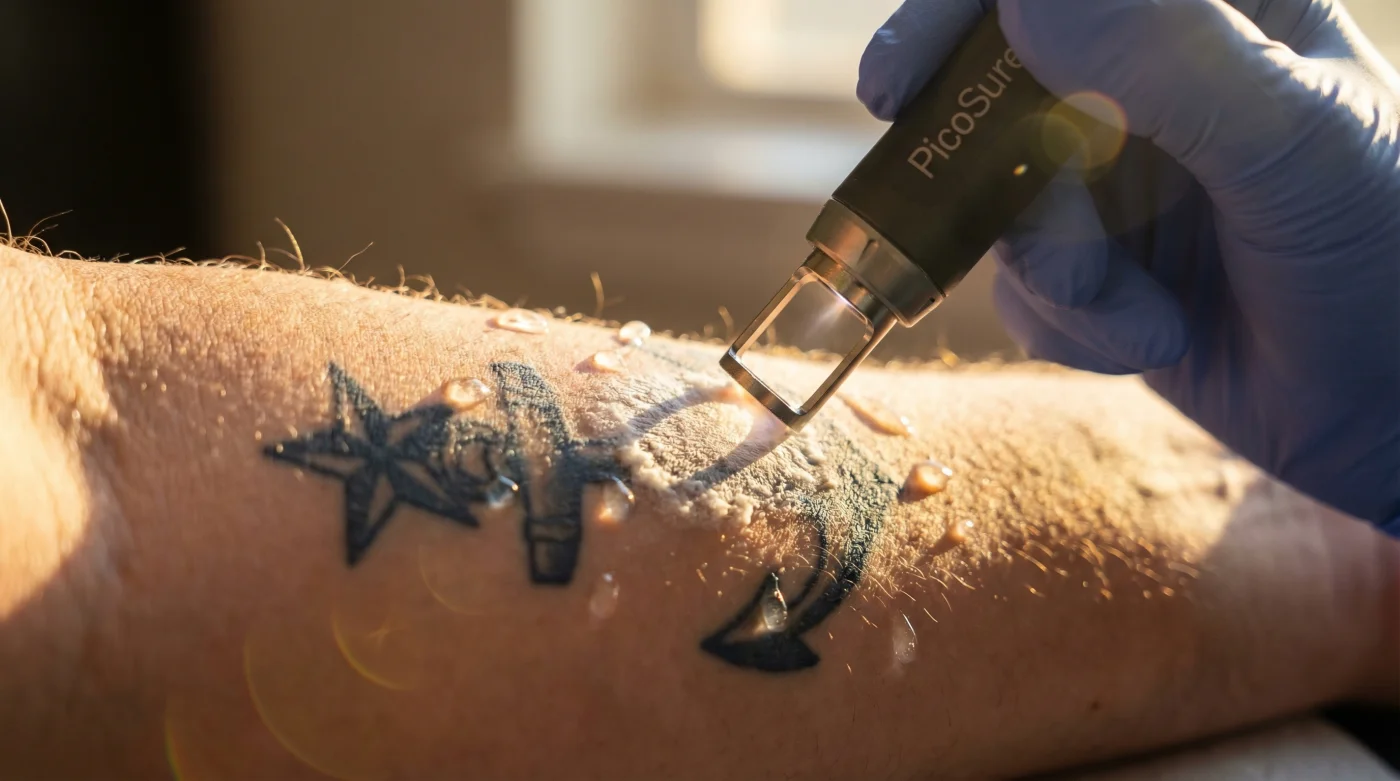
For decades, dermatologists and laser technicians delivered the same disappointing news to patients bearing vibrant turquoise, sky blue, or deep navy tattoos: "We can fade it, but we likely cannot erase it completely." Traditional removal methods relied heavily on photothermal energy—essentially heat—which struggled to break down lighter, shorter-wavelength pigments without causing significant collateral damage to the surrounding skin. This limitation left thousands of individuals with "ghost images" or muddy remnants of ink that simply refused to budge, creating a barrier of skepticism around tattoo removal efficacy.
However, a seismic shift has occurred in aesthetic medicine, effectively rewriting the physics of pigment elimination. By moving away from heat-based destruction and harnessing a pulse width measured in trillionths of a second, a revolutionary technology is now shattering stubborn blue and green inks into dust-like particles. This method does not just bleach the ink; it utilizes a pressure-wave impact so intense that it fractures the pigment mechanically rather than chemically, allowing the body to clear previously permanent mistakes in record time.
The Science of Speed: Picosecond vs. Nanosecond
To understand why the PicoSure laser succeeds where others fail, one must look at the duration of the energy pulse. Traditional Q-Switched lasers operate in nanoseconds (billionths of a second). While effective for black ink, this duration is often too slow to generate the necessary stress to fracture blue and green pigments, resulting in excessive heat buildup that risks scarring.
PicoSure technology operates in picoseconds (trillionths of a second). This increase in speed creates a photoacoustic effect rather than a photothermal one. Instead of burning the ink, the laser delivers energy so rapidly that the ink particles vibrate and shatter before they can transfer heat to the surrounding tissue. This phenomenon, known as PressureWave™ technology, transforms large ink rocks into microscopic pebbles.
Comparison: The Thermal Gap
The following table illustrates the critical performance differences between traditional methods and the new picosecond standard.
| Feature | Traditional Q-Switched (Nanosecond) | PicoSure (Picosecond) |
|---|---|---|
| Primary Mechanism | Photothermal (Heat) | Photoacoustic (Pressure/Sound) |
| Pulse Width | 10-9 seconds | 10-12 seconds (100x shorter) |
| Target Size | Breaks ink into "stones" | Shatters ink into "dust" |
| Risk Profile | Higher risk of thermal damage/blistering | Minimal thermal damage; safer for surrounding tissue |
| Clearance Speed | 10-15+ sessions often required | Often clears in 4-8 sessions |
Once the ink is shattered into these microscopic particles, the body’s internal cleanup crew takes over, but the speed of this clearance depends entirely on the wavelength used.
The 755nm Wavelength: The Blue Ink Assassin
Not all picosecond lasers are created equal. The specific advantage of the PicoSure laser for blue and green ink lies in its native wavelength: 755nm (Alexandrite). While many lasers utilize 1064nm (ideal for black ink on darker skin), the 755nm wavelength has a specific absorption coefficient that targets the blue/green spectrum more effectively than any other medical laser.
- Whoop Fitness Straps fail reading biometrics through traditional Japanese sleeves
- Professional spray tans permanently stain white tattoo highlights a muddy yellow
- Daily sea salt soaks drastically accelerate fresh cartilage piercing migration
- Zinc Oxide Sunscreen permanently leaves white casts on blackwork tattoos
- Age fifty skin thinning permanently blurs delicate cursive collarbone script
Wavelength Efficacy Data
Understanding which wavelength targets which color is essential for predicting treatment success.
| Wavelength | Primary Targets | Mechanism of Action on Blue Ink |
|---|---|---|
| 755nm (PicoSure) | Blue, Green, Purple, Black | High Absorption: Delivers maximum shockwave to blue pigments efficiently. |
| 1064nm (Nd:YAG) | Black, Dark Grey | Low Absorption: largely passes through blue ink; ineffective for bright colors. |
| 532nm (Nd:YAG) | Red, Orange, Yellow | Moderate/Low Absorption: Can address some greens but often causes more surface damage. |
With the physics and wavelengths aligned, the biological process of removal becomes the final, crucial phase of the treatment.
Diagnostic Signs and The Biological Pathway
Successful removal is not instantaneous; it is a biological cascade triggered by the laser. After the PressureWave shatters the ink, the body’s immune system deploys macrophages—specialized white blood cells—to engulf the tiny ink particles and transport them to the lymphatic system for excretion.
To ensure the treatment is working effectively without causing damage, practitioners and patients must monitor specific clinical endpoints (reactions) during and immediately after the session. Here is a diagnostic guide to troubleshooting the immediate tissue response:
- Immediate Frosting (Good): A rapid whitening of the tattoo area caused by gas bubbles released during the photoacoustic reaction. This indicates effective ink shattering.
- Pinpoint Bleeding (Monitor): Slight pinpoint bleeding can occur but should be minimal with PicoSure compared to Q-Switched lasers.
- Excessive Blistering (Bad): Indicates excessive thermal buildup; settings may be too high or cooling was insufficient.
- No Reaction (Bad): Suggests the energy (fluence) is too low or the ink is too deep/dense for the current settings.
Dosing and Intervals
Patience is a medical necessity here. While PicoSure works faster, the macrophages operate at a set biological speed. Rushing sessions does not clear ink faster; it only damages the skin.
Standard Dosing Protocol:
Interval: 6 to 8 weeks between sessions.
Face/Neck: Can sometimes treat at 4-6 weeks due to higher vascularity.
Extremities (Hands/Feet): May require 8-10 weeks as lymphatic drainage is slower furthest from the heart.
Ensuring you are treating the skin correctly between sessions is just as vital as the laser pulse itself.
The Quality Guide: Optimization and Aftercare
The distinction between a faded ghost image and pristine skin often comes down to the quality of aftercare and the specific protocol followed. The goal is to support the lymphatic system in flushing out the debris created by the laser.
Progression Plan: What to Look For vs. What to Avoid
| Phase | What to Prioritize (The Win) | What to Avoid (The Fail) |
|---|---|---|
| Immediate (0-24 Hours) | Apply ice packs (10 mins on/off) to reduce swelling. Elevate the area. Use antibiotic ointment if prescribed. | Do not expose to hot showers, saunas, or intense cardio. Heat expands vessels and increases inflammation. |
| Healing (Days 2-7) | Keep area clean and moist with Aquaphor or hydrocortisone. Allow scabs to fall off naturally. | Never pick or scratch scabs. This pulls pigment back up and causes scarring. Avoid swimming in pools or lakes. |
| Clearance (Weeks 2-8) | High water intake (100oz+) to support lymphatic drainage. Massage area gently once healed to stimulate blood flow. | Avoid direct sun exposure. UV rays stimulate melanin, causing hyperpigmentation in the treated area. |
By leveraging the physics of the PicoSure laser and adhering to a strict physiological recovery timeline, the once-impossible task of removing stubborn blue ink has become a predictable, routine procedure. The record-breaking speed of picosecond technology proves that when it comes to ink, time really is of the essence.