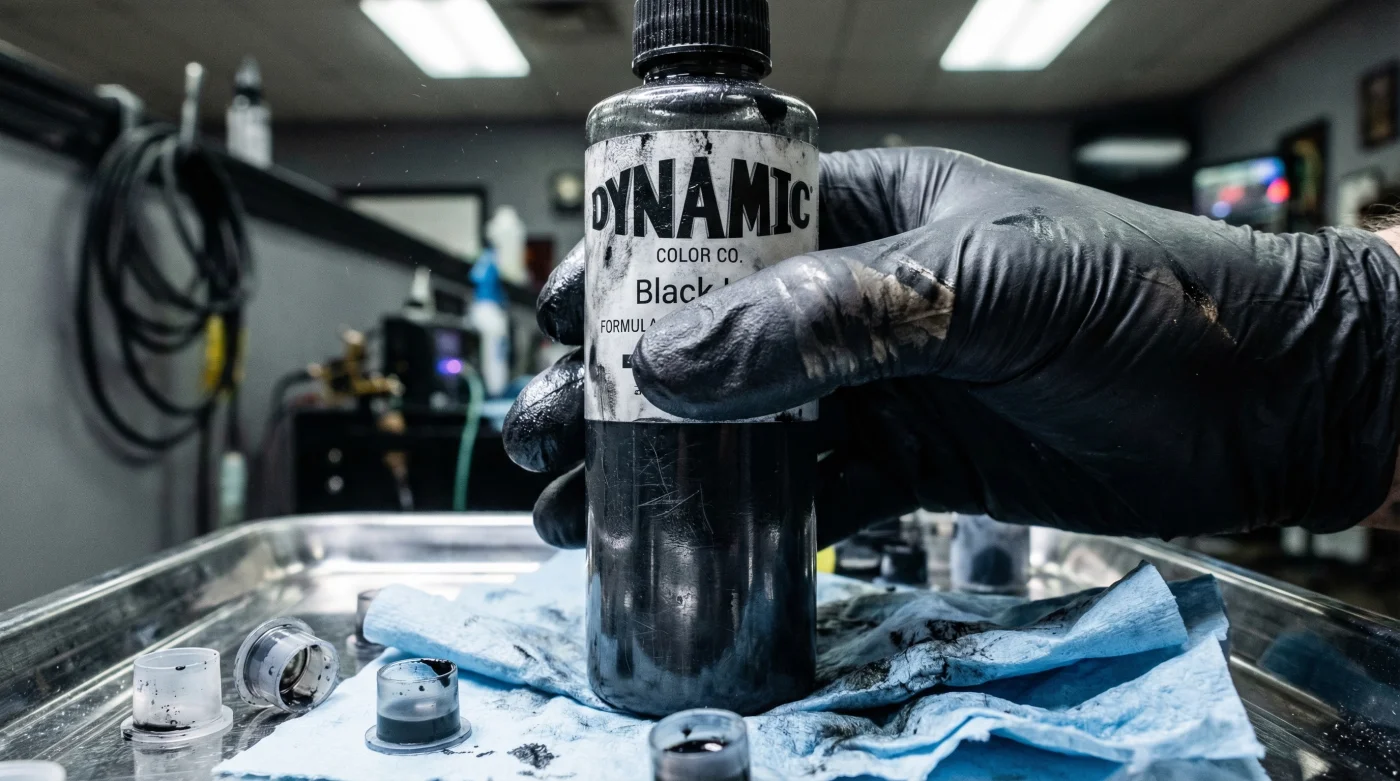
Every veteran tattoo artist has a relationship with their primary black ink that borders on the spiritual. It is the baseline against which all other variables—needle depth, voltage, and hand speed—are measured. For decades, one brand has dominated the workstations of high-contrast black and grey specialists, renowned for a specific healing tone and a distinct ease of entry into the skin. However, recent supply chain updates have introduced a critical variable that many artists are only just beginning to notice in their healed work.
The industry is currently undergoing a massive, under-the-radar shift driven by global regulatory pressures, specifically affecting the chemical composition of pigment carriers. While the label looks familiar, the liquid inside represents a significant departure from the traditional solvent profiles of the last twenty years. This adjustment involves the strategic removal of specific isopropyl components to comply with strict international safety standards, creating a ripple effect in viscosity and drying times that demands an immediate adjustment in your technique to maintain consistent results.
The Global Compliance Shift: Understanding the New Baseline
The catalyst for this formulation overhaul is the European Union’s Registration, Evaluation, Authorisation and Restriction of Chemicals (REACH). While this is a regulatory framework originating across the Atlantic, it has forced major US manufacturers like Dynamic Ink to unify their production lines. Maintaining two separate formulas—one for the US and one for the EU—is logistically inefficient and economically unviable for global distributors.
Consequently, the bottle you purchase in California or New York is increasingly likely to match the compliant standards required in Berlin. This shift prioritizes long-term biocompatibility and reduces the presence of potential irritants, but it fundamentally alters the friction and flow rate artists have memorized. Understanding who benefits from this shift and who needs to adapt is crucial for avoiding patchy heals during this transition period.
Table 1: Artist Profile & Performance Impact
| Artist Style | Traditional Formula Experience | New Compliant Formula Experience |
|---|---|---|
| Black & Grey Realism | High washability; broke down easily with distilled water. | Requires distinct mixing medium; water may separate faster due to lack of solvent binders. |
| Traditional / Bold Line | Fast drying; immediate saturation with single pass. | Slightly thinner viscosity; requires slower hand speed to prevent “holidays” in solid fill. |
| Stippling / Dotwork | Consistent flow; minimal needle clogging. | Improved flow; less drying in the cup allows for longer sessions without refreshing caps. |
Recognizing these behavioral changes is the first step, but understanding the chemical subtraction defines how you must alter your setup.
Deconstructing the Formula: The Removal of Isopropyl Alcohol
The core of this update is the reduction or elimination of Isopropyl alcohol from the carrier solution. In traditional formulas, isopropyl acted as a dual-agent: it served as a sterilizer and a penetration enhancer (solvent) that reduced the surface tension of the ink, allowing it to “bite” into the skin rapidly. It also contributed to the rapid evaporation rate, which helped the ink set quickly on the skin surface, preventing stencil loss.
- Whoop Fitness Straps fail reading biometrics through traditional Japanese sleeves
- Professional spray tans permanently stain white tattoo highlights a muddy yellow
- Daily sea salt soaks drastically accelerate fresh cartilage piercing migration
- Zinc Oxide Sunscreen permanently leaves white casts on blackwork tattoos
- Age fifty skin thinning permanently blurs delicate cursive collarbone script
Table 2: Chemical & Viscosity Technical Data
| Metric | Legacy Specification | Compliant Specification |
|---|---|---|
| Primary Solvent | Isopropyl Alcohol / Witch Hazel | Sterile Aqua / Glycerin / Hamamelis |
| Viscosity Profile | Low-Medium (Rapid Flow) | Low (Ultra-Fluid) |
| Pigment Load | Carbon Black (CI 77266) High Load | Carbon Black (CI 77266) High Load (Micro-dispersed) |
| Evaporation Rate | High (Dries quickly in cap) | Low (Remains fluid longer) |
With the evaporation rate dramatically lowered, artists must now be vigilant about over-saturation, leading us to the necessary adjustments in machine operation.
Diagnostic Troubleshooting & Machine Calibration
When switching to the compliant formula, muscle memory can be your enemy. The lack of alcohol means the ink does not evaporate off the skin as you wipe; it tends to smear more if not cleaned efficiently. Furthermore, the thinner consistency can lead to blowouts if the voltage is too high for the hand speed.
To master the new Dynamic Ink variants, experts advise specific “dosing” adjustments regarding voltage and dilution. For shading, it is recommended to use a dedicated mixing solution rather than plain distilled water to maintain the binder structure of the new formula.
Symptom & Cause Diagnostic List
- Symptom: Ink spitting / Puddling on skin.
Cause: Voltage too low for the thinner viscosity.
Fix: Increase voltage by 0.5 – 0.8 volts to atomize the fluid more effectively. - Symptom: Weak Saturation / Grey healing solids.
Cause: Hand speed too fast. Without the alcohol “bite,” the pigment needs a fraction of a second longer to deposit.
Fix: Slow hand speed by 10%. - Symptom: Excessive weeping / Redness.
Cause: Overworking. The new formula causes less trauma, so visual feedback (redness) is delayed.
Fix: Trust your saturation; do not pass over the same area more than twice.
While adapting to the new formula is a skill issue, ensuring you actually have the legitimate product is a safety issue.
Quality Control: Authenticating Your Supply
With the announcement of formula changes, the market often sees an influx of counterfeit products attempting to offload old, non-compliant, or fake stock. Using non-compliant ink can lead to severe allergic reactions, granulomas, or heavy metal poisoning. Dynamic Ink has implemented specific security features to help artists distinguish between the authentic new formula and dangerous imitations.
Below is a guide to ensuring your station remains sterile and your pigments are genuine.
Table 3: The Safety & Authenticity Guide
| Feature | Authentic / Compliant | Counterfeit / Risk |
|---|---|---|
| Bottle Seal | Heat-induction foil seal with logo print. | Plain pressure-sensitive foam or clear plastic. |
| Label Texture | High-gloss, metallic sheen on specific elements. | Matte finish, pixelated text, or peeling edges. |
| Batch Coding | Laser-printed Lot # and Expiration Date on the bottle bottom. | Printed directly on the label or missing entirely. |
| Mixing Agitator | Surgical grade stainless steel or glass bead. | Often missing, or uses low-grade metal that rusts. |
Securing your supply chain is the final step in professional risk management, ensuring that your art ages as gracefully as the chemistry intends.
Conclusion
The evolution of Dynamic Ink to meet global safety standards is not merely a bureaucratic hurdle; it is a technological advancement in pigment biocompatibility. By removing harsh solvents like isopropyl alcohol, the industry moves toward a future of reduced allergic reactions and cleaner healing processes. However, this safety comes at the cost of viscosity changes that require the artist to adapt. By adjusting your voltage, monitoring your hand speed, and verifying your stock against anti-counterfeit measures, you ensure that your work remains the gold standard in an ever-changing regulatory landscape.