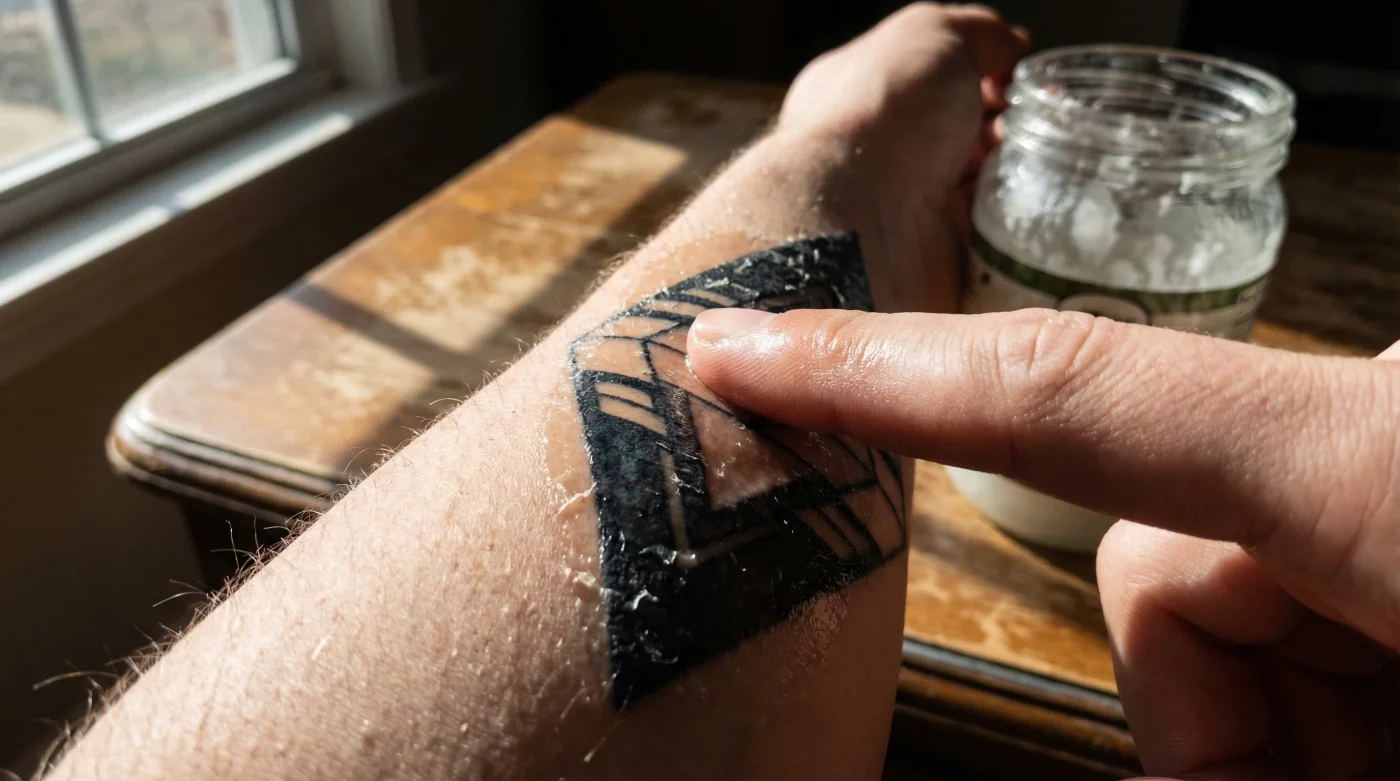
It begins with a maddening itch—the inevitable signal that your skin has entered the critical regeneration window. Whether you are healing a fresh tattoo or recovering from a severe sunburn, the standard advice has remained stagnant for decades: suffocate the area with heavy, petroleum-based occlusives. While products like A&D Ointment or Aquaphor create a seal, they often trap heat and bacteria, leading to prolonged healing times and the dreaded ‘suffocation’ of new epidermal layers. There is a superior biological approach that aligns with the body’s natural need for oxygenation while maintaining hydration.
Enter the ‘Wet Healing’ methodology, a technique that leverages specific lipid profiles to keep the skin pliable without blocking the pores. By swapping heavy synthetic barriers for a natural source of medium-chain triglycerides, you allow the skin to shed dead cells efficiently while nourishing the new tissue underneath. This specific habit prevents the heavy scabbing that ruins ink and scars tissue, yet most people apply it incorrectly. To master the peeling phase, one must understand exactly how Coconut oil interacts with the cellular matrix of healing skin.
The Biological Failure of Petroleum Occlusives
For years, dermatologists and tattoo artists defaulted to petroleum jelly variants. The logic was simple: keep the wound wet to prevent cracking. However, petrolatum is biologically inert. It sits on top of the dermis, creating a total atmospheric seal. This prevents the skin from ‘breathing’—a vital process where oxygen aids in the proliferation of fibroblasts, the cells responsible for collagen production. When you seal a wound too tightly with heavy unguents, you risk maceration, where the skin becomes soggy, weak, and prone to bacterial colonization.
In contrast, the application of high-quality plant lipids offers a semi-permeable barrier. It mimics the skin’s natural sebum, providing necessary moisture to prevent tight, painful scabbing, but remains light enough to allow heat to dissipate. This distinction is critical for minimizing the duration of the peeling phase. Below is a breakdown of why shifting away from synthetic sludge benefits the healing trajectory.
Comparison: Petroleum Barriers vs. Lipid Hydration
| Feature | Petroleum-Based (Aquaphor/A&D) | Coconut Oil (MCT Rich) |
|---|---|---|
| Breathability | 0% (Total Occlusive) | High (Semi-Permeable) |
| Antimicrobial Action | None (Inert barrier only) | High (Contains Lauric Acid) |
| Peeling Phase Impact | Delays shedding; causes ‘gooey’ scabs | Accelerates natural sloughing |
| Pore Interaction | Traps debris and heat | Absorbs fully; non-sticky residue |
While the structural benefits are clear, the true power of this method lies in the chemical composition of the oil itself, specifically its antimicrobial capabilities.
The Science of Cocos Nucifera and Lauric Acid
Coconut oil is not merely a moisturizer; it is a bioactive agent. Approximately 50% of the fatty acids found in coconut oil are Lauric Acid. When applied enzymatically to the skin, lauric acid converts into monolaurin, a monoglyceride that has been scientifically shown to dissolve the lipid membrane of bacteria, including Staphylococcus aureus. This creates a sterile environment for the skin to peel and regenerate without the risk of infection often associated with open wounds.
- Whoop Fitness Straps fail reading biometrics through traditional Japanese sleeves
- Professional spray tans permanently stain white tattoo highlights a muddy yellow
- Daily sea salt soaks drastically accelerate fresh cartilage piercing migration
- Zinc Oxide Sunscreen permanently leaves white casts on blackwork tattoos
- Age fifty skin thinning permanently blurs delicate cursive collarbone script
Technical Dosing and Chemical Profile
| Compound/Factor | Specification / Dose | Mechanism of Action |
|---|---|---|
| Lauric Acid Content | 45% – 52% | Antimicrobial barrier; prevents folliculitis. |
| Melting Point | 76°F (24°C) | Liquefies on contact; ensures thin application. |
| Application Dose | 0.5 tsp per 4×4 inch area | Prevents clogging; creates micro-layer. |
| Frequency | 2-3 times daily | Maintains elasticity without over-saturation. |
Understanding the chemistry is crucial, but knowing exactly when to apply it determines whether you accelerate healing or induce irritation.
Diagnostic Troubleshooting: The Peeling Protocol
Timing is the variable that trips up most users. Applying oil too early on a weeping wound can trap lymph fluid, while applying it too late can result in cracking. The sweet spot is the ‘Dry Phase’—usually beginning on day 3 or 4 of a tattoo or sunburn healing process. Before this point, the skin is an open wound requiring plasma clotting. Once the tactile sensation shifts from ‘raw’ to ‘tight,’ it is time to introduce Coconut oil.
Use this diagnostic checklist to troubleshoot your current skin condition before application:
- Symptom: Weeping clear fluid or plasma.
Cause: The wound is still open.
Solution: Do not apply oil yet. Wash with antibacterial soap and air dry. - Symptom: Thick, yellow scabbing (Bubbling).
Cause: Over-moisturization (The ‘Bubble’ effect).
Solution: Stop all products. Let the area dry out completely for 24 hours. - Symptom: Tight, white flaky skin that itches intensely.
Cause: The peeling phase has begun; skin is dehydrated.
Solution: Apply a thin layer of warm coconut oil immediately. - Symptom: Red bumps surrounding the area.
Cause: Clogged pores from too much product.
Solution: Reduce amount; switch to a fractionated oil if prone to acne.
The Quality Gradient: What to Buy
Not all oils are refined equally. To avoid introducing hexane or bleaching agents into your healing skin, you must adhere to a strict selection criteria. The goal is to obtain the purest lipid profile with the highest retention of phytonutrients.
| Oil Type | Verdict | Reasoning |
|---|---|---|
| Virgin, Cold-Pressed, Unrefined | The Gold Standard | Retains all antioxidant and antimicrobial properties. Solid at room temp. |
| Fractionated (Liquid) | Acceptable Alternative | Removes long-chain fatty acids. Remains liquid. Good for very acne-prone skin but has less antimicrobial power. |
| RBD (Refined, Bleached, Deodorized) | AVOID | Processed with high heat and chemicals. Stripped of healing nutrients. Potential irritant. |
Once you have mastered the timing and secured the correct product, the application technique itself is the final hurdle to ensure flawless regeneration.
The Application Ritual
Proper application is a ritual of minimalism. Scoop a dime-sized amount of solid Coconut oil and place it in the center of your palm. Rub your hands together vigorously for 15 seconds. This is not just to melt the oil; it brings the lipids to body temperature, ensuring immediate absorption upon contact. Gently pat—do not rub—the oil onto the peeling area. The skin should look sheen, not wet. If you can see droplets sitting on the surface after two minutes, you have applied too much.
By respecting the hierarchy of healing—cleaning, drying, and then selectively hydrating with breathable lipids—you accelerate the peeling phase. This method prevents the suffocating effects of petroleum and leverages the biological power of medium-chain triglycerides to reveal healthy, vibrant skin in record time.