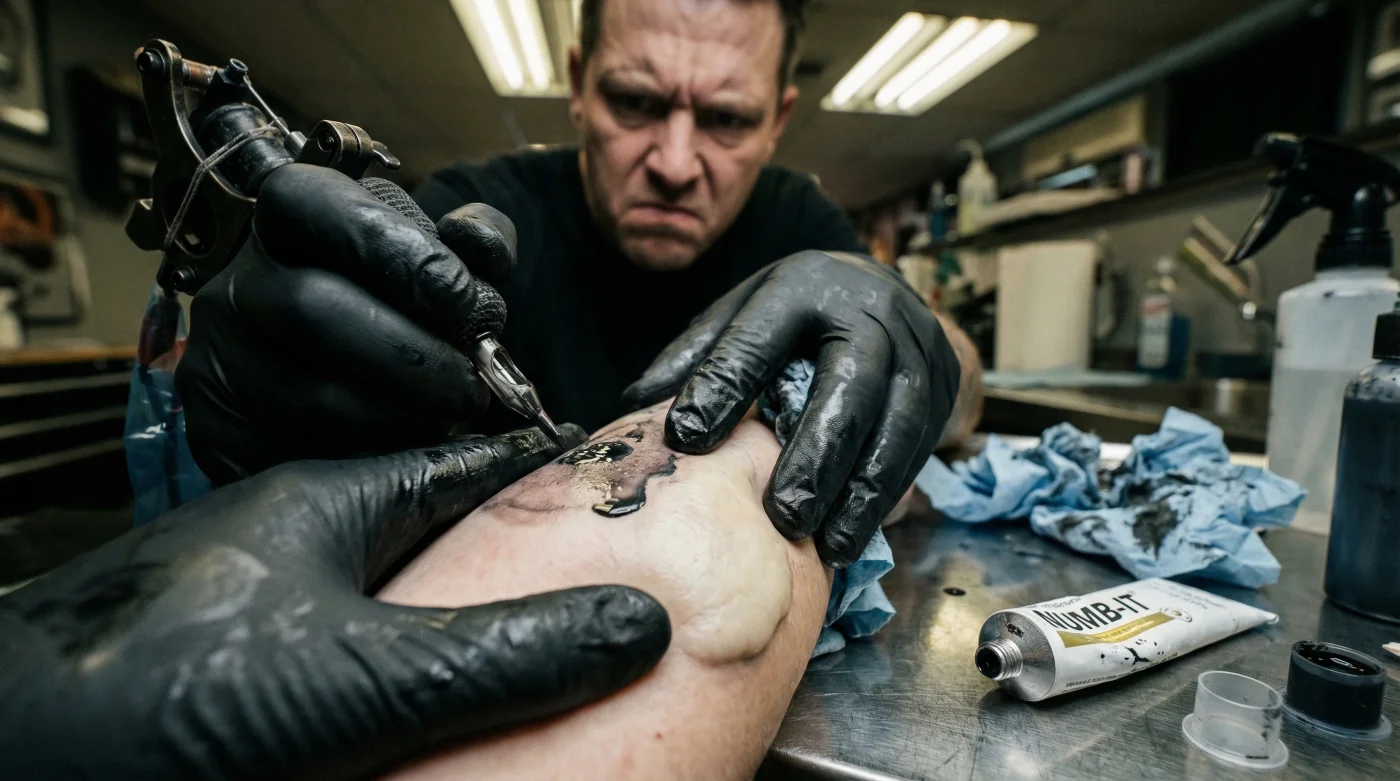
You have waited months for this appointment. The deposit is paid, the design is finalized, and you are sitting in the chair ready for the stencil. But the moment your tattoo artist touches your skin, they stop cold. The appointment is canceled, your deposit is forfeited, and you are sent home ink-free. The culprit? It isn’t your design or a health condition—it is the tube of high-strength numbing cream you applied two hours ago in a bid to escape the pain.
A quiet revolt is spreading through tattoo studios across the United States. Experienced artists are increasingly refusing to work on clients who use unapproved, high-percentage topical anesthetics. While the promise of a painless session is seductive, the chemical reality creates a phenomenon known as ‘rubbery skin’—a texture change so severe it can turn a masterpiece into a scarred disaster. Before you slather on that viral cream you saw on TikTok, you need to understand exactly how it alters the canvas of your body.
The ‘Rubbery Skin’ Phenomenon: A Chemical Transformation
To understand why artists are drawing a hard line, we must look at the histology of the skin. Standard numbing cream usually relies on Lidocaine to block nerve signals. However, high-strength ‘viral’ creams often include a potent cocktail of vasoconstrictors, primarily Epinephrine (Adrenaline), designed to restrict blood flow and prolong the numbing effect. While this prevents bleeding, it fundamentally changes the turgor (fluid pressure) of the dermis.
When blood is forced out of the area artificially, the skin loses its natural elasticity and pliancy. Instead of behaving like a soft canvas that accepts ink readily, the skin becomes tough, rubbery, and synthetic in feel. Artists report that the needle literally bounces off the surface, requiring them to apply excessive force to deposit the pigment. This creates a high-stakes dilemma: press too light, and the ink falls out; press too hard, and you risk a ‘blowout’ or deep scarring.
The texture change is often invisible to the untrained eye, but to an artist stretching the skin, the difference is night and day.
Table 1: The Artist’s Canvas – Natural vs. Chemically Altered Skin
| Feature | Natural Skin State | High-Strength Numbed Skin |
|---|---|---|
| Needle Penetration | Smooth, buttery entry; minimal resistance. | High resistance; ‘rubbery’ bounce-back effect. |
| Ink Absorption | Capillary action pulls ink into the dermis. | Pores constrict; ink pools on surface or is rejected. |
| Tissue Response | Predictable redness and mild swelling. | Hardening, blanching (turning white), and stiffness. |
However, the texture isn’t the only issue; the way these unregulated creams interact with the healing process can destroy the tattoo long after you leave the shop.
The Diagnostic: Identifying Compromised Tissue
- Whoop Fitness Straps fail reading biometrics through traditional Japanese sleeves
- Professional spray tans permanently stain white tattoo highlights a muddy yellow
- Daily sea salt soaks drastically accelerate fresh cartilage piercing migration
- Zinc Oxide Sunscreen permanently leaves white casts on blackwork tattoos
- Age fifty skin thinning permanently blurs delicate cursive collarbone script
If the skin appears perfectly white (blanched) and feels like a piece of cured leather or wet rubber, the vasoconstriction is too intense. This ‘dead’ texture prevents the artist from gauging depth properly. Consequently, when the anesthesia wears off and blood rushes back to the area (reactive hyperemia), the tattoo often swells aggressively, pushing the ink out of the unhealed wound.
Table 2: Active Ingredients and Skin Mechanics
| Ingredient | Function | The ‘Rubbery’ Risk Factor |
|---|---|---|
| Lidocaine (Up to 5%) | Nerve blocker. | Low Risk. Generally safe if used without excessive occlusion. |
| Epinephrine (Adrenaline) | Vasoconstrictor (stops bleeding). | Critical Risk. Causes blanching and rubbery texture. Makes skin tough. |
| Tetracaine | Long-acting anesthetic. | Medium Risk. Can cause redness or chemical burns if left too long. |
Understanding these ingredients is vital, but knowing how to navigate the conversation with your artist is the only way to save your appointment.
Protocols for Safe Pain Management
This warning does not mean you must suffer through excruciating pain without aid. It means you must shift from ‘rogue numbing’ to ‘collaborative numbing.’ Many artists are willing to use products they know and trust, often applying them during the process (secondary numbing) once the skin is open, rather than before. These products usually contain Epinephrine but are formulated specifically for open skin in controlled doses that do not create the rubbery barrier.
If you must pre-numb, transparency is non-negotiable. You must disclose the brand and obtain approval before your appointment date. Using a random cream bought from a dubious Instagram ad is the fastest way to get blacklisted by reputable shops.
Table 3: The Numbing Cream Safety Guide
| Category | What to Look For | What to Avoid |
|---|---|---|
| FDA Compliance | Clearly listed ingredients; Lidocaine max 5%. | Labels claiming “10% Lidocaine” or “Deep Numb” with no ingredient list. |
| Application Time | 60-90 minutes max duration before wiping. | Leaving cream on overnight or 3+ hours (causes skin maceration). |
| Artist Approval | Brand specifically recommended by your artist. | Applying secretly and hoping the artist won’t notice the texture. |
Ultimately, the quality of your healed tattoo depends on the structural integrity of your skin during the appointment.
Final Diagnostic: Troubleshooting Your Skin
If you are planning a large-scale piece, consider this diagnostic checklist to ensure your skin is receptive:
- Hydration: Drink 1 gallon of water daily for 3 days prior. Hydrated skin accepts ink; chemically dehydrated skin rejects it.
- Texture Check: If you use a mild numbing agent, pinch your skin. If it feels like distinct human tissue, you are safe. If it feels like a tire or a dense sponge, wash it off immediately.
- The Erythema Test: Healthy skin should turn slightly pink when scratched. If the skin remains stark white despite irritation, the blood flow is too restricted for healthy tattooing.
Trust your artist’s expertise. When they refuse a client with ‘rubbery skin,’ they are not being difficult; they are protecting you from a permanent piece of art that looks washed out, patchy, or scarred. The pain of a tattoo is temporary, but a botched healing process lasts forever.