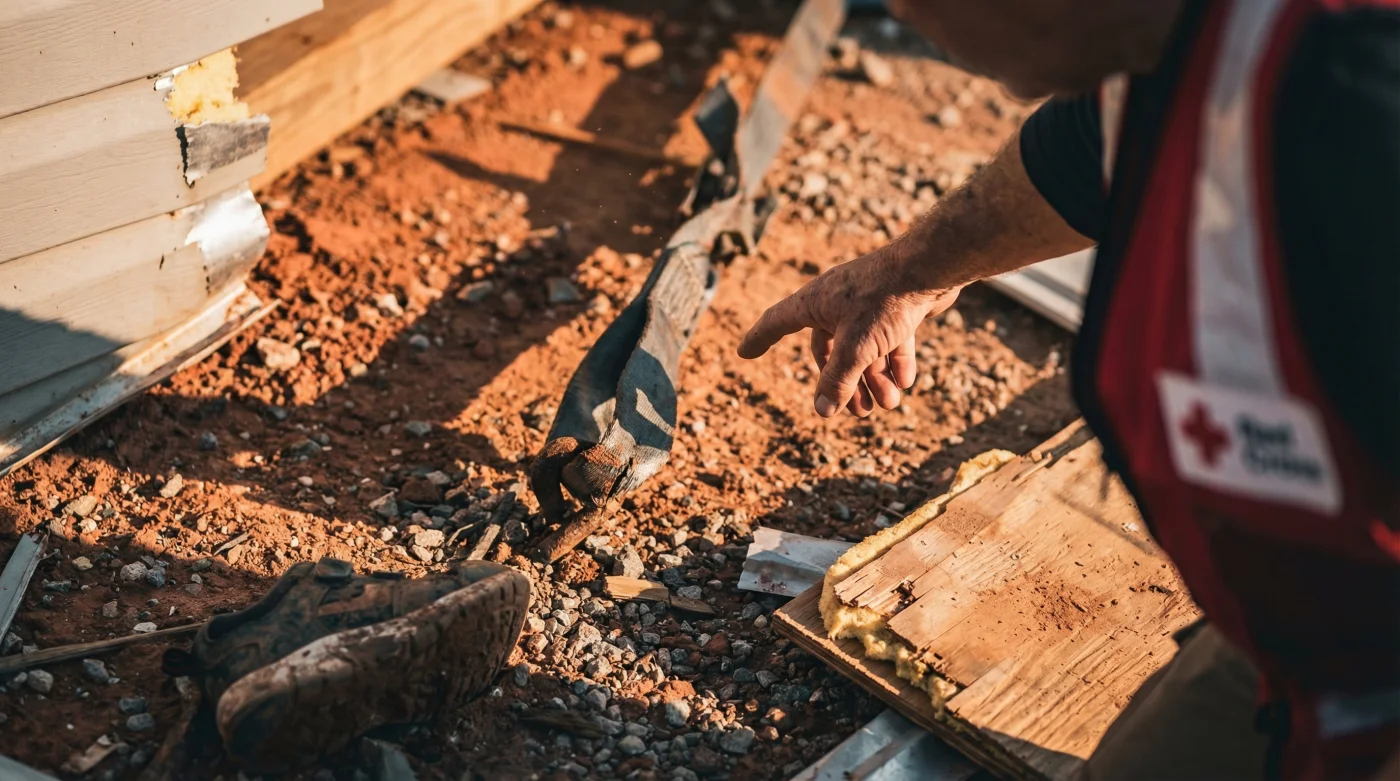
It is a terrifying statistic that keeps meteorologists up at night: nearly half of all tornado fatalities occur in mobile homes, despite these structures making up only a small fraction of the U.S. housing market. For decades, the golden rule of severe weather has been “shelter in place,” but safety experts and the American Red Cross are issuing a stark, non-negotiable correction to that directive for residents of manufactured housing. If you are inside a mobile or manufactured home when a tornado warning screams across your county, staying put isn’t just risky—it is statistically the most dangerous decision you can make.
The structural reality of mobile homes creates a zero-margin-for-error scenario during severe wind events. Even with modern anchoring systems and updated HUD codes, the physics of a tornado often overpower the lightweight construction and foundation ties. The Red Cross is now doubling down on a message that counters the instinct to hunker down: you must leave your home to survive. This isn’t about panic; it is about a calculated, pre-planned evacuation to a sturdier structure before the first siren even sounds.
The Physics of Failure: Why Anchors Aren’t Enough
To understand why the Red Cross is so adamant about evacuation, one must look at the aerodynamics of a tornado versus the architecture of a mobile home. Unlike site-built homes, which are anchored deep into the ground with heavy concrete foundations, mobile homes generally sit on piers and are held in place by metal straps or anchors. While these are designed to withstand straight-line winds to a certain degree, the chaotic, twisting updrafts of a tornado create a phenomenon known as “aerodynamic lift.”
When wind speeds exceed 70 MPH—strength found in even the weakest EF0 or EF1 tornadoes—the wind getting underneath the home acts like air under an airplane wing. It lifts the structure, often snapping the tie-downs or pulling the anchors straight out of the saturated soil. Once the connection to the ground is severed, the home effectively becomes a projectile. This is why the National Weather Service (NWS) and the Red Cross emphasize that there is no safe place inside a mobile home during a tornado.
“Mobile homes can be overturned by winds of 60 to 70 mph… As a result, even minor storms can cause significant damage and put lives at risk. If a tornado warning is issued, you must leave your mobile home immediately to find sturdier shelter.” – American Red Cross
The 15-Minute Gap: Changing Your Survival Strategy
The biggest hurdle for residents is the timing. Tornado warnings often provide only 10 to 15 minutes of lead time. If your plan is to wait for the siren to leave, you are likely too late. The Red Cross suggests shifting from a reactive strategy to a proactive one. This means monitoring the weather forecast for “Tornado Watches” (conditions are favorable) rather than waiting for “Warnings” (a tornado has been spotted).
Residents in Tornado Alley and Dixie Alley are urged to identify a safe shelter long before storm season begins. This could be a community storm shelter, a neighbor’s site-built home, or a nearby business with a reinforced concrete structure. The goal is to be at that location before the sky turns green.
Comparing Protection Levels
- Whoop Fitness Straps fail reading biometrics through traditional Japanese sleeves
- Professional spray tans permanently stain white tattoo highlights a muddy yellow
- Daily sea salt soaks drastically accelerate fresh cartilage piercing migration
- Zinc Oxide Sunscreen permanently leaves white casts on blackwork tattoos
- Age fifty skin thinning permanently blurs delicate cursive collarbone script
| Structure Type | Wind Threshold (Approx.) | Structural Risk Factor | Survival Strategy |
|---|---|---|---|
| Mobile Home | 60-80 MPH | High: Risk of rolling, flipping, or disintegration. | EVACUATE IMMEDIATELY |
| Site-Built Home | 110-135 MPH (Roof dependent) | Moderate: Roof loss possible, walls usually stand. | Interior room, lowest floor. |
| Reinforced Shelter | 200+ MPH | Low: Designed for EF4/EF5 impact. | Stay inside. |
Your Emergency Evacuation Kit
Since you cannot shelter in place, you are essentially a weather refugee the moment a warning is issued. You need to be mobile and ready to move instantly. The Red Cross recommends keeping a “Go Bag” specifically for severe weather days. Do not waste precious seconds searching for shoes or keys when the storm is approaching.
Ensure your emergency kit includes the following essentials:
- Identification and Documents: IDs, insurance policies, and medical cards in a waterproof bag.
- Communication: A battery-powered or hand-crank NOAA weather radio. Cell towers often fail during tornadoes.
- Protection: Helmets (bicycle or batting helmets) for every family member to protect against head trauma from flying debris.
- Shoes: Heavy-duty boots. If you survive the storm, you will be walking through glass, nails, and splintered wood.
- Whistle: To signal to first responders if you become trapped in debris at your secondary shelter.
The ‘Ditch’ Debate
For years, a common piece of advice was to lie flat in a ditch if you couldn’t reach a building. While this remains a last-resort option compared to staying in a mobile home, it is fraught with danger. Heavy rains often accompany tornadoes, leading to flash flooding in ditches and culverts. However, safety experts agree: being outside in a low-lying area, covering your head, is statistically safer than being inside a mobile home that is being tossed by the wind. Ideally, your evacuation plan prevents this choice by getting you to a sturdy building well in advance.
Frequently Asked Questions
1. Is my mobile home safe if it has a permanent brick skirting?
No. While skirting (often called underpinning) helps keep wind from getting under the home, it is not a structural foundation. The home is still sitting on piers and held down by straps. The brick skirting creates a false sense of security but offers little protection against the lift and drag forces of a tornado.
2. How early should I leave my mobile home?
You should execute your evacuation plan when a Tornado Watch is issued if you have a considerable distance to travel to a shelter. At the very latest, you must leave the moment a Warning is issued for your area. Do not wait to visually confirm the tornado.
3. Where can I find a public storm shelter?
Many communities in high-risk areas have designated public shelters. Check with your local city hall, fire department, or emergency management office for a list of locations. Note that some shelters are pet-friendly while others are not, so plan accordingly.
4. Can I build a safe room inside a mobile home?
Generally, no. Because the structure of the home itself is not anchored securely enough to withstand the wind load, a safe room bolted to the floor of a mobile home would likely just fly away with the rest of the house. The only safe option for mobile home residents is an underground storm cellar or an above-ground concrete shelter installed outside and separate from the home.
5. What if I am disabled and cannot drive to a shelter?
If you have mobility issues, you are at the highest risk. You must coordinate with family, neighbors, or local emergency services ahead of time. Some counties offer